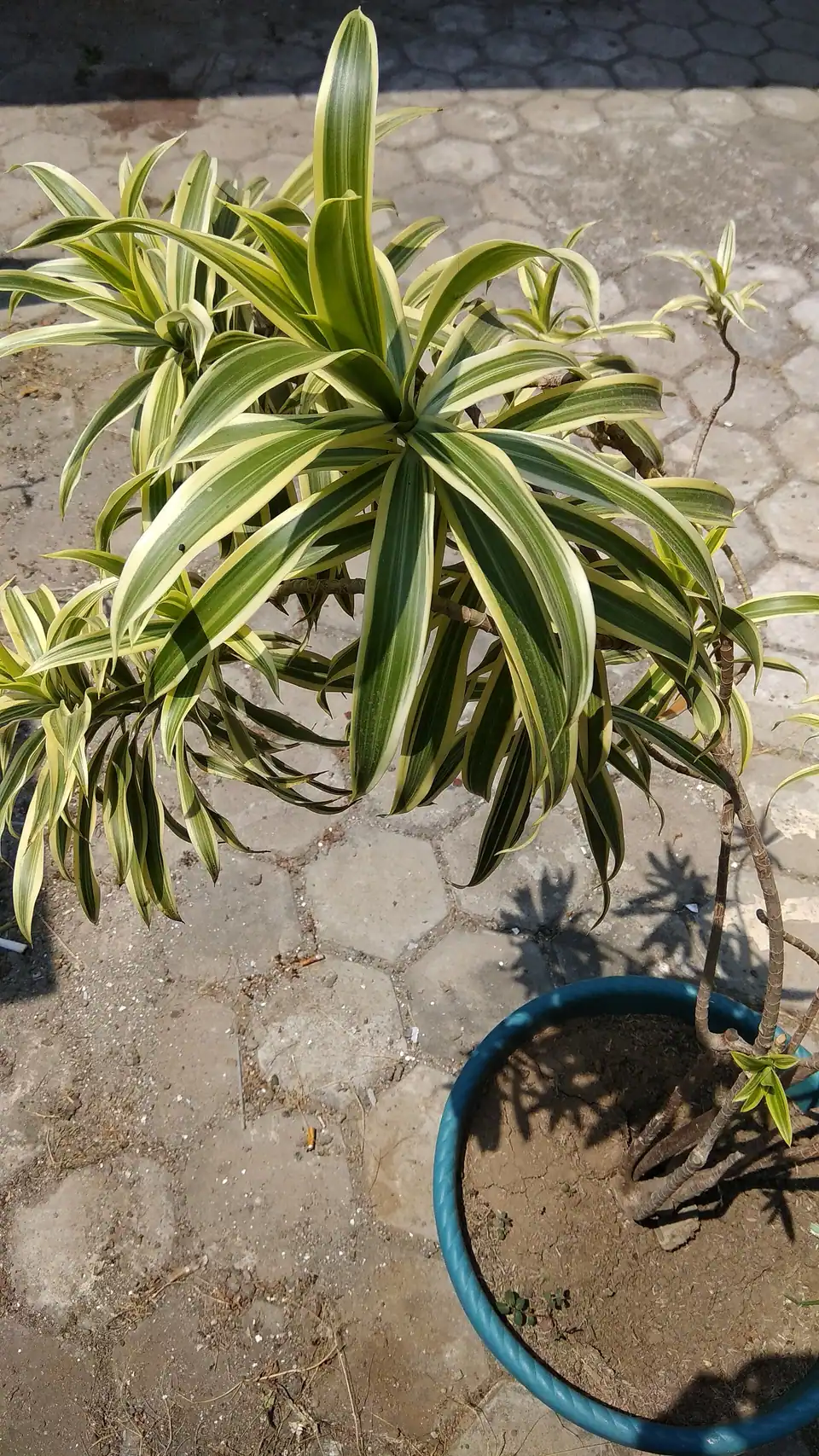
How to care for Song of India
Dracaena reflexa · Asparagaceae
An elegant dracaena with whorls of narrow leaves banded in lime and cream along gracefully zig-zagging stems. It grows slowly into a sculptural indoor tree and forgives irregular watering. One of the easiest ways to add height and variegation to a bright room. Water roughly every 8 days while it's growing (about every 14 in winter), give it bright, indirect light, kept above 59°F (15°C) — average room humidity suits it.
Care at a glance
Water when the top half of the soil has dried, using filtered water if your tap water is heavily fluoridated.
Bright indirect light keeps the yellow variegation bold; it tolerates medium light with greener, slower growth.
Half-strength balanced fertilizer monthly in spring and summer; it is a light feeder.
Mistakes that kill this plant
- Overwatering in low light, the standard slow death for dracaenas.
- Cold drafts or a chilly transport home in winter.
- Letting salts build up for years without ever flushing the soil.
Seasonal tips
- Cut back a tall stem in spring; it branches at the cut and grows fuller.
- Water noticeably less in winter when growth is minimal.
- Shower or wipe the leaf whorls occasionally to deter mites.
Is it safe for pets?
We have Song of India recorded as toxic to cats and dogs.
Full pet-safety details for cats & dogsCare for your Song of India on autopilot
Ploomily turns this guide into a Living Schedule — watering tuned to your city’s climate, the season, the pot and the light, and feeding tuned to that same pot, drainage and light, following the growing season and pausing while the plant rests. The founding price in force today is shown in full before you confirm, and locked for as long as you stay subscribed — with 30 days to change your mind.
Build my Living ScheduleSong of India is featured in
More foliage plants
Toxicity here is informational, not a safety guarantee. Those are our own records, compiled by following the ASPCA's published toxic and non-toxic plant lists and Pet Poison Helpline's plant poison list rather than copied from them — confirm anything that matters against the ASPCA's published lists, which this one is matched to, or with your vet. If your pet ingested this plant, contact your vet or the ASPCA Animal Poison Control Center at (888) 426-4435.