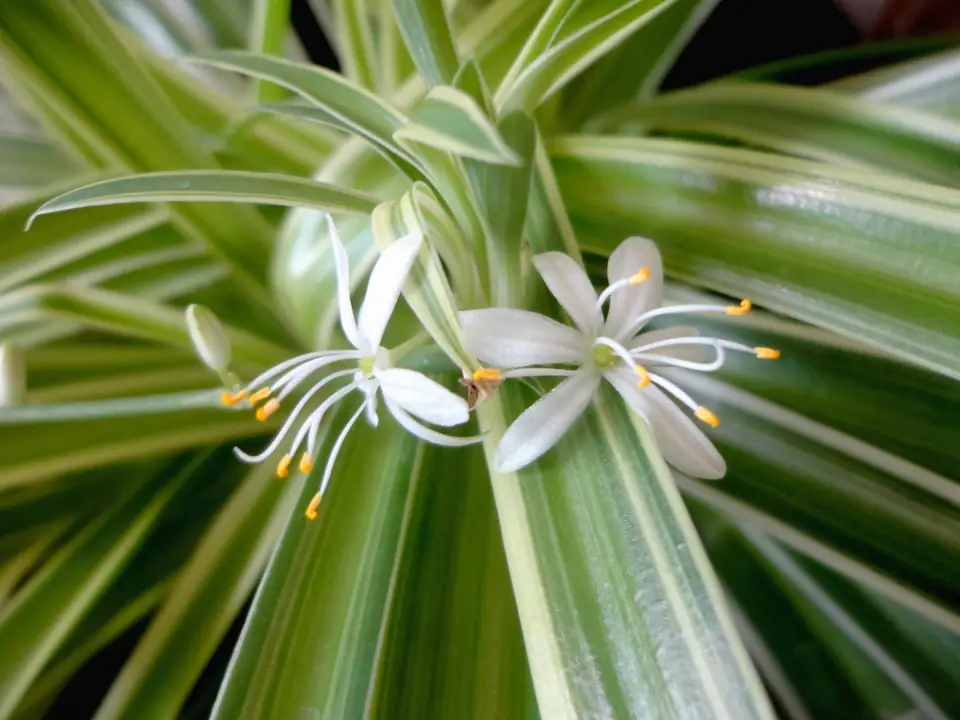
How to care for Spider Plant
Chlorophytum comosum · Asparagaceae
The classic arching houseplant that showers baby plantlets from long stems, ready to root and share. Thick water-storing roots make it remarkably forgiving of missed waterings. A superb beginner plant that still rewards good care with fountains of striped foliage. Water roughly every 7 days while it's growing (about every 12 in winter), give it bright, indirect light, kept above 50°F (10°C) — dry air is fine for it.
Care at a glance
Water when the top few centimeters are dry; its fleshy roots store water, so slightly under is better than over.
Bright indirect light keeps the stripes crisp; it tolerates medium light and only dislikes hot direct sun.
Half-strength balanced fertilizer monthly; overfeeding reduces plantlet production.
Mistakes that kill this plant
- Chronic overwatering in a pot without drainage.
- Leaving it rootbound for years until the tubers strangle themselves.
- Very little else — this plant survives most owners.
Seasonal tips
- Pot up plantlets in spring — they root in weeks and make easy gifts.
- Cut watering back in winter; cool rooms plus wet soil invite rot.
- Flush the pot occasionally or use rainwater to reduce brown tips.
Is it safe for pets?
Our records list Spider Plant as non-toxic to cats and dogs.
Full pet-safety details for cats & dogsCare for your Spider Plant on autopilot
Ploomily turns this guide into a Living Schedule — watering tuned to your city’s climate, the season, the pot and the light, and feeding tuned to that same pot, drainage and light, following the growing season and pausing while the plant rests. The founding price in force today is shown in full before you confirm, and locked for as long as you stay subscribed — with 30 days to change your mind.
Build my Living ScheduleSpider Plant is featured in
More foliage plants
Toxicity here is informational, not a safety guarantee. Those are our own records, compiled by following the ASPCA's published toxic and non-toxic plant lists and Pet Poison Helpline's plant poison list rather than copied from them — confirm anything that matters against the ASPCA's published lists, which this one is matched to, or with your vet. If your pet ingested this plant, contact your vet or the ASPCA Animal Poison Control Center at (888) 426-4435.