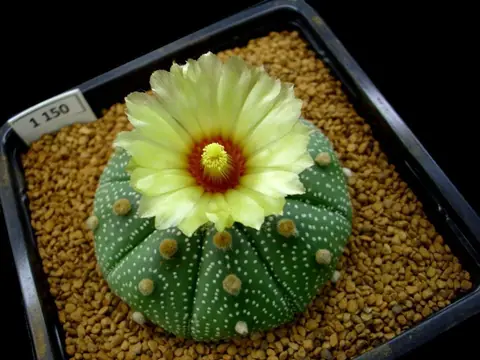
Star Cactus problems & how to fix them
Astrophytum asterias
Drooping, yellowing, brown tips, or a plant that just won’t thrive? Here are the most common Star Cactus problems, what usually causes them, and how to turn things around.
Common problems
Root rot
The flat body sits right at soil level, so damp mix rots it from underneath almost invisibly. A fungal or bacterial infection of the roots, almost always triggered by soil staying wet too long. Caught early, most plants recover within a few weeks after repotting; if most roots are already mushy, recovery is uncertain.
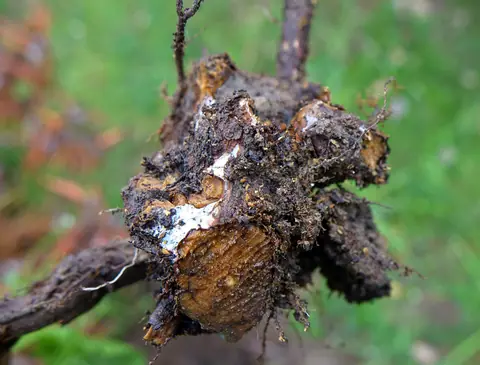
Phytophthora root rot on a dug-up root ball
Photo: Jerzy Opioła · CC BY-SA 4.0 · Wikimedia Commons
Overwatering
A swollen, split, or translucent body means water came too often. The soil is staying wet longer than the plant can handle, starving roots of oxygen. If caught before roots start rotting, the fix is simple - let the soil dry out and adjust the routine - and most plants bounce back within 2-3 weeks.
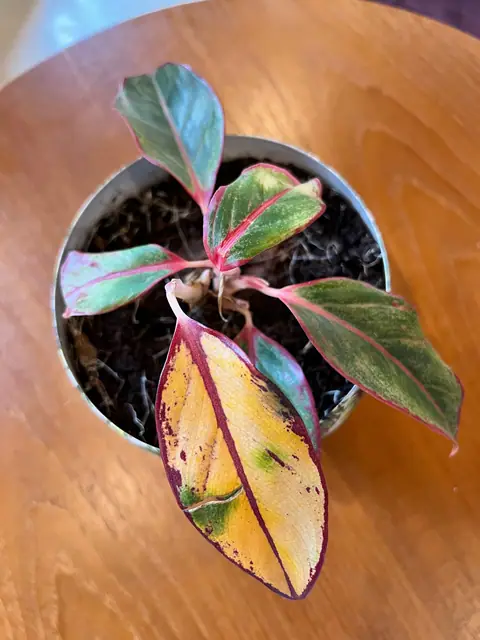
a yellowing lower leaf on a potted Chinese evergreen
Photo: Saurav9656 · CC BY-SA 4.0 · Wikimedia Commons
Sunburn
Sudden moves into strong sun bronze and scar the spineless skin. Leaf tissue scorched by more direct sun than the plant was acclimated to, often after moving it to a brighter spot or outdoors. Burned patches are permanent, but the plant itself usually recovers fully once moved - new growth comes in healthy.
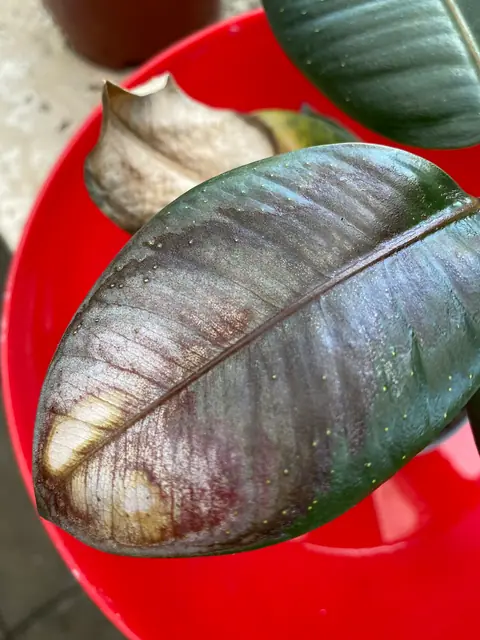
a sunburnt rubber plant leaf, bleached and browned where the sun hit
Photo: Secretlondon · CC BY-SA 4.0 · Wikimedia Commons
Spider mites
Fine stippling on the flat surface shows up in hot, dry, stagnant air. Tiny sap-sucking mites that thrive in warm, dry air and leave fine webbing and speckled leaves. Caught early they are very treatable; most plants recover fully within 3-4 weeks of consistent treatment.
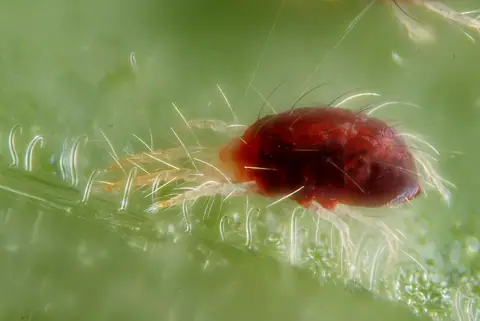
a two-spotted spider mite among its silk threads
Photo: Gilles San Martin · CC BY-SA 2.0 · Wikimedia Commons
The mistakes that most often kill it
- Watering while the deep taproot zone is still moist — rot starts below and shows late.
- Rich, peaty soil instead of a mostly mineral mix.
- Winter watering in a cool room.
Not sure what’s wrong?
Ploomily’s rescue tool walks you through the symptoms, gives an honest diagnosis, and schedules a day-by-day recovery plan. The founding price in force today is shown in full before you confirm, and locked for as long as you stay subscribed — with 30 days to change your mind.
Rescue my plant