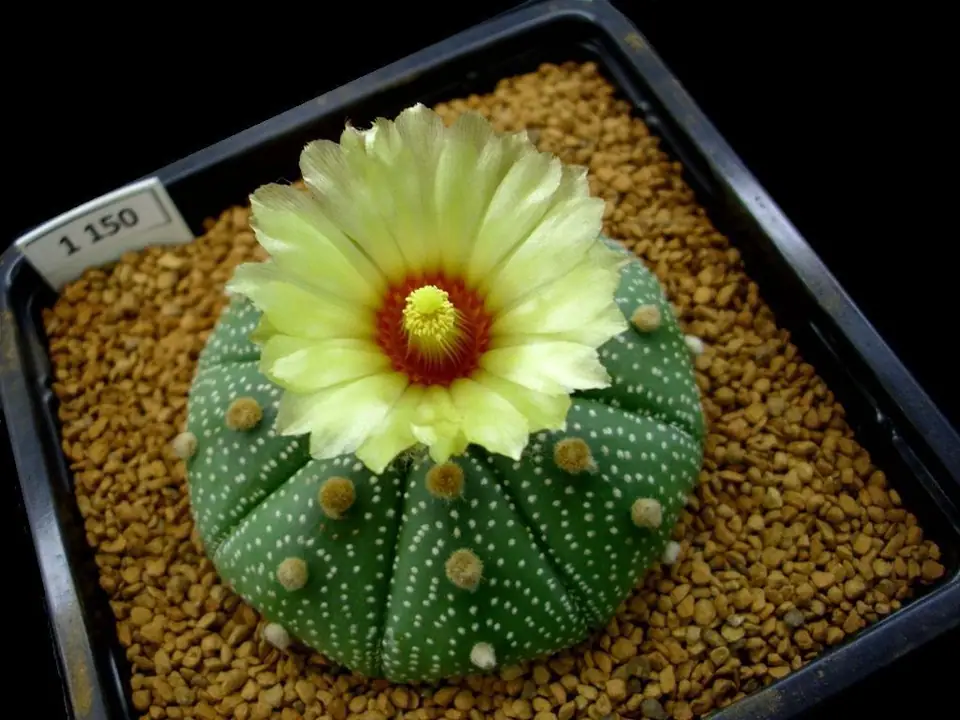
How to care for Star Cactus
Astrophytum asterias · Cactaceae
A spineless, dome-shaped collector's gem from the Rio Grande borderlands, divided into flat ribs flecked with tiny white dots — like a sand dollar that took up gardening. It rewards patient, disciplined care with silky yellow flowers in summer. Its low, flat body is unforgiving of excess water, making it a plant for careful hands. Water roughly every 16 days while it's growing (about every 45 in winter), give it direct sun, kept above 46°F (8°C) — dry air is fine for it.
Care at a glance
Water deeply but only after the gritty mineral mix has been completely dry for a few days; err on the side of drought.
A few hours of direct morning sun with bright light the rest of the day; shade it from the fiercest midday summer rays behind glass.
Very dilute low-nitrogen cactus feed a few times in the growing season.
Mistakes that kill this plant
- Watering while the deep taproot zone is still moist — rot starts below and shows late.
- Rich, peaty soil instead of a mostly mineral mix.
- Winter watering in a cool room.
Seasonal tips
- Give it a cold (8-12 C), bone-dry winter rest to set up summer flowering.
- Use a shallow pot and a top dressing of grit to keep the body off damp soil.
- Resume watering gently in spring, starting with small amounts.
Is it safe for pets?
We couldn’t place Star Cactus on a toxic or a non-toxic list, so its toxicity is unconfirmed — which is not the same as safe.
Full pet-safety details for cats & dogsCare for your Star Cactus on autopilot
Ploomily turns this guide into a Living Schedule — watering tuned to your city’s climate, the season, the pot and the light, and feeding tuned to that same pot, drainage and light, following the growing season and pausing while the plant rests. The founding price in force today is shown in full before you confirm, and locked for as long as you stay subscribed — with 30 days to change your mind.
Build my Living ScheduleMore cactus plants
Toxicity here is informational, not a safety guarantee. Those are our own records, compiled by following the ASPCA's published toxic and non-toxic plant lists and Pet Poison Helpline's plant poison list rather than copied from them — confirm anything that matters against those lists or with your vet. If your pet ingested this plant, contact your vet or the ASPCA Animal Poison Control Center at (888) 426-4435.