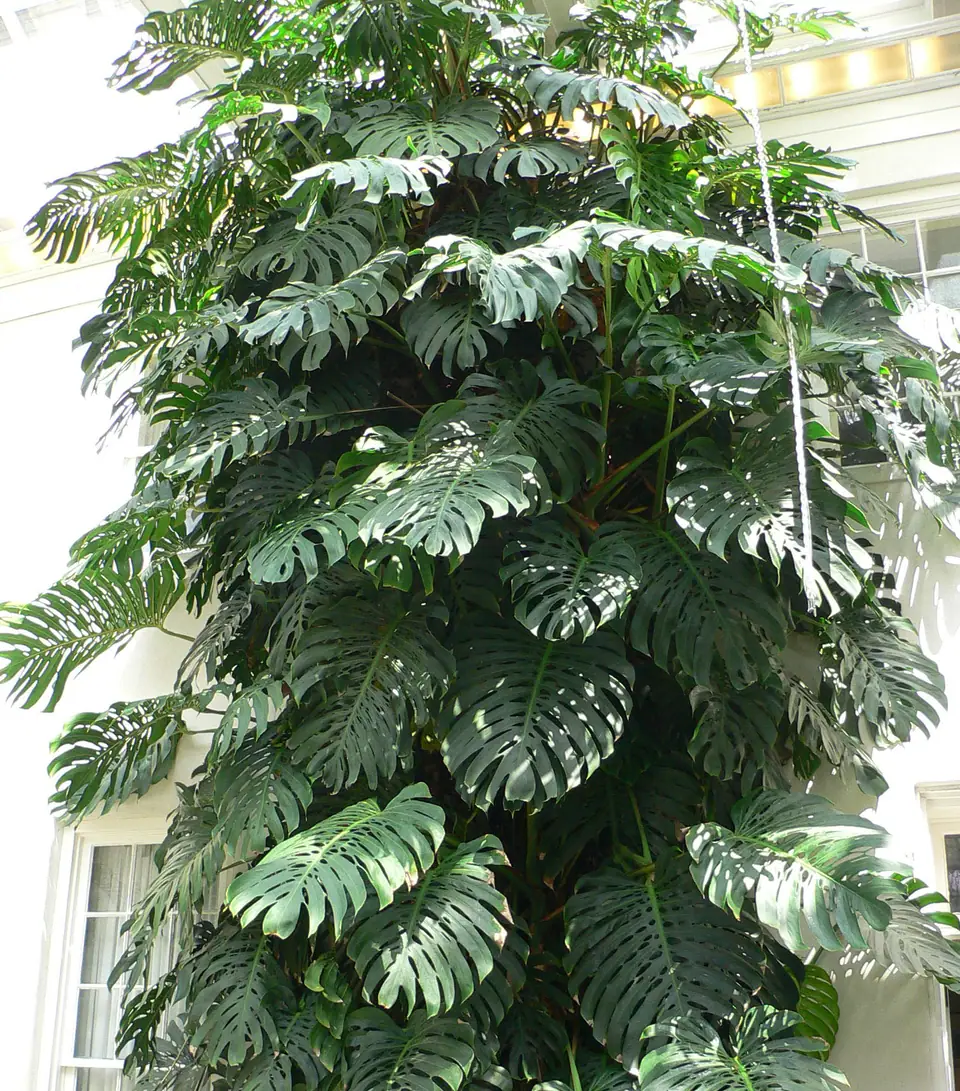
How to care for Swiss Cheese Plant
Monstera deliciosa · Araceae
A big, forgiving climbing aroid famous for the splits and holes (fenestrations) that develop in mature leaves. Native to Central American rainforests, it climbs trees in the wild and appreciates a moss pole indoors. Give it space and decent light and it rewards you with dramatic, glossy foliage for decades. Water roughly every 7 days while it's growing (about every 12 in winter), give it bright, indirect light, kept above 55°F (13°C) — average room humidity suits it.
Care at a glance
Water thoroughly when the top 2 inches (5 cm) of soil is dry, letting excess drain fully from the pot.
Near an east window or a metre back from a bright south or west window; too little light means small leaves without fenestrations.
Balanced liquid fertilizer at half strength through spring and summer.
Mistakes that kill this plant
- Keeping it in a huge pot of soggy soil — root rot is the number one killer.
- Parking it in a dark corner for years and wondering why it declines.
- Letting it freeze near a cold window or draft in winter.
Seasonal tips
- In spring, add or extend a moss pole before new growth hardens off.
- Wipe leaves monthly in winter — dust plus low light really slows this plant down.
- Cut watering back by roughly a third once days shorten.
Is it safe for pets?
We have Swiss Cheese Plant recorded as toxic to cats and dogs.
Full pet-safety details for cats & dogsCare for your Swiss Cheese Plant on autopilot
Ploomily turns this guide into a Living Schedule — watering tuned to your city’s climate, the season, the pot and the light, and feeding tuned to that same pot, drainage and light, following the growing season and pausing while the plant rests. The founding price in force today is shown in full before you confirm, and locked for as long as you stay subscribed — with 30 days to change your mind.
Build my Living ScheduleSwiss Cheese Plant is featured in
More foliage plants
Toxicity here is informational, not a safety guarantee. Those are our own records, compiled by following the ASPCA's published toxic and non-toxic plant lists and Pet Poison Helpline's plant poison list rather than copied from them — confirm anything that matters against the ASPCA's published lists, which this one is matched to, or with your vet. If your pet ingested this plant, contact your vet or the ASPCA Animal Poison Control Center at (888) 426-4435.