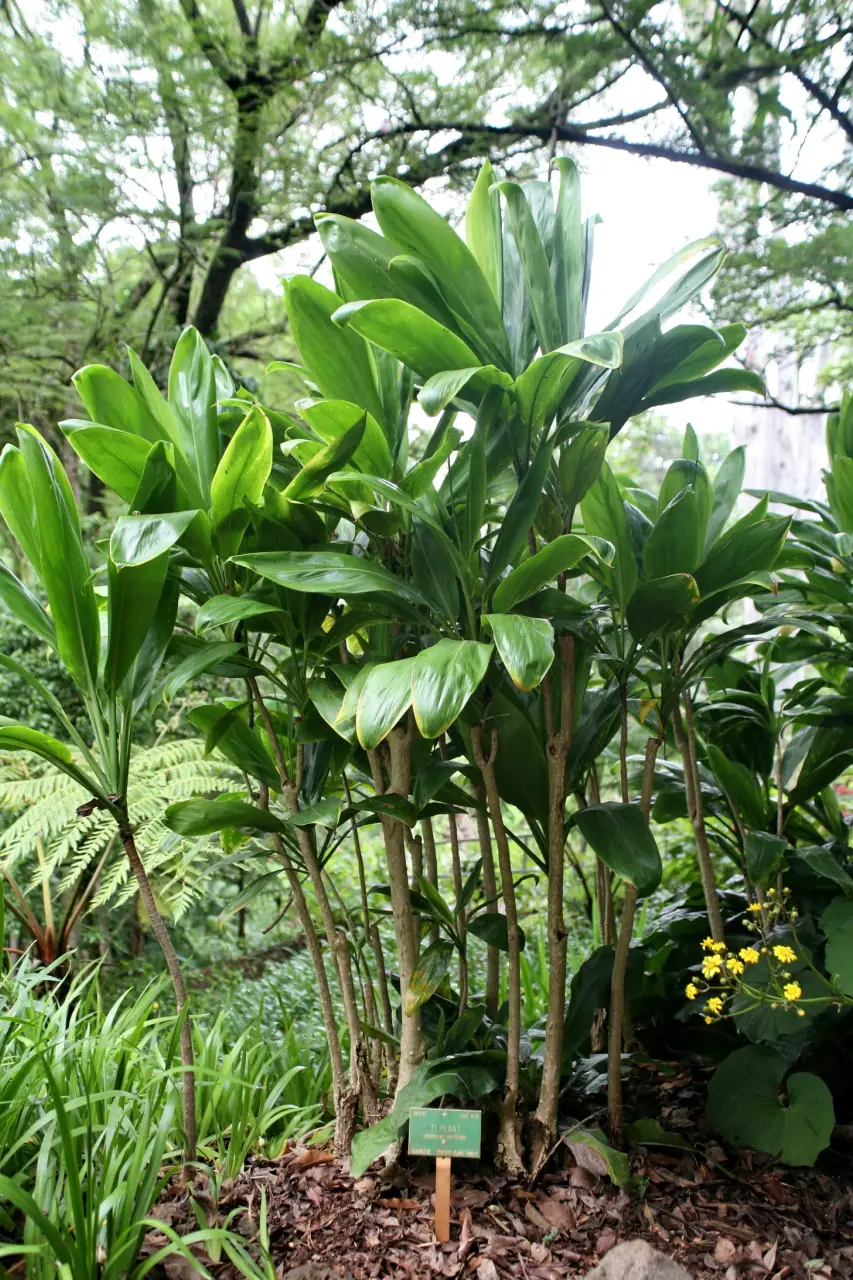
How to care for Ti Plant
Cordyline fruticosa · Asparagaceae
A Polynesian classic grown for sword-shaped leaves splashed in pink, red, burgundy, and green on upright canes. Indoors it brings serious tropical color, but it wants good light and is picky about water quality. Given both, it grows into a striking small indoor tree. Water roughly every 6 days while it's growing (about every 10 in winter), give it bright, indirect light, kept above 59°F (15°C) — it wants humid air.
Care at a glance
Water when the top few centimeters dry, ideally with filtered or rain water, since fluoride and salts cause brown leaf tips.
Bright indirect light keeps the colors saturated; too little light fades new leaves toward plain green.
Balanced liquid fertilizer at half strength; avoid fertilizers high in fluoride or superphosphate.
Mistakes that kill this plant
- Watering with heavily fluoridated or softened water for months on end.
- Cold exposure, even a brief chill by a winter window.
- Soggy soil in a dark corner, which rots the cane.
Seasonal tips
- In winter, move it to your brightest window and cut watering back.
- Rinse the soil through with distilled water a few times a year to flush salts.
- Cut back a leggy cane in spring; it will resprout below the cut.
Is it safe for pets?
We have Ti Plant recorded as toxic to cats and dogs.
Full pet-safety details for cats & dogsCare for your Ti Plant on autopilot
Ploomily turns this guide into a Living Schedule — watering tuned to your city’s climate, the season, the pot and the light, and feeding tuned to that same pot, drainage and light, following the growing season and pausing while the plant rests. The founding price in force today is shown in full before you confirm, and locked for as long as you stay subscribed — with 30 days to change your mind.
Build my Living ScheduleTi Plant is featured in
More foliage plants
Toxicity here is informational, not a safety guarantee. Those are our own records, compiled by following the ASPCA's published toxic and non-toxic plant lists and Pet Poison Helpline's plant poison list rather than copied from them — confirm anything that matters against those lists or with your vet. If your pet ingested this plant, contact your vet or the ASPCA Animal Poison Control Center at (888) 426-4435.