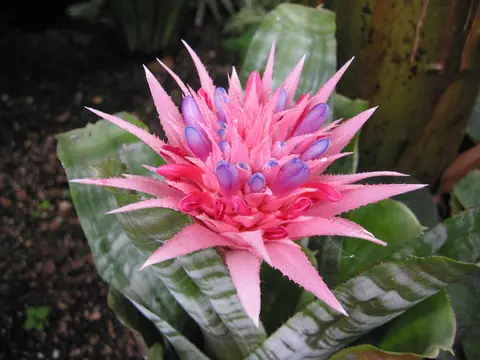
Urn Plant problems & how to fix them
Aechmea fasciata
Drooping, yellowing, brown tips, or a plant that just won’t thrive? Here are the most common Urn Plant problems, what usually causes them, and how to turn things around.
Common problems
Root rot
Soggy soil around its minimal roots rots the base — it is an epiphyte at heart. A fungal or bacterial infection of the roots, almost always triggered by soil staying wet too long. Caught early, most plants recover within a few weeks after repotting; if most roots are already mushy, recovery is uncertain.
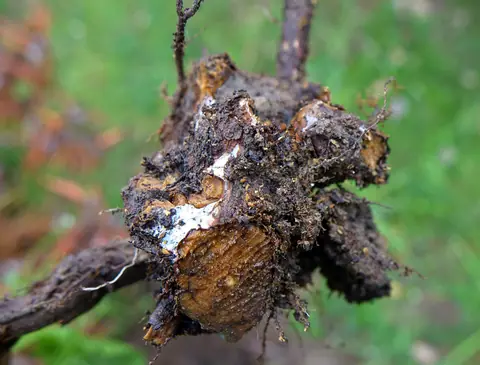
Phytophthora root rot on a dug-up root ball
Photo: Jerzy Opioła · CC BY-SA 4.0 · Wikimedia Commons
Scale insects
Scale insects lodge along the banded leaves and are easy to mistake for the natural silver markings. Sap-sucking insects that hide under hard, shell-like bumps stuck to stems and leaves, making them resistant to sprays. Treatment is mostly manual and takes patience, but most plants recover well over 4-6 weeks of consistent removal.
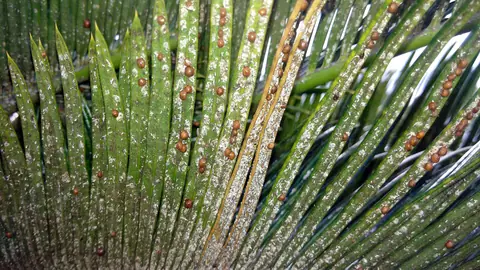
armoured scale insects dotting a cycad frond
Photo: Plant pests and diseases · CC0 · Wikimedia Commons
Cold damage
Cold, wet conditions in winter cause soft brown patches on the leaves. Tissue injury from a cold draft, a chilly windowsill, or a night outdoors below the plant's tolerance. Damaged leaves will not heal, but if the stems and roots survived, new growth typically appears within three to four weeks in a warm, stable spot.
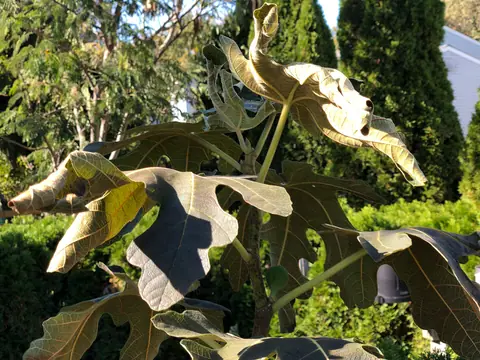
fig leaves killed by a frost
Photo: Famartin · CC BY-SA 4.0 · Wikimedia Commons
Sunburn
Sudden direct midday sun scorches through the powdery coating, especially if it's been rubbed off. Leaf tissue scorched by more direct sun than the plant was acclimated to, often after moving it to a brighter spot or outdoors. Burned patches are permanent, but the plant itself usually recovers fully once moved - new growth comes in healthy.
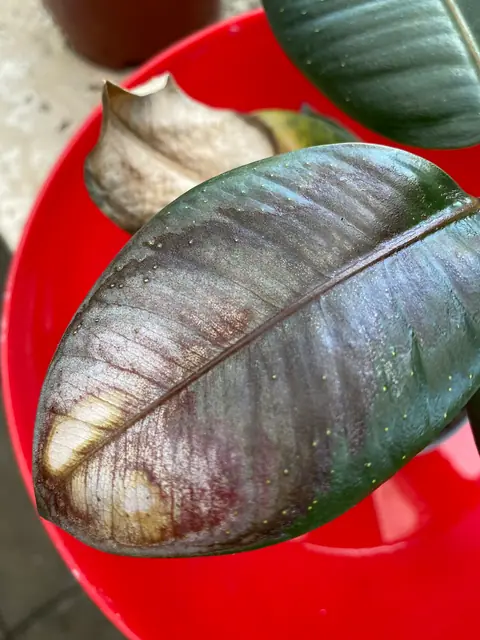
a sunburnt rubber plant leaf, bleached and browned where the sun hit
Photo: Secretlondon · CC BY-SA 4.0 · Wikimedia Commons
The mistakes that most often kill it
- Treating the pot like a normal houseplant's and keeping the soil wet.
- Letting the urn dry completely for long stretches in a hot room.
- Keeping it too dark, where it survives for years but never flowers or pups well.
Not sure what’s wrong?
Ploomily’s rescue tool walks you through the symptoms, gives an honest diagnosis, and schedules a day-by-day recovery plan. The founding price in force today is shown in full before you confirm, and locked for as long as you stay subscribed — with 30 days to change your mind.
Rescue my plant