How to care for Urn Plant
Aechmea fasciata · Bromeliaceae
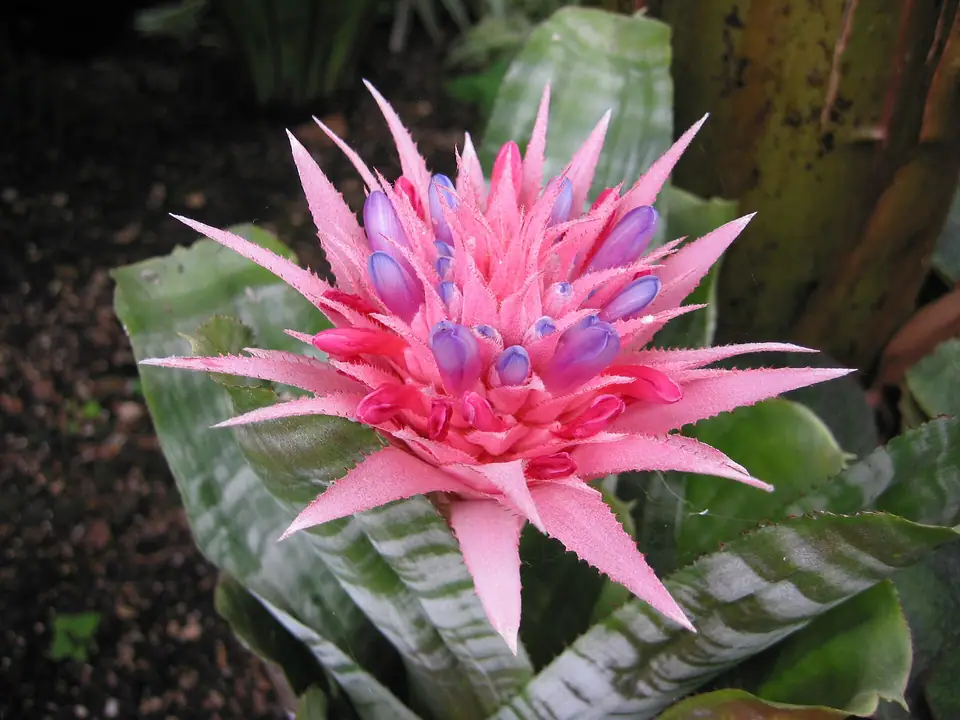
The urn plant forms a vase of broad, silver-banded leaves crowned, at maturity, by a spiky pink inflorescence dotted with small violet flowers that lasts up to six months. It is armored and tough, with leaf edges that carry small spines. Its silvery, powdery coating is part of its charm — and its sunscreen. Water roughly every 7 days while it's growing (about every 14 in winter), give it bright, indirect light, kept above 54°F (12°C) — average room humidity suits it.
Care at a glance
Keep the central urn topped with fresh water, flushed monthly, and water the fast-draining mix only when it dries out.
Bright, indirect light with some gentle sun; more light than a guzmania needs, or the silver banding fades and it won't bloom.
Quarter-strength liquid feed monthly onto the mix or foliage during the warm months.
Mistakes that kill this plant
- Treating the pot like a normal houseplant's and keeping the soil wet.
- Letting the urn dry completely for long stretches in a hot room.
- Keeping it too dark, where it survives for years but never flowers or pups well.
Seasonal tips
- Avoid handling or wiping the leaves — the silvery scurf protects them and doesn't grow back evenly.
- A ripening apple in a bag with a mature plant releases ethylene and can trigger blooming.
- After the pink spike fades, feed and grow on the pups for the next generation.
Is it safe for pets?
We couldn’t place Urn Plant on a toxic or a non-toxic list, so its toxicity is unconfirmed — which is not the same as safe.
Full pet-safety details for cats & dogsCare for your Urn Plant on autopilot
Ploomily turns this guide into a Living Schedule — watering tuned to your city’s climate, the season, the pot and the light, and feeding tuned to that same pot, drainage and light, following the growing season and pausing while the plant rests. The founding price in force today is shown in full before you confirm, and locked for as long as you stay subscribed — with 30 days to change your mind.
Build my Living ScheduleUrn Plant is featured in
More flowering plants
Toxicity here is informational, not a safety guarantee. Those are our own records, compiled by following the ASPCA's published toxic and non-toxic plant lists and Pet Poison Helpline's plant poison list rather than copied from them — confirm anything that matters against those lists or with your vet. If your pet ingested this plant, contact your vet or the ASPCA Animal Poison Control Center at (888) 426-4435.