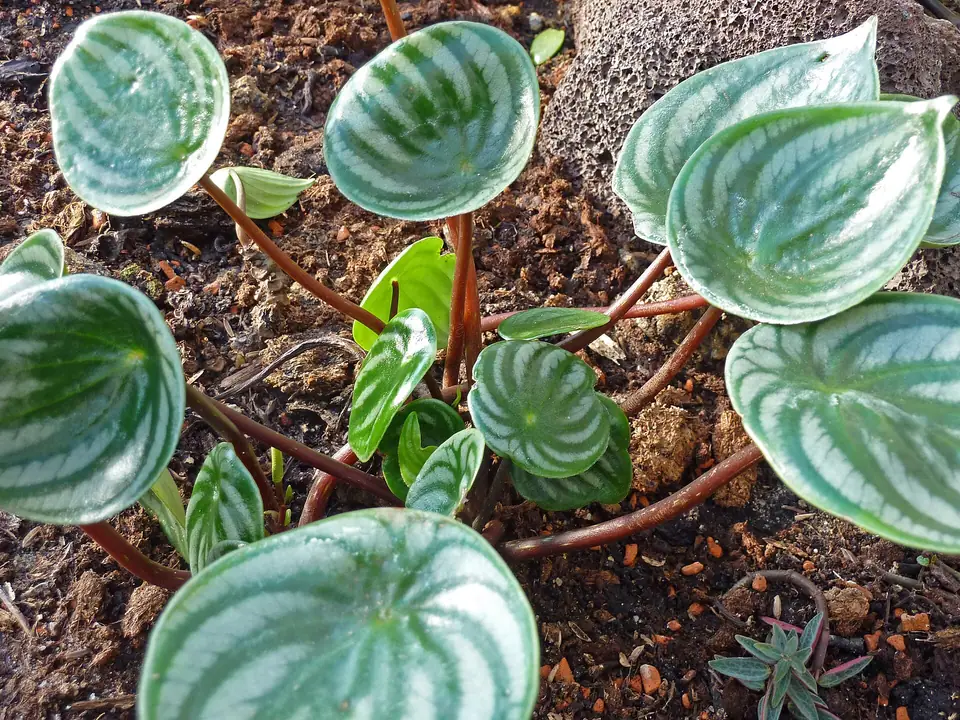
How to care for Watermelon Peperomia
Peperomia argyreia · Piperaceae
One of the most charming small houseplants: rounded leaves striped silver and green exactly like a watermelon rind, held on red stems. It stays compact and is listed as non-toxic to cats and dogs. Slightly fussier about watering than other peperomias, but not difficult once you find its rhythm. Water roughly every 7 days while it's growing (about every 13 in winter), give it bright, indirect light, kept above 59°F (15°C) — average room humidity suits it.
Care at a glance
Water when the top few centimeters are dry; the leaves go subtly limp when thirsty, and firm up within a day of watering.
Bright indirect light near a window keeps the watermelon pattern crisp; direct sun fades and scorches it.
Quarter- to half-strength balanced fertilizer monthly in the growing season.
Mistakes that kill this plant
- Overwatering, which melts the petioles and crown almost overnight.
- A big deep pot of heavy soil around its tiny root ball.
- Cold, wet conditions in winter.
Seasonal tips
- Keep it in a smallish pot; it flowers and looks best slightly snug.
- Propagate spare leaves in spring: even half a leaf can grow plantlets.
- Reduce watering noticeably in the darker months.
Is it safe for pets?
Our records list Watermelon Peperomia as non-toxic to cats and dogs.
Full pet-safety details for cats & dogsCare for your Watermelon Peperomia on autopilot
Ploomily turns this guide into a Living Schedule — watering tuned to your city’s climate, the season, the pot and the light, and feeding tuned to that same pot, drainage and light, following the growing season and pausing while the plant rests. The founding price in force today is shown in full before you confirm, and locked for as long as you stay subscribed — with 30 days to change your mind.
Build my Living ScheduleWatermelon Peperomia is featured in
More foliage plants
Toxicity here is informational, not a safety guarantee. Those are our own records, compiled by following the ASPCA's published toxic and non-toxic plant lists and Pet Poison Helpline's plant poison list rather than copied from them — confirm anything that matters against the ASPCA's published lists, which this one is matched to, or with your vet. If your pet ingested this plant, contact your vet or the ASPCA Animal Poison Control Center at (888) 426-4435.