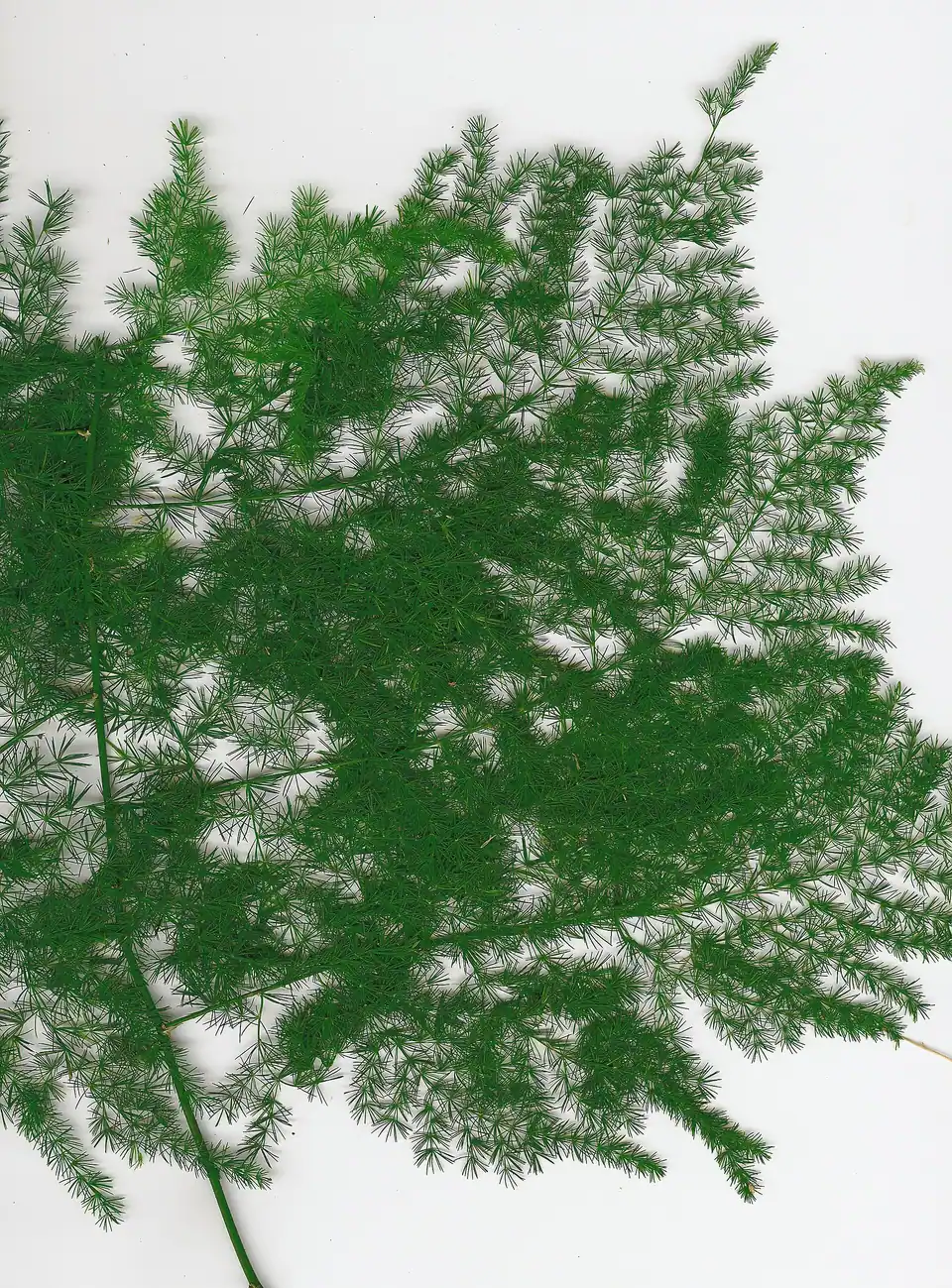
How to care for Asparagus Fern
Asparagus setaceus · Asparagaceae
Despite the name, the asparagus fern is not a true fern but a lily relative with feathery, cloud-like sprays of needle foliage. It is vigorous and forgiving, storing water in tuberous roots that buy you slack on watering. Mature stems develop tiny thorns and can climb or trail impressively. Water roughly every 5 days while it's growing (about every 10 in winter), give it bright, indirect light, kept above 50°F (10°C) — average room humidity suits it.
Care at a glance
Water when the top few centimeters dry; its tuberous roots store water, so err slightly dry rather than wet.
Bright, indirect light keeps it dense and deep green; some gentle morning sun is fine, harsh afternoon sun yellows it.
Balanced liquid fertilizer at half strength every 3 weeks — it is a hungry, fast grower.
Mistakes that kill this plant
- Letting pets chew it — it's toxic despite its harmless, fluffy look.
- Ignoring it until the pot is a solid mass of tubers with no room for water.
- Prolonged drought in hot sun, which sheds every needle at once.
Seasonal tips
- Repot or divide in spring — the tuberous roots expand faster than you'd expect.
- Cut old yellowed stems to the base; new plumes rise from the crown.
- Watch for berries on mature plants and remove them if pets or children are around.
Is it safe for pets?
We have Asparagus Fern recorded as toxic to cats and dogs.
Full pet-safety details for cats & dogsCare for your Asparagus Fern on autopilot
Ploomily turns this guide into a Living Schedule — watering tuned to your city’s climate, the season, the pot and the light, and feeding tuned to that same pot, drainage and light, following the growing season and pausing while the plant rests. The founding price in force today is shown in full before you confirm, and locked for as long as you stay subscribed — with 30 days to change your mind.
Build my Living ScheduleAsparagus Fern is featured in
More fern plants
Toxicity here is informational, not a safety guarantee. Those are our own records, compiled by following the ASPCA's published toxic and non-toxic plant lists and Pet Poison Helpline's plant poison list rather than copied from them — confirm anything that matters against the ASPCA's published lists, which this one is matched to, or with your vet. If your pet ingested this plant, contact your vet or the ASPCA Animal Poison Control Center at (888) 426-4435.