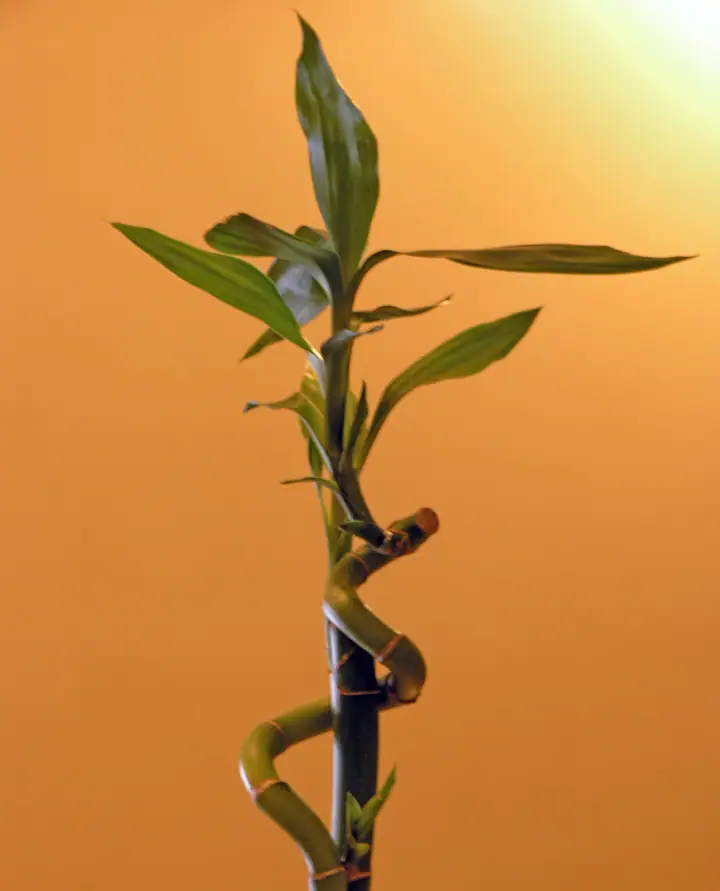
How to care for Lucky Bamboo
Dracaena sanderiana · Asparagaceae
Not a bamboo at all but a dracaena, sold as sculptural green canes grown in water or soil and long associated with good fortune. It tolerates low light and minimal care, though it is sensitive to the chlorine and fluoride in tap water. In soil it grows into a leafy upright plant; in water it stays a slow, tidy arrangement. Water roughly every 7 days while it's growing (about every 12 in winter), give it a bright room away from the window, kept above 59°F (15°C) — average room humidity suits it.
Care at a glance
In soil, water when the top few centimeters dry; in water culture, top up as needed and replace the water fully every week or two, using filtered or day-old tap water.
Medium indirect light is ideal; it tolerates low light but bleaches and scorches in direct sun.
A few drops of very dilute liquid fertilizer every couple of months; water-grown plants need only a trace.
Mistakes that kill this plant
- Using cold, heavily chlorinated tap water straight from the faucet.
- Letting the water go stale and slimy for weeks.
- Placing it in hot direct sun.
Seasonal tips
- Change the water more often in warm summer months to keep it fresh.
- If a cane yellows from the bottom, cut healthy top growth and re-root it.
- Keep it away from cold winter drafts and heater blasts alike.
Is it safe for pets?
We have Lucky Bamboo recorded as toxic to cats and dogs.
Full pet-safety details for cats & dogsCare for your Lucky Bamboo on autopilot
Ploomily turns this guide into a Living Schedule — watering tuned to your city’s climate, the season, the pot and the light, and feeding tuned to that same pot, drainage and light, following the growing season and pausing while the plant rests. The founding price in force today is shown in full before you confirm, and locked for as long as you stay subscribed — with 30 days to change your mind.
Build my Living ScheduleLucky Bamboo is featured in
More foliage plants
Toxicity here is informational, not a safety guarantee. Those are our own records, compiled by following the ASPCA's published toxic and non-toxic plant lists and Pet Poison Helpline's plant poison list rather than copied from them — confirm anything that matters against the ASPCA's published lists, which this one is matched to, or with your vet. If your pet ingested this plant, contact your vet or the ASPCA Animal Poison Control Center at (888) 426-4435.