How to care for Staghorn Fern
Platycerium bifurcatum · Polypodiaceae
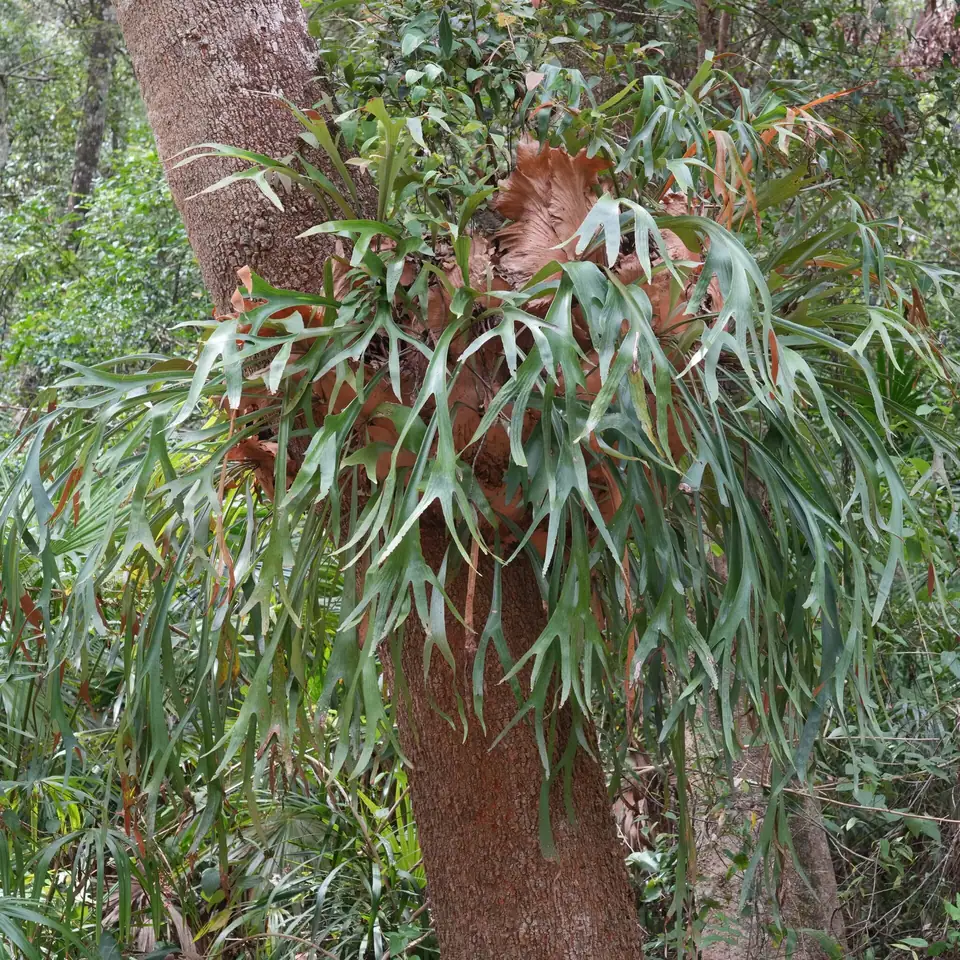
The staghorn fern is an epiphyte that grows on trees in the wild, producing antler-like fertile fronds and flat shield fronds that hug its mount. Indoors it is most often grown mounted on a board or in a hanging basket rather than a standard pot. Its sculptural form makes it a living wall ornament as much as a houseplant. Water roughly every 7 days while it's growing (about every 12 in winter), give it bright, indirect light, kept above 50°F (10°C) — it wants humid air.
Care at a glance
Soak the root ball or mount in water for 10–20 minutes, then let it drip dry; let the medium approach dryness between soaks.
Bright, filtered light near an east or shaded south window; it tolerates a little gentle morning sun.
Balanced liquid feed at half strength monthly in the soak water during spring and summer.
Mistakes that kill this plant
- Peeling off the browning shield fronds thinking they are dead leaves.
- Keeping the mount constantly wet in winter.
- Wiping the fuzzy coating off the fronds — it protects them from sun and water loss.
Seasonal tips
- Water noticeably less in winter — cool, wet sphagnum is how most mounted staghorns die.
- Never remove the brown shield fronds; they are meant to turn papery and protect the root ball.
- Summer outdoors in bright shade gives vigorous growth — bring it in well before nights cool.
Is it safe for pets?
Our records list Staghorn Fern as non-toxic to cats and dogs.
Full pet-safety details for cats & dogsCare for your Staghorn Fern on autopilot
Ploomily turns this guide into a Living Schedule — watering tuned to your city’s climate, the season, the pot and the light, and feeding tuned to that same pot, drainage and light, following the growing season and pausing while the plant rests. The founding price in force today is shown in full before you confirm, and locked for as long as you stay subscribed — with 30 days to change your mind.
Build my Living ScheduleStaghorn Fern is featured in
More fern plants
Toxicity here is informational, not a safety guarantee. Those are our own records, compiled by following the ASPCA's published toxic and non-toxic plant lists and Pet Poison Helpline's plant poison list rather than copied from them — confirm anything that matters against the ASPCA's published lists, which this one is matched to, or with your vet. If your pet ingested this plant, contact your vet or the ASPCA Animal Poison Control Center at (888) 426-4435.