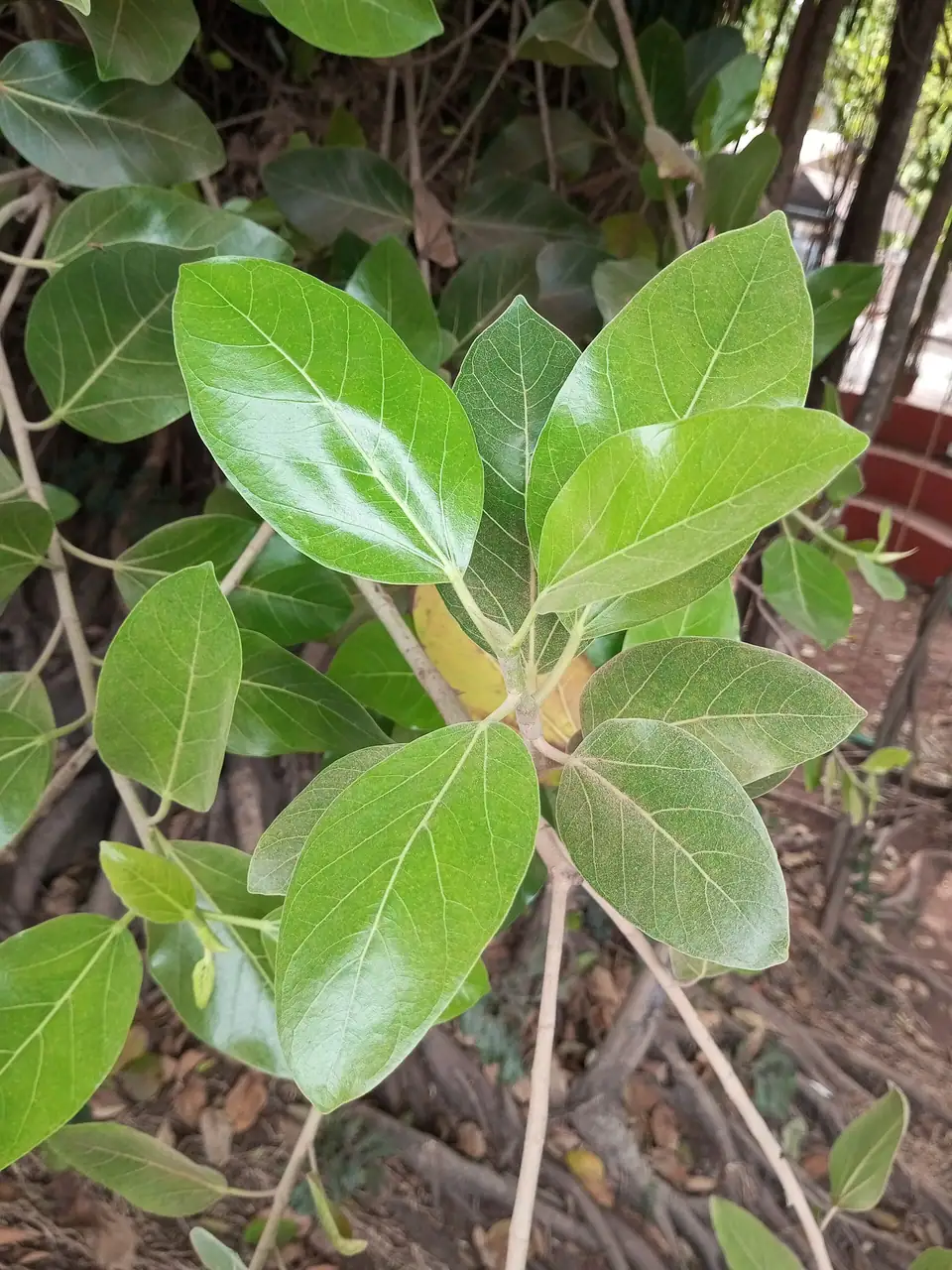
How to care for Ficus Audrey
Ficus benghalensis · Moraceae
The banyan tree of India scaled down to a stylish houseplant, with soft, velvety green leaves on pale trunks. It is often called the easier fiddle-leaf: similar looks, noticeably more forgiving of watering wobbles, though it still insists on strong light. Water roughly every 8 days while it's growing (about every 14 in winter), give it bright, indirect light, kept above 55°F (13°C) — average room humidity suits it.
Care at a glance
Water when the top 1–2 inches (3-5 cm) are dry; it prefers small consistent cycles over long droughts and deep soaks.
Close to a bright window with some gentle direct sun; the velvety leaves scorch under harsh midday rays.
Monthly balanced feed at half strength while actively growing.
Mistakes that kill this plant
- Chronic overwatering in a dim spot — the fast track to root rot.
- Letting spider mites colonize the leaf undersides unseen.
- Treating it as a low-light plant; it thins out and declines.
Seasonal tips
- Dust the velvety leaves with a soft dry brush or lightly damp cloth — grime clings to them.
- Pinch the growing tip in spring if you want a branched, fuller tree.
- Cut watering back by roughly half once growth stops in autumn.
Is it safe for pets?
We have Ficus Audrey recorded as toxic to cats and dogs.
Full pet-safety details for cats & dogsCare for your Ficus Audrey on autopilot
Ploomily turns this guide into a Living Schedule — watering tuned to your city’s climate, the season, the pot and the light, and feeding tuned to that same pot, drainage and light, following the growing season and pausing while the plant rests. The founding price in force today is shown in full before you confirm, and locked for as long as you stay subscribed — with 30 days to change your mind.
Build my Living ScheduleMore tree plants
Toxicity here is informational, not a safety guarantee. Those are our own records, compiled by following the ASPCA's published toxic and non-toxic plant lists and Pet Poison Helpline's plant poison list rather than copied from them — confirm anything that matters against the ASPCA's published lists, which this one is matched to, or with your vet. If your pet ingested this plant, contact your vet or the ASPCA Animal Poison Control Center at (888) 426-4435.