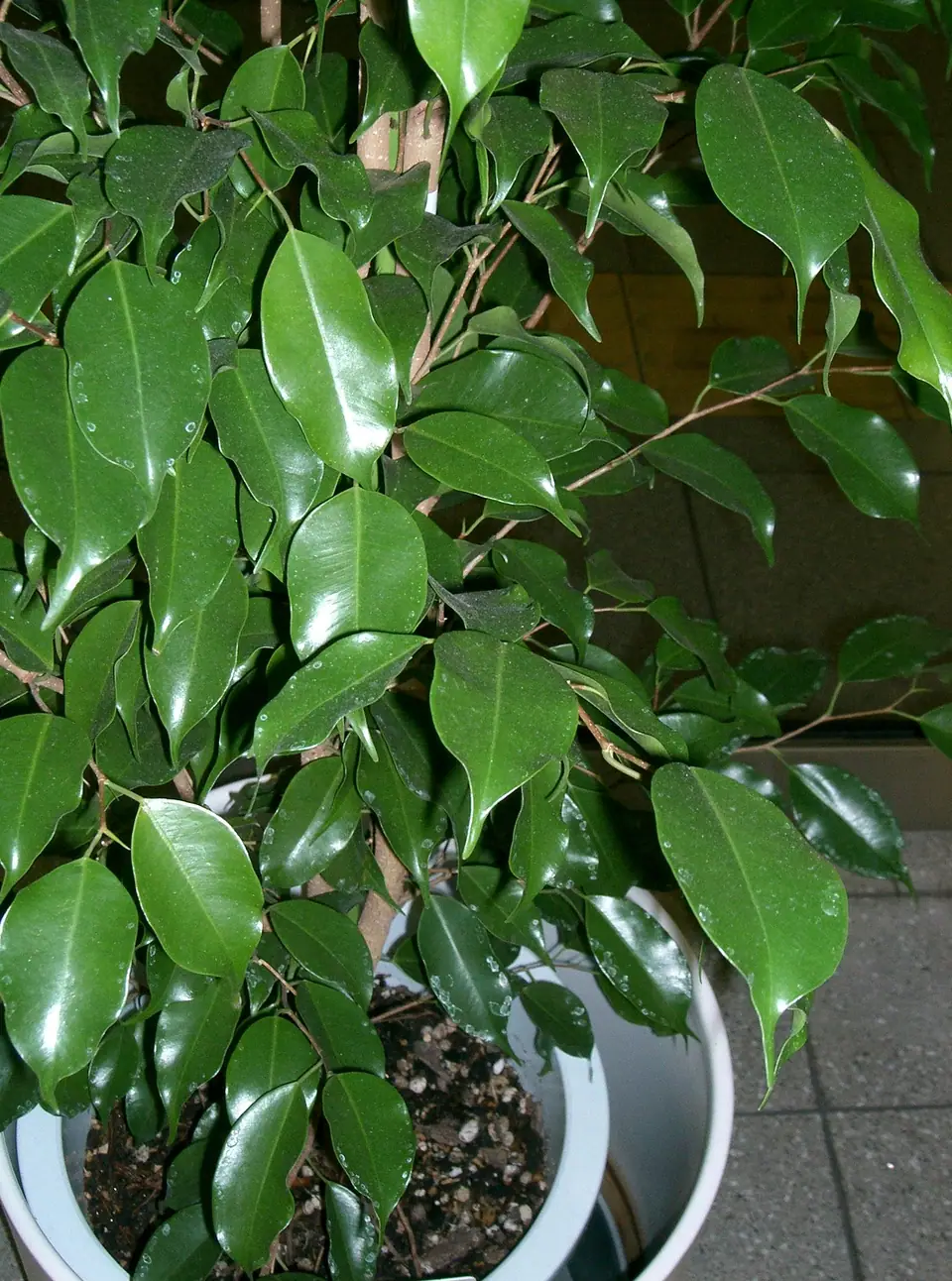
How to care for Weeping Fig
Ficus benjamina · Moraceae
An elegant indoor tree with arching branches and small glossy leaves that create a genuinely tree-like canopy. Its one quirk is famous: it drops leaves in protest at any change — a move, a draft, a new light angle — but almost always regrows them once it settles. Water roughly every 7 days while it's growing (about every 12 in winter), give it bright, indirect light, kept above 55°F (13°C) — average room humidity suits it.
Care at a glance
Water when the top few centimeters dry; keep the routine steady, since drought and flood both trigger leaf showers.
A permanently assigned bright spot out of cold drafts — pick its home once and leave it there.
Half-strength balanced fertilizer monthly during the growing season.
Mistakes that kill this plant
- Reacting to normal adjustment leaf drop with heavy watering, causing actual root rot.
- Stationing it near a drafty entrance or AC vent.
- Frequent relocation — every move restarts the shedding cycle and drains its reserves.
Seasonal tips
- A flush of leaf drop each autumn as light falls is normal — don't compensate with extra water.
- Prune lightly in spring; it back-buds readily and tolerates shaping well.
- Rotate only slightly and rarely; it maps its canopy to one light direction.
Is it safe for pets?
We have Weeping Fig recorded as toxic to cats and dogs.
Full pet-safety details for cats & dogsCare for your Weeping Fig on autopilot
Ploomily turns this guide into a Living Schedule — watering tuned to your city’s climate, the season, the pot and the light, and feeding tuned to that same pot, drainage and light, following the growing season and pausing while the plant rests. The founding price in force today is shown in full before you confirm, and locked for as long as you stay subscribed — with 30 days to change your mind.
Build my Living ScheduleMore tree plants
Toxicity here is informational, not a safety guarantee. Those are our own records, compiled by following the ASPCA's published toxic and non-toxic plant lists and Pet Poison Helpline's plant poison list rather than copied from them — confirm anything that matters against the ASPCA's published lists, which this one is matched to, or with your vet. If your pet ingested this plant, contact your vet or the ASPCA Animal Poison Control Center at (888) 426-4435.