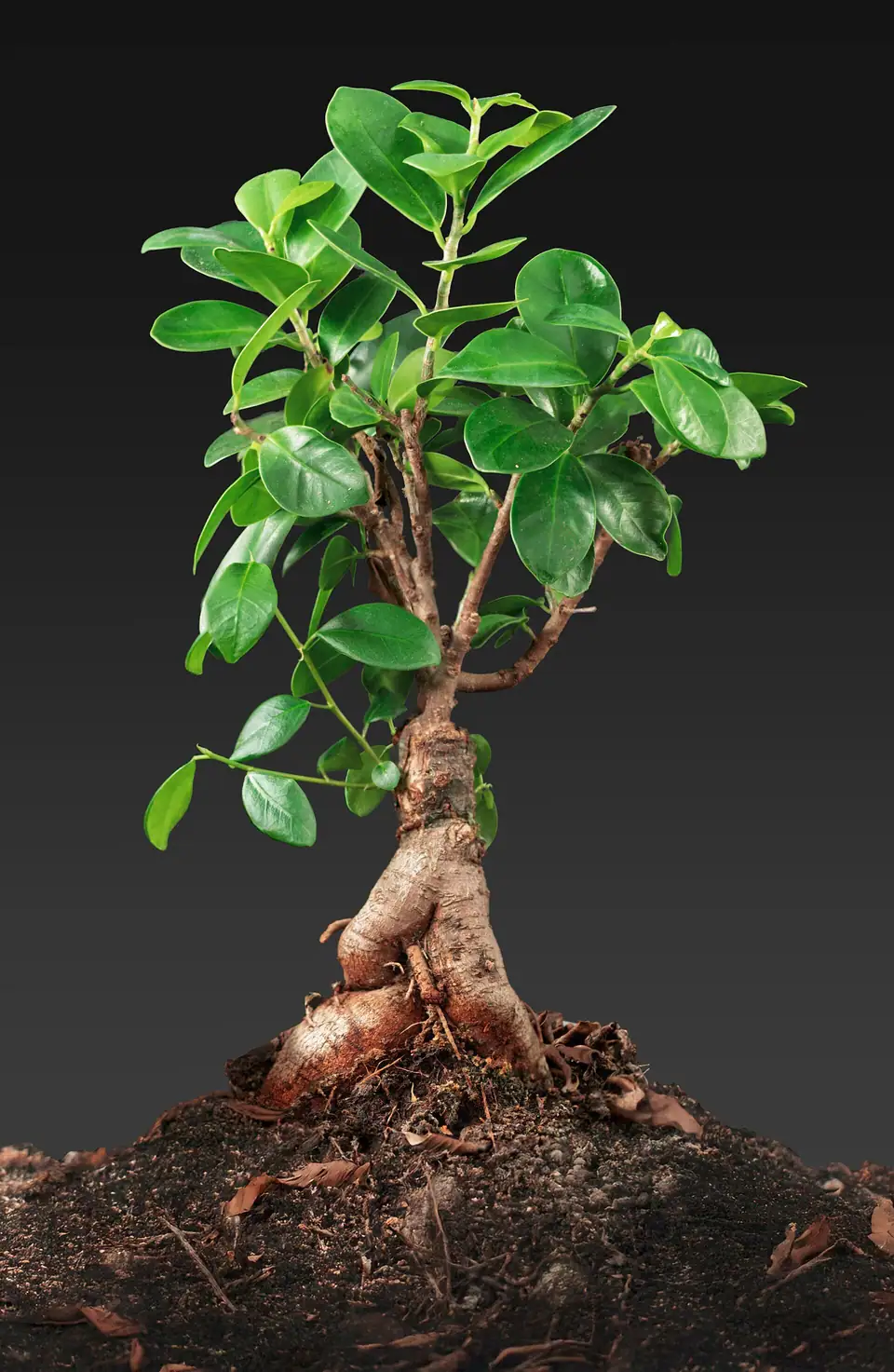
How to care for Ficus Ginseng
Ficus microcarpa · Moraceae
A bonsai-style ficus grafted or trained over swollen, ginseng-like exposed roots, sold as a ready-made miniature tree. It is genuinely tough, but its small pot dries fast and it shares the family habit of dropping leaves when moved or chilled. Water roughly every 6 days while it's growing (about every 10 in winter), give it bright, indirect light, kept above 55°F (13°C) — average room humidity suits it.
Care at a glance
The shallow bonsai pot dries quickly — water thoroughly when the surface dries, letting excess drain fully.
Bright indirect light near a window; it tolerates some direct sun once acclimated.
Dilute balanced or bonsai fertilizer every three weeks in the growing season.
Mistakes that kill this plant
- Forgetting how fast a bonsai pot dries out.
- A decorative container with no drainage hole slowly drowning the roots.
- Cold drafts stripping the canopy in winter.
Seasonal tips
- Trim new shoots back to two or three leaves through the growing season to keep the crown dense.
- It enjoys a bright, sheltered spot outdoors in summer.
- Keep it away from radiators; heat plus tiny pot equals rapid desiccation.
Is it safe for pets?
We have Ficus Ginseng recorded as toxic to cats and dogs.
Full pet-safety details for cats & dogsCare for your Ficus Ginseng on autopilot
Ploomily turns this guide into a Living Schedule — watering tuned to your city’s climate, the season, the pot and the light, and feeding tuned to that same pot, drainage and light, following the growing season and pausing while the plant rests. The founding price in force today is shown in full before you confirm, and locked for as long as you stay subscribed — with 30 days to change your mind.
Build my Living ScheduleFicus Ginseng is featured in
More tree plants
Toxicity here is informational, not a safety guarantee. Those are our own records, compiled by following the ASPCA's published toxic and non-toxic plant lists and Pet Poison Helpline's plant poison list rather than copied from them — confirm anything that matters against the ASPCA's published lists, which this one is matched to, or with your vet. If your pet ingested this plant, contact your vet or the ASPCA Animal Poison Control Center at (888) 426-4435.