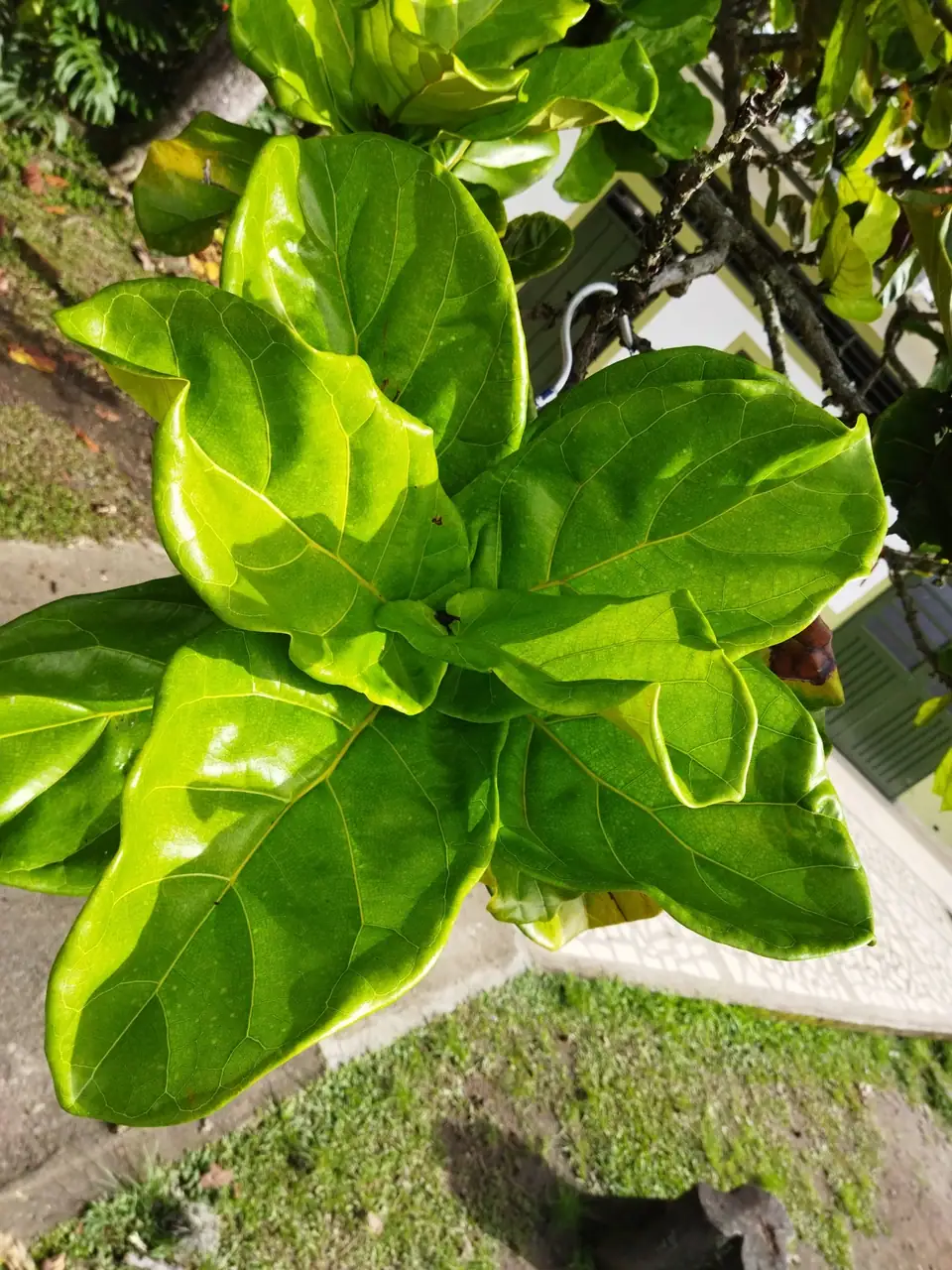
How to care for Fiddle Leaf Fig
Ficus lyrata · Moraceae
The interior-design darling with huge, violin-shaped leaves that can grow into a dramatic indoor tree. Its reputation for drama is earned: it wants strong consistent light, a settled routine, and no surprises — reward it and it grows fast and architectural. Water roughly every 8 days while it's growing (about every 14 in winter), give it bright, indirect light, kept above 55°F (13°C) — average room humidity suits it.
Care at a glance
Water deeply when the top 2 inches (5 cm) are dry and empty the saucer; it hates both soggy soil and erratic swings between soaked and parched.
Right beside a large bright window — a little gentle direct morning sun is a bonus — and don't keep moving it.
Balanced liquid fertilizer at half strength monthly through spring and summer.
Mistakes that kill this plant
- Parking it a few meters from the window — 'bright' to us is dim to a fiddle.
- Overwatering in response to every dropped leaf, accelerating root rot.
- Repeatedly relocating it, compounding stress until it defoliates.
Seasonal tips
- Rotate a quarter turn every few weeks so it grows straight toward the light.
- Wipe the broad leaves monthly — dust meaningfully cuts the light they can use.
- Expect a sulk (a dropped leaf or two) after any move; hold steady rather than changing more things.
Is it safe for pets?
We have Fiddle Leaf Fig recorded as toxic to cats and dogs.
Full pet-safety details for cats & dogsCare for your Fiddle Leaf Fig on autopilot
Ploomily turns this guide into a Living Schedule — watering tuned to your city’s climate, the season, the pot and the light, and feeding tuned to that same pot, drainage and light, following the growing season and pausing while the plant rests. The founding price in force today is shown in full before you confirm, and locked for as long as you stay subscribed — with 30 days to change your mind.
Build my Living ScheduleMore tree plants
Toxicity here is informational, not a safety guarantee. Those are our own records, compiled by following the ASPCA's published toxic and non-toxic plant lists and Pet Poison Helpline's plant poison list rather than copied from them — confirm anything that matters against the ASPCA's published lists, which this one is matched to, or with your vet. If your pet ingested this plant, contact your vet or the ASPCA Animal Poison Control Center at (888) 426-4435.