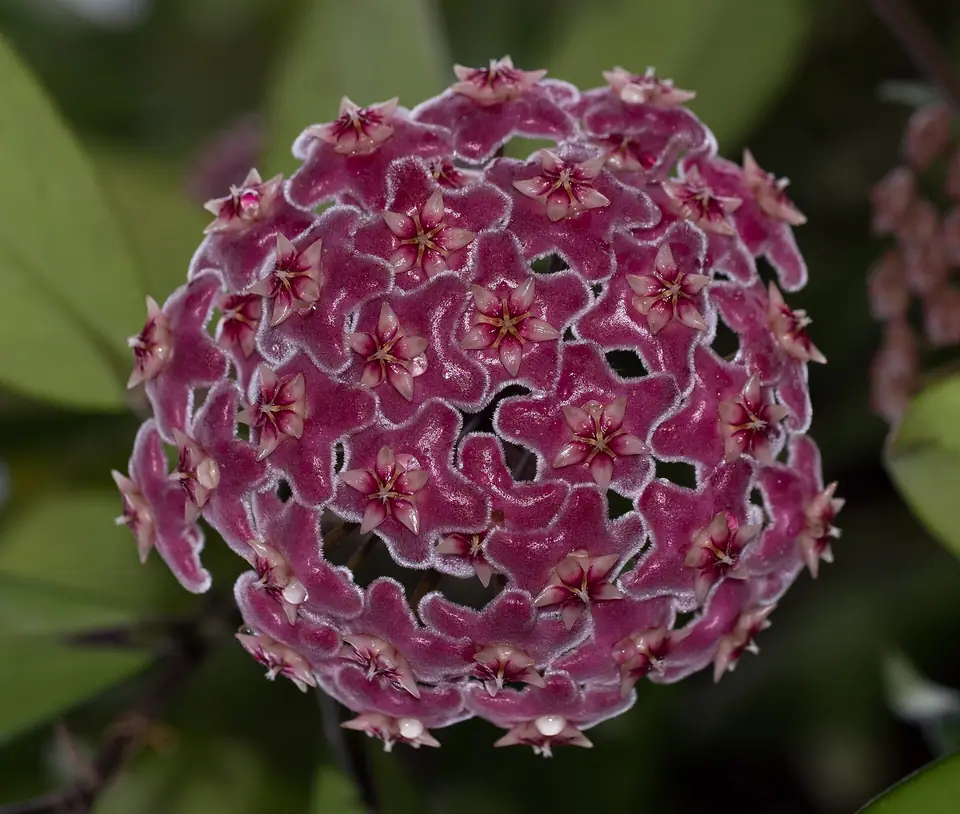
How to care for Hoya Pubicalyx
Hoya pubicalyx · Apocynaceae
One of the fastest and most forgiving hoyas, with lance-shaped leaves often splashed with silver flecks. Cultivars range from pink-flowered forms to the near-black blooms of 'Black Dragon'. Its vigor makes it a great first hoya — it forgives neglect and roots readily from cuttings. Water roughly every 8 days while it's growing (about every 16 in winter), give it bright, indirect light, kept above 50°F (10°C) — average room humidity suits it.
Care at a glance
Water when the top half of the mix has dried; it drinks faster than most hoyas when actively vining.
Bright indirect light brings out heavier silver splash; a little direct sun can blush the leaves purple.
Half-strength balanced fertilizer monthly while it is actively producing vines.
Mistakes that kill this plant
- Potting up into a much bigger pot of dense soil after seeing fast growth.
- Chronic overwatering in winter when growth has paused.
- Cutting off the bare vines and peduncles it needs for future leaves and flowers.
Seasonal tips
- Give the vigorous vines a trellis or hoop in spring before they tangle.
- Leave bare runner vines alone — they leaf out later and often carry the blooms.
- Ease off water in winter; it tolerates cool rooms if kept on the dry side.
Is it safe for pets?
Our records list Hoya Pubicalyx as non-toxic to cats and dogs.
Full pet-safety details for cats & dogsCare for your Hoya Pubicalyx on autopilot
Ploomily turns this guide into a Living Schedule — watering tuned to your city’s climate, the season, the pot and the light, and feeding tuned to that same pot, drainage and light, following the growing season and pausing while the plant rests. The founding price in force today is shown in full before you confirm, and locked for as long as you stay subscribed — with 30 days to change your mind.
Build my Living ScheduleHoya Pubicalyx is featured in
More vine plants
Toxicity here is informational, not a safety guarantee. Those are our own records, compiled by following the ASPCA's published toxic and non-toxic plant lists and Pet Poison Helpline's plant poison list rather than copied from them — confirm anything that matters against the ASPCA's published lists, which this one is matched to, or with your vet. If your pet ingested this plant, contact your vet or the ASPCA Animal Poison Control Center at (888) 426-4435.