How to care for Miniature Wax Plant
Hoya lanceolata subsp. bella · Apocynaceae
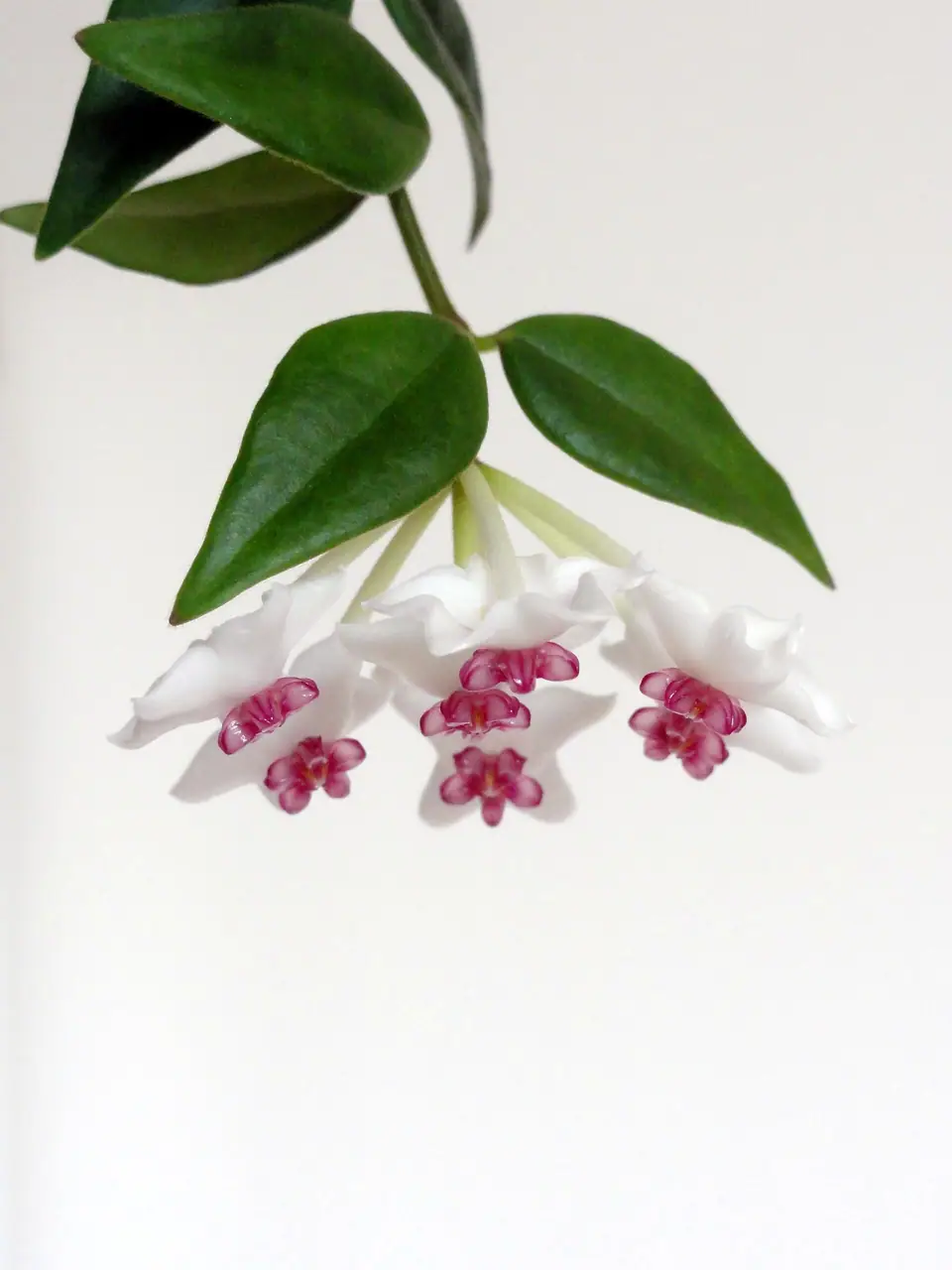
A dainty, cascading hoya with small pointed leaves on arching stems, ideal for hanging baskets. Its jasmine-scented white-and-purple flowers hang downward, best admired from below. Thinner-leaved than most hoyas, it needs slightly more frequent water and higher humidity to look its best. Water roughly every 7 days while it's growing (about every 14 in winter), give it bright, indirect light, kept above 54°F (12°C) — average room humidity suits it.
Care at a glance
Water when the top third of the mix dries; its thinner leaves store less water than other hoyas, so do not let it stay bone-dry for long.
Bright, filtered light without harsh direct sun; a bright bathroom or kitchen window suits it well.
Quarter-strength balanced fertilizer monthly while in active growth.
Mistakes that kill this plant
- Letting it dry out completely on a hot windowsill — it defoliates dramatically.
- Cold drafts or winter windows below about 12 C, which trigger leaf drop.
- Overwatering into a basket liner or saucer that never drains.
Seasonal tips
- Hang it where you can see under the plant in summer — the flowers face downward.
- Raise humidity or group it with other plants during heated winter months.
- Trim lightly after flowering to keep the cascade full and encourage branching.
Is it safe for pets?
We couldn’t place Miniature Wax Plant on a toxic or a non-toxic list, so its toxicity is unconfirmed — which is not the same as safe.
Full pet-safety details for cats & dogsCare for your Miniature Wax Plant on autopilot
Ploomily turns this guide into a Living Schedule — watering tuned to your city’s climate, the season, the pot and the light, and feeding tuned to that same pot, drainage and light, following the growing season and pausing while the plant rests. The founding price in force today is shown in full before you confirm, and locked for as long as you stay subscribed — with 30 days to change your mind.
Build my Living ScheduleMiniature Wax Plant is featured in
More vine plants
Toxicity here is informational, not a safety guarantee. Those are our own records, compiled by following the ASPCA's published toxic and non-toxic plant lists and Pet Poison Helpline's plant poison list rather than copied from them — confirm anything that matters against those lists or with your vet. If your pet ingested this plant, contact your vet or the ASPCA Animal Poison Control Center at (888) 426-4435.