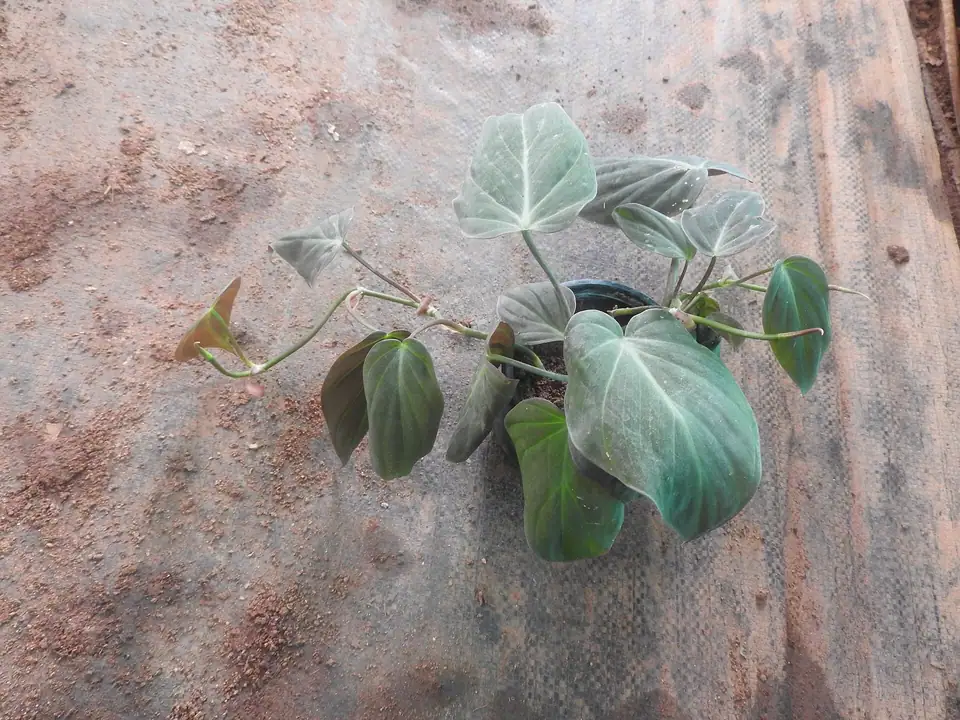
How to care for Philodendron Micans
Philodendron hederaceum var. hederaceum · Araceae
A velvet-leaved form of the heartleaf philodendron, with iridescent foliage that shifts between deep green, bronze, and burgundy depending on the light. It trails beautifully and shares the heartleaf's easygoing nature, though the velvety leaves are a bit fussier about harsh sun and very dry air. New leaves emerge a striking rosy bronze before darkening. Water roughly every 7 days while it's growing (about every 12 in winter), give it a bright room away from the window, kept above 55°F (13°C) — average room humidity suits it.
Care at a glance
Water when the top 1 inch (3 cm) dries; slight leaf droop and curl tell you it is ready.
Medium to bright indirect light deepens the velvet colours; direct sun bleaches and crisps the delicate leaves.
Half-strength balanced feed every 6 weeks in spring and summer.
Mistakes that kill this plant
- Overwatering a pot that gets little light.
- Placing it in direct afternoon sun.
- Sustained cold drafts that blacken the velvet leaves.
Seasonal tips
- Prune in spring — cuttings root effortlessly in water and thicken the parent pot.
- Shield from intensifying spring and summer sun through south windows.
- Reduce watering and skip fertilizer entirely in winter.
Is it safe for pets?
We have Philodendron Micans recorded as toxic to cats and dogs.
Full pet-safety details for cats & dogsCare for your Philodendron Micans on autopilot
Ploomily turns this guide into a Living Schedule — watering tuned to your city’s climate, the season, the pot and the light, and feeding tuned to that same pot, drainage and light, following the growing season and pausing while the plant rests. The founding price in force today is shown in full before you confirm, and locked for as long as you stay subscribed — with 30 days to change your mind.
Build my Living SchedulePhilodendron Micans is featured in
More vine plants
Toxicity here is informational, not a safety guarantee. Those are our own records, compiled by following the ASPCA's published toxic and non-toxic plant lists and Pet Poison Helpline's plant poison list rather than copied from them — confirm anything that matters against the ASPCA's published lists, which this one is matched to, or with your vet. If your pet ingested this plant, contact your vet or the ASPCA Animal Poison Control Center at (888) 426-4435.