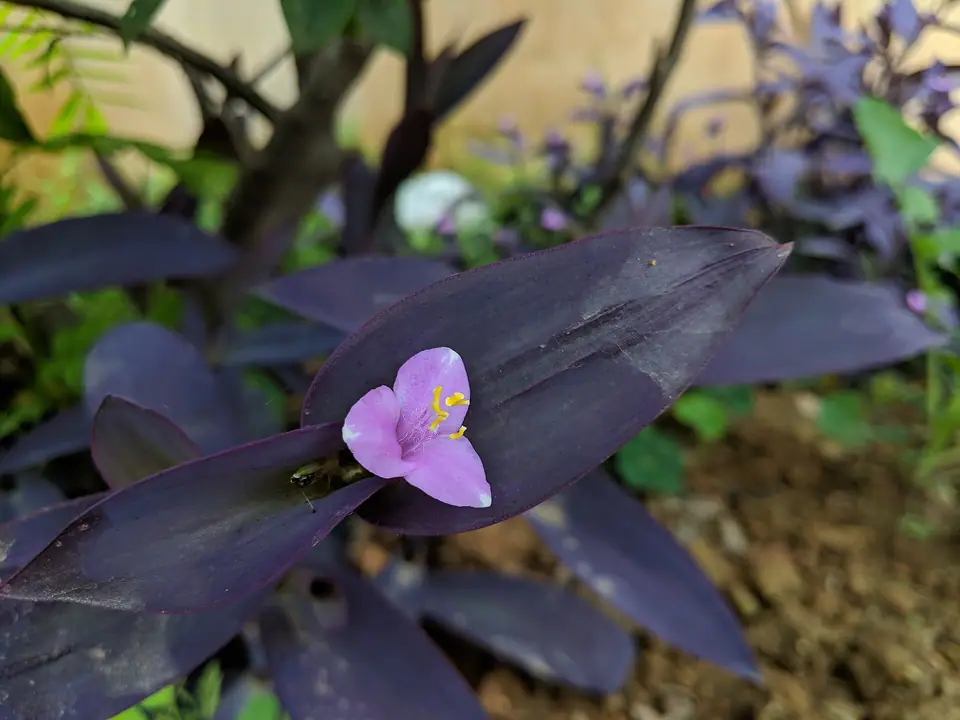
How to care for Purple Heart
Tradescantia pallida · Commelinaceae
A striking trailer with elongated leaves and stems in saturated royal purple, dotted with small pink flowers in warm months. It is drought-tolerant, sun-loving, and nearly indestructible with enough light. The more sun it receives, the deeper the purple becomes. Water roughly every 8 days while it's growing (about every 14 in winter), give it direct sun, kept above 50°F (10°C) — dry air is fine for it.
Care at a glance
Let the top half of the soil dry between waterings; the semi-succulent stems tolerate drought far better than wet feet.
Give it the sunniest spot you have; in weak light it fades toward gray-green and stretches.
Half-strength balanced fertilizer monthly in the growing season; it needs little.
Mistakes that kill this plant
- Overwatering a plant built for drought.
- Keeping it in shade until the purple and the structure are both gone.
- Handling roughly, snapping the brittle stems (though cuttings root easily).
Seasonal tips
- Move it to your brightest window, or outdoors in summer, for the deepest purple.
- Pinch tips regularly; the brittle stems branch readily below every break.
- Water sparingly in winter, almost like a succulent.
Is it safe for pets?
We have Purple Heart recorded as toxic to cats and dogs.
Full pet-safety details for cats & dogsCare for your Purple Heart on autopilot
Ploomily turns this guide into a Living Schedule — watering tuned to your city’s climate, the season, the pot and the light, and feeding tuned to that same pot, drainage and light, following the growing season and pausing while the plant rests. The founding price in force today is shown in full before you confirm, and locked for as long as you stay subscribed — with 30 days to change your mind.
Build my Living SchedulePurple Heart is featured in
More vine plants
Toxicity here is informational, not a safety guarantee. Those are our own records, compiled by following the ASPCA's published toxic and non-toxic plant lists and Pet Poison Helpline's plant poison list rather than copied from them — confirm anything that matters against those lists or with your vet. If your pet ingested this plant, contact your vet or the ASPCA Animal Poison Control Center at (888) 426-4435.