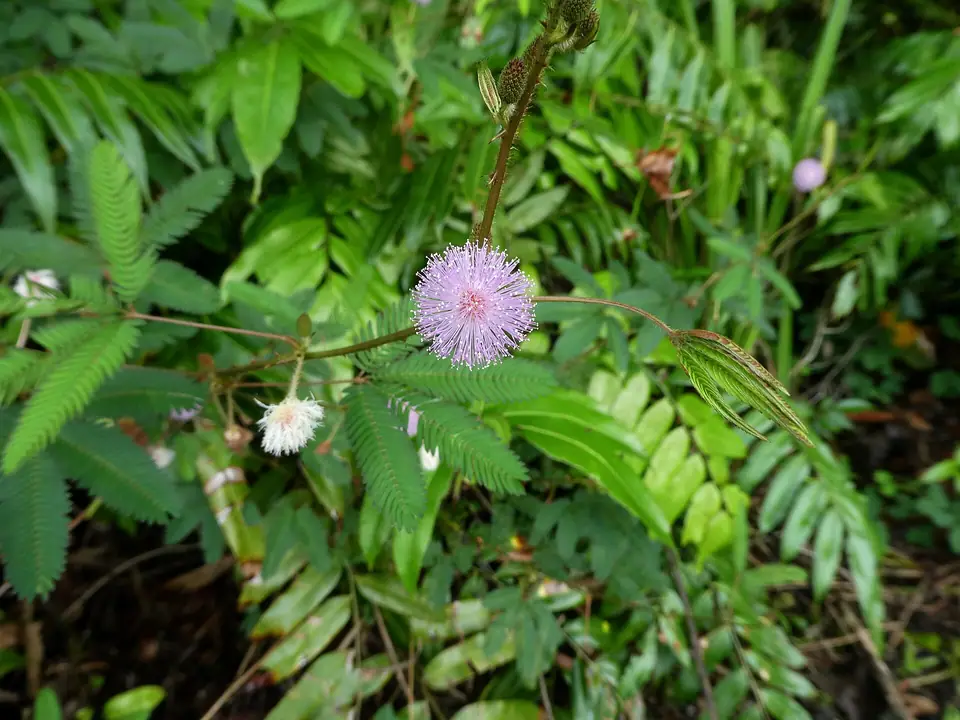
How to care for Sensitive Plant
Mimosa pudica · Fabaceae
The famous touch-me-not, whose ferny leaflets fold shut in seconds when tapped and reopen minutes later. It is a fast, fun plant — especially with kids — that wants warmth, sun, and steady moisture, and is honestly at its best treated as an easy-from-seed annual indoors. Water roughly every 3 days while it's growing (about every 6 in winter), give it direct sun, kept above 61°F (16°C) — it wants humid air.
Care at a glance
Keep the soil consistently moist but not waterlogged; it wilts dramatically and drops leaflets if allowed to dry.
A sunny windowsill with several hours of direct light; in shade it stretches thin and folds sluggishly.
Half-strength balanced fertilizer every three weeks in the growing season — as a legume it needs little nitrogen.
Mistakes that kill this plant
- Letting the pot dry out repeatedly until the plant is bare stems.
- A cold windowsill in winter — chill is usually the end of it.
- Expecting a perennial: indoors it naturally declines after a year or two; save seed instead.
Seasonal tips
- Sow fresh seed each spring (nick and soak it first) — young plants outperform overwintered ones.
- Leaves also fold at night; that's its normal sleep movement, not distress.
- Poke it sparingly: every folding costs energy, and constant handling weakens the plant.
Is it safe for pets?
We couldn’t place Sensitive Plant on a toxic or a non-toxic list, so its toxicity is unconfirmed — which is not the same as safe.
Full pet-safety details for cats & dogsCare for your Sensitive Plant on autopilot
Ploomily turns this guide into a Living Schedule — watering tuned to your city’s climate, the season, the pot and the light, and feeding tuned to that same pot, drainage and light, following the growing season and pausing while the plant rests. The founding price in force today is shown in full before you confirm, and locked for as long as you stay subscribed — with 30 days to change your mind.
Build my Living ScheduleSensitive Plant is featured in
More other plants
Toxicity here is informational, not a safety guarantee. Those are our own records, compiled by following the ASPCA's published toxic and non-toxic plant lists and Pet Poison Helpline's plant poison list rather than copied from them — confirm anything that matters against those lists or with your vet. If your pet ingested this plant, contact your vet or the ASPCA Animal Poison Control Center at (888) 426-4435.