How to care for Tropical Pitcher Plant
Nepenthes × ventrata · Nepenthaceae
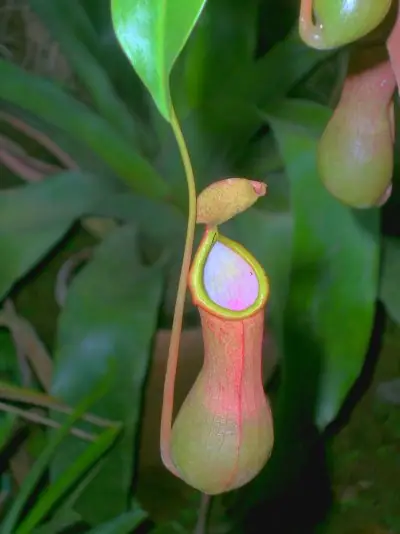
A vining carnivore that dangles jug-shaped pitchers from the tips of its leaves, each one a passive insect trap holding real digestive fluid. This hybrid is the toughest of its tribe and does well in a bright window or hanging basket with pure water and decent humidity. Water roughly every 3 days while it's growing (about every 5 in winter), give it bright, indirect light, kept above 55°F (13°C) — it wants humid air.
Care at a glance
Keep the airy sphagnum-based mix evenly moist with distilled or rainwater; unlike a flytrap, never leave it standing in water.
Very bright indirect light with a little gentle direct sun; deep shade means no new pitchers.
Skip soil fertilizer; it feeds itself through the pitchers — the occasional insect dropped in is a bonus.
Mistakes that kill this plant
- Watering with hard tap water until the roots burn.
- Letting the pot sit in a full saucer like a bog plant — this one wants moist, not flooded.
- Keeping it in dry, dim conditions where it slowly stops pitchering and declines.
Seasonal tips
- If new leaves stop making pitchers, raise humidity and light — those are the usual levers.
- Old pitchers browning from the top down is natural; trim them once fully dry.
- Prune leggy vines in spring; it back-buds and often pitchers better on the regrowth.
Is it safe for pets?
We couldn’t place Tropical Pitcher Plant on a toxic or a non-toxic list, so its toxicity is unconfirmed — which is not the same as safe.
Full pet-safety details for cats & dogsCare for your Tropical Pitcher Plant on autopilot
Ploomily turns this guide into a Living Schedule — watering tuned to your city’s climate, the season, the pot and the light, and feeding tuned to that same pot, drainage and light, following the growing season and pausing while the plant rests. The founding price in force today is shown in full before you confirm, and locked for as long as you stay subscribed — with 30 days to change your mind.
Build my Living ScheduleTropical Pitcher Plant is featured in
More other plants
Toxicity here is informational, not a safety guarantee. Those are our own records, compiled by following the ASPCA's published toxic and non-toxic plant lists and Pet Poison Helpline's plant poison list rather than copied from them — confirm anything that matters against those lists or with your vet. If your pet ingested this plant, contact your vet or the ASPCA Animal Poison Control Center at (888) 426-4435.