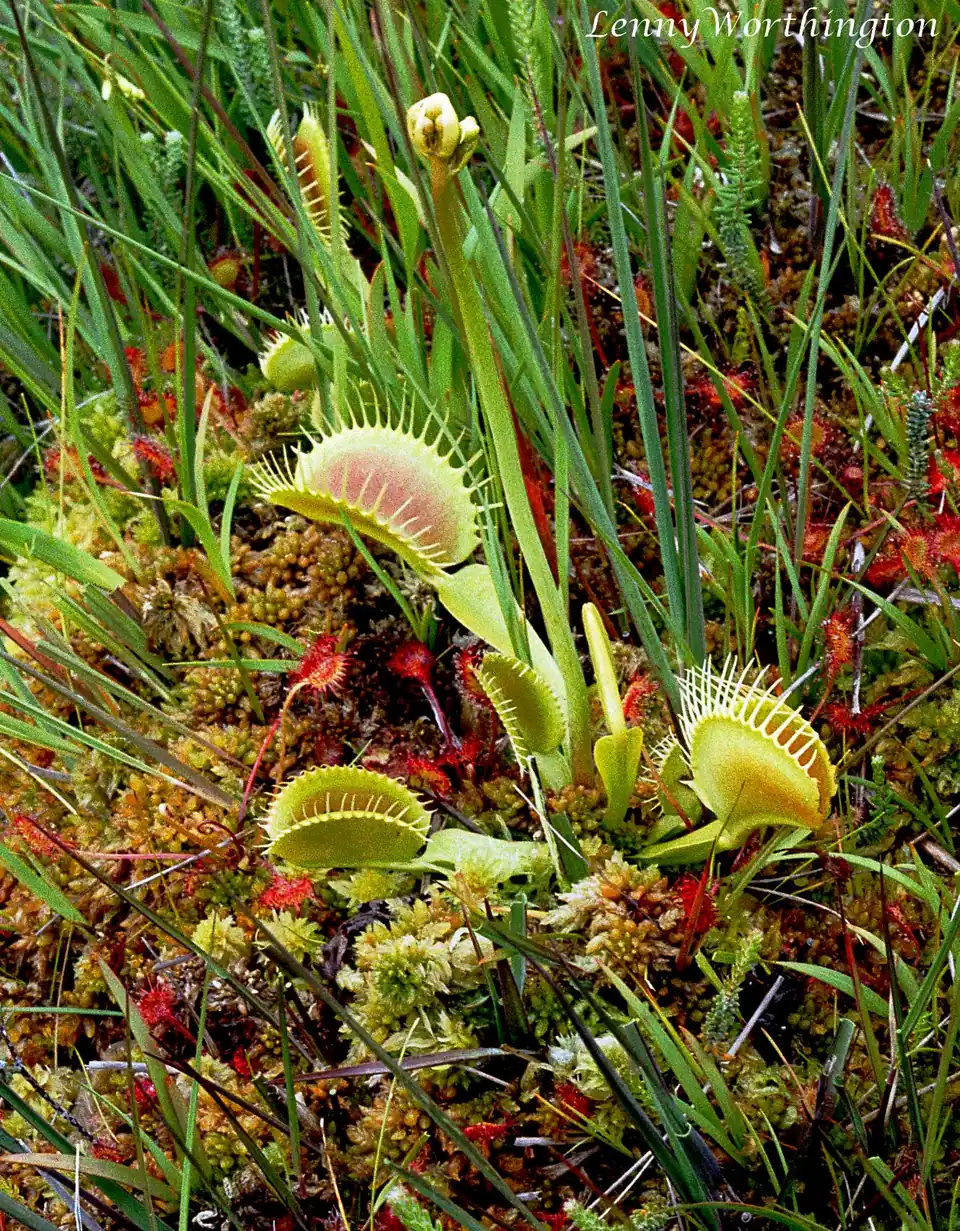
How to care for Venus Flytrap
Dionaea muscipula · Droseraceae
The world's most famous carnivorous plant, native to a tiny patch of Carolina bog, snapping shut on insects with jaw-like traps. It is very keepable once you accept its three non-negotiables: pure water, full sun, and a genuine cold winter dormancy. Water roughly every 3 days while it's growing (about every 7 in winter), give it direct sun, kept above 36°F (2°C) — average room humidity suits it.
Care at a glance
Keep constantly moist with distilled, reverse-osmosis, or rainwater only — stand the pot in 0.5–1 inches (1-2 cm) of pure water in summer; tap water minerals are fatal.
Four or more hours of direct sun on the sunniest sill you have, or strong grow lights; weak light means weak, floppy traps.
Never fertilize the soil — it catches its own nutrition; a couple of insects a month is plenty.
Mistakes that kill this plant
- Watering with tap or mineral water — the number one flytrap killer.
- Skipping winter dormancy in a warm room until it exhausts itself, usually within two years.
- Playing with the traps for fun; each false closure wastes serious energy.
Seasonal tips
- Give it a cold dormancy (roughly 2-10 C) from late autumn to late winter — a chilly windowsill, garage, or porch works.
- Traps blackening in autumn is normal die-back, not disease; trim the dead ones.
- Cut the flower stalk in spring unless you want seed — flowering drains a small plant badly.
Is it safe for pets?
Our records list Venus Flytrap as non-toxic to cats and dogs.
Full pet-safety details for cats & dogsCare for your Venus Flytrap on autopilot
Ploomily turns this guide into a Living Schedule — watering tuned to your city’s climate, the season, the pot and the light, and feeding tuned to that same pot, drainage and light, following the growing season and pausing while the plant rests. The founding price in force today is shown in full before you confirm, and locked for as long as you stay subscribed — with 30 days to change your mind.
Build my Living ScheduleVenus Flytrap is featured in
More other plants
Toxicity here is informational, not a safety guarantee. Those are our own records, compiled by following the ASPCA's published toxic and non-toxic plant lists and Pet Poison Helpline's plant poison list rather than copied from them — confirm anything that matters against the ASPCA's published lists, which this one is matched to, or with your vet. If your pet ingested this plant, contact your vet or the ASPCA Animal Poison Control Center at (888) 426-4435.