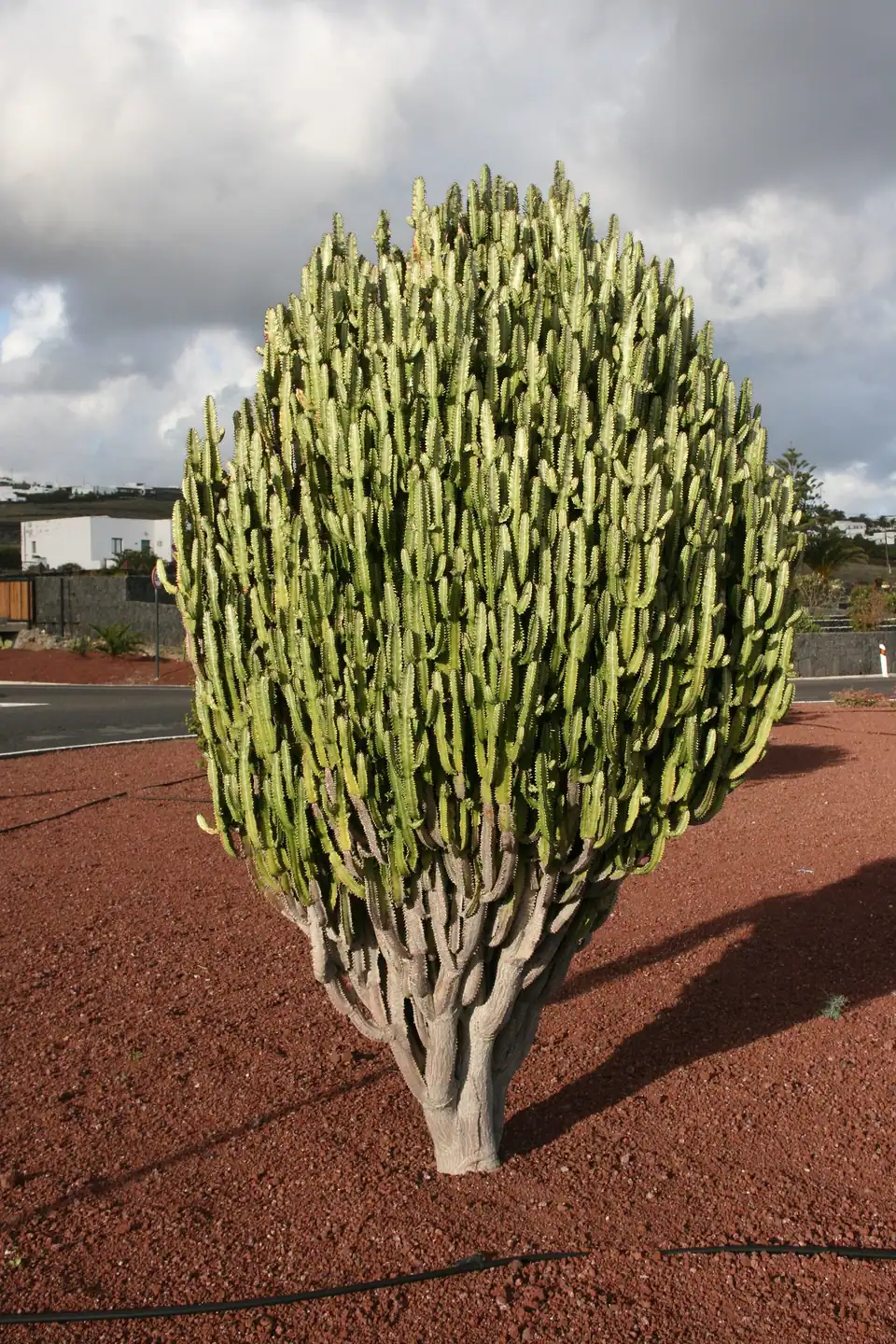
How to care for African Milk Tree
Euphorbia trigona · Euphorbiaceae
An upright, candelabra-branching euphorbia with three-angled stems lined by small teardrop leaves and paired thorns — a convincing cactus impersonator from central Africa. It can reach ceiling height indoors over the years while staying elegantly narrow. Like all euphorbias, its white sap is caustic, so treat cuts and pruning with respect. Water roughly every 14 days while it's growing (about every 30 in winter), give it direct sun, kept above 50°F (10°C) — dry air is fine for it.
Care at a glance
Water well when the soil is fully dry; leaf drop plus wrinkled stem ridges means too dry, yellowing means too wet.
It grows sturdiest with several hours of direct sun; it tolerates bright indirect light but new growth becomes thin and lean-prone.
Monthly half-strength balanced fertilizer in the warm months keeps growth steady.
Mistakes that kill this plant
- Overwatering until the base liquefies under a still-green top.
- Repotting or pruning without gloves — the sap burns skin and eyes.
- Letting a top-heavy plant stand in a light plastic pot until it crashes over.
Seasonal tips
- Rotate the pot a quarter turn weekly so the columns grow straight.
- Stake or top very tall plants in spring — beheaded stems branch and cuttings root.
- Water sparingly in winter; dropped leaves in the dark months are normal.
Is it safe for pets?
We have African Milk Tree recorded as toxic to cats and dogs.
Full pet-safety details for cats & dogsCare for your African Milk Tree on autopilot
Ploomily turns this guide into a Living Schedule — watering tuned to your city’s climate, the season, the pot and the light, and feeding tuned to that same pot, drainage and light, following the growing season and pausing while the plant rests. The founding price in force today is shown in full before you confirm, and locked for as long as you stay subscribed — with 30 days to change your mind.
Build my Living ScheduleAfrican Milk Tree is featured in
More succulent plants
Toxicity here is informational, not a safety guarantee. Those are our own records, compiled by following the ASPCA's published toxic and non-toxic plant lists and Pet Poison Helpline's plant poison list rather than copied from them — confirm anything that matters against those lists or with your vet. If your pet ingested this plant, contact your vet or the ASPCA Animal Poison Control Center at (888) 426-4435.