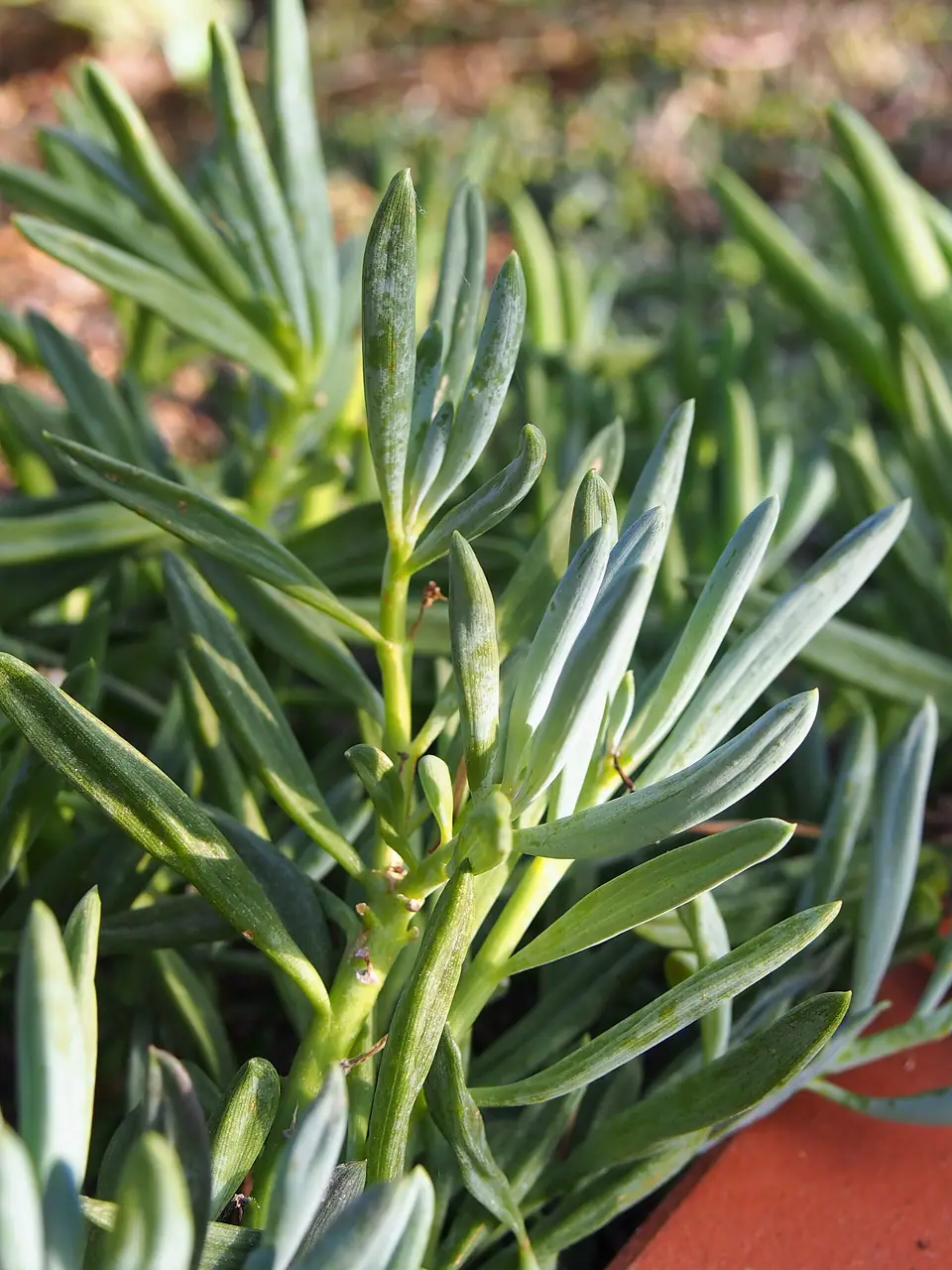
How to care for Blue Chalksticks
Curio repens · Asteraceae
A ground-covering succulent with upright, finger-like leaves in a striking powdery blue, formerly Senecio serpens. The chalky coating (farina) is its sunscreen and best feature — avoid touching or spraying the leaves. It is drought-proof and easygoing given plenty of sun. Water roughly every 14 days while it's growing (about every 30 in winter), give it direct sun, kept above 41°F (5°C) — dry air is fine for it.
Care at a glance
Water at soil level only when fully dry; avoid wetting the leaves so the powdery blue coating stays intact.
Direct sun for much of the day keeps the color intensely blue and the growth compact.
Diluted cactus fertilizer once or twice a season at most.
Mistakes that kill this plant
- Watering frequently — this plant genuinely prefers to be forgotten.
- Low light, which ruins the compact blue columns within weeks.
- Misting or overhead watering that strips the protective coating.
Seasonal tips
- Handle by the pot, never the leaves — fingerprints in the farina are permanent.
- Keep it barely watered and bright in winter.
- Prune sprawling stems in spring; cuttings root easily in dry, gritty mix.
Is it safe for pets?
We have Blue Chalksticks recorded as toxic to cats and dogs.
Full pet-safety details for cats & dogsCare for your Blue Chalksticks on autopilot
Ploomily turns this guide into a Living Schedule — watering tuned to your city’s climate, the season, the pot and the light, and feeding tuned to that same pot, drainage and light, following the growing season and pausing while the plant rests. The founding price in force today is shown in full before you confirm, and locked for as long as you stay subscribed — with 30 days to change your mind.
Build my Living ScheduleBlue Chalksticks is featured in
More succulent plants
Toxicity here is informational, not a safety guarantee. Those are our own records, compiled by following the ASPCA's published toxic and non-toxic plant lists and Pet Poison Helpline's plant poison list rather than copied from them — confirm anything that matters against the ASPCA's published lists, which this one is matched to, or with your vet. If your pet ingested this plant, contact your vet or the ASPCA Animal Poison Control Center at (888) 426-4435.