How to care for Ghost Plant
Graptopetalum paraguayense · Crassulaceae
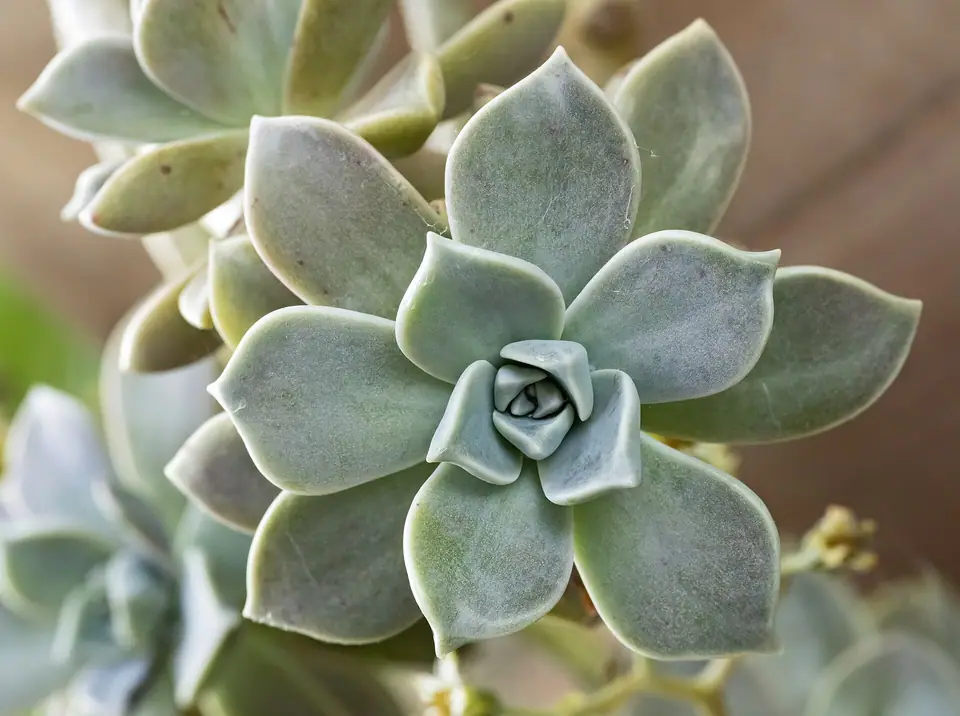
A trailing Mexican succulent with pale, opalescent rosettes that shift between grey, lavender, and pink depending on light and stress. Its powdery farina coating gives it the ghostly look — and fingerprints on it are permanent. Stems lengthen and cascade over pot edges, and every dropped leaf tends to sprout a new plant. Water roughly every 14 days while it's growing (about every 30 in winter), give it direct sun, kept above 45°F (7°C) — dry air is fine for it.
Care at a glance
Soak the soil completely once it is fully dry, then leave it alone; wrinkled lower leaves are your cue.
Direct sun for several hours daily keeps rosettes tight and brings out the pink tones; a bare bright windowsill suits it perfectly.
A couple of quarter-strength cactus feeds per growing season is all it wants.
Mistakes that kill this plant
- Chronic overwatering in a peat-heavy mix.
- Growing it far from a window until it collapses into stretched fragments.
- Handling the leaves constantly, which strips the protective powder and invites scarring.
Seasonal tips
- Behead leggy stems in spring and re-root the rosettes for a fuller pot.
- Cool, bright, dry winters deepen the lavender-pink coloring.
- Let fallen leaves lie on the soil — most will root into free plants.
Is it safe for pets?
Our records list Ghost Plant as non-toxic to cats and dogs.
Full pet-safety details for cats & dogsCare for your Ghost Plant on autopilot
Ploomily turns this guide into a Living Schedule — watering tuned to your city’s climate, the season, the pot and the light, and feeding tuned to that same pot, drainage and light, following the growing season and pausing while the plant rests. The founding price in force today is shown in full before you confirm, and locked for as long as you stay subscribed — with 30 days to change your mind.
Build my Living ScheduleGhost Plant is featured in
More succulent plants
Toxicity here is informational, not a safety guarantee. Those are our own records, compiled by following the ASPCA's published toxic and non-toxic plant lists and Pet Poison Helpline's plant poison list rather than copied from them — confirm anything that matters against the ASPCA's published lists, which this one is matched to, or with your vet. If your pet ingested this plant, contact your vet or the ASPCA Animal Poison Control Center at (888) 426-4435.