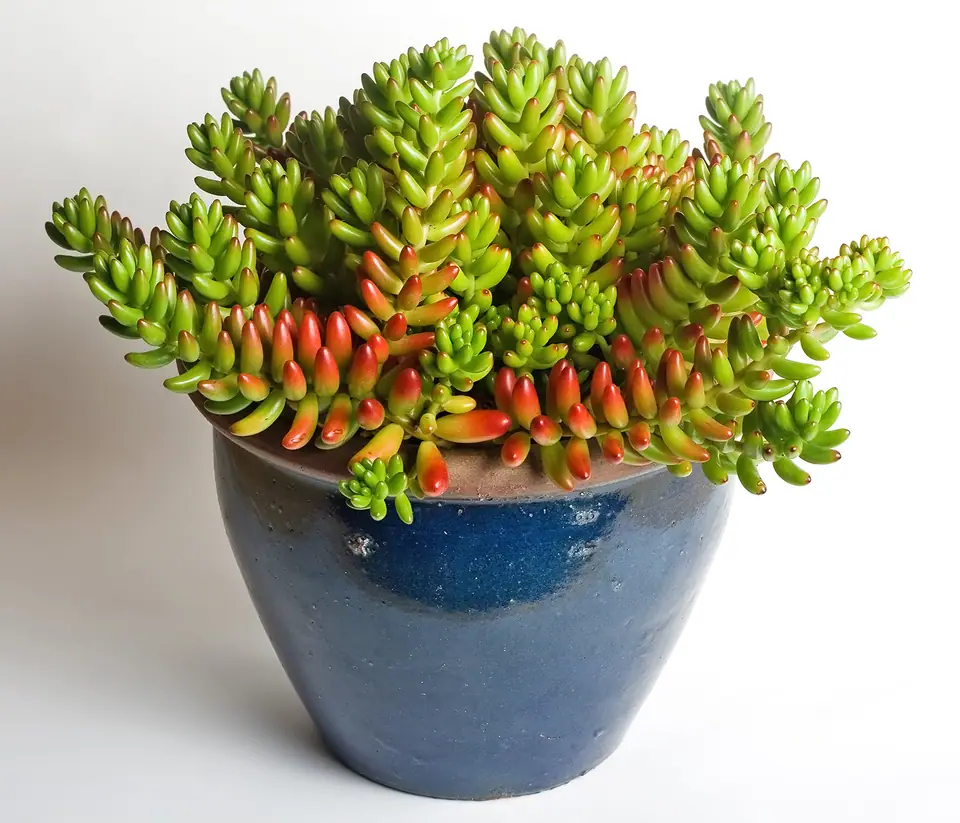
How to care for Jelly Bean Plant
Sedum rubrotinctum · Crassulaceae
A cheerful little sedum with glossy, bean-shaped leaves that flush red at the tips in bright sun and stress. It is tough, fast, and effortless to propagate — dropped leaves root where they land. The red 'jelly bean' coloring is a badge of good light; all-green plants are asking for a sunnier spot. Water roughly every 12 days while it's growing (about every 28 in winter), give it direct sun, kept above 41°F (5°C) — dry air is fine for it.
Care at a glance
Water deeply after the soil has been dry for a few days; wrinkled beans mean thirst, dropped translucent beans mean too much.
Direct sun for at least half the day brings out the red tips; it survives less light but turns plain green and leggy.
Diluted cactus fertilizer once or twice a season — it needs very little.
Mistakes that kill this plant
- Frequent watering — this plant thrives on benign neglect.
- Low light, which permanently stretches the compact bean clusters.
- Poorly draining soil in a decorative pot with no drainage hole.
Seasonal tips
- Deepest red coloring comes from sun plus cool nights and lean watering.
- Prune leggy stems in spring — tops and even single beans re-root easily.
- Keep it nearly dry in winter; it tolerates cool rooms well.
Is it safe for pets?
We couldn’t place Jelly Bean Plant on a toxic or a non-toxic list, so its toxicity is unconfirmed — which is not the same as safe.
Full pet-safety details for cats & dogsCare for your Jelly Bean Plant on autopilot
Ploomily turns this guide into a Living Schedule — watering tuned to your city’s climate, the season, the pot and the light, and feeding tuned to that same pot, drainage and light, following the growing season and pausing while the plant rests. The founding price in force today is shown in full before you confirm, and locked for as long as you stay subscribed — with 30 days to change your mind.
Build my Living ScheduleJelly Bean Plant is featured in
More succulent plants
Toxicity here is informational, not a safety guarantee. Those are our own records, compiled by following the ASPCA's published toxic and non-toxic plant lists and Pet Poison Helpline's plant poison list rather than copied from them — confirm anything that matters against those lists or with your vet. If your pet ingested this plant, contact your vet or the ASPCA Animal Poison Control Center at (888) 426-4435.