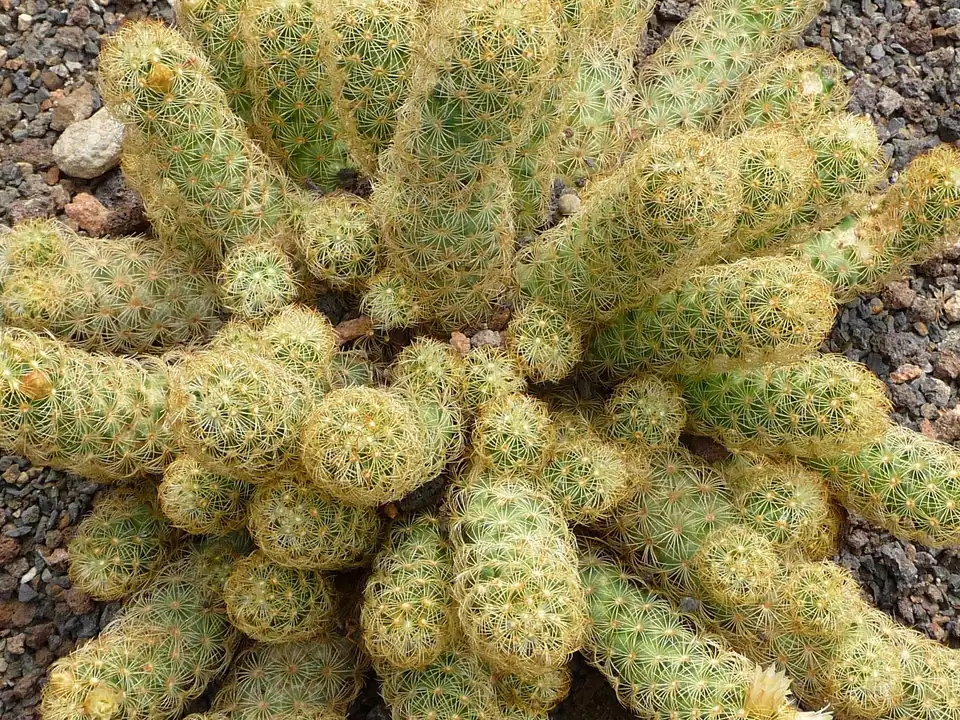
How to care for Ladyfinger Cactus
Mammillaria elongata · Cactaceae
Clusters of slender golden-spined columns that sprawl and offset into a charming tangle of 'fingers' over the years. It is tough, fast for a cactus, and very forgiving as long as it gets sun and dry feet. Pale yellow spring flowers appear along the stems on well-rested plants. Water roughly every 14 days while it's growing (about every 35 in winter), give it direct sun, kept above 45°F (7°C) — dry air is fine for it.
Care at a glance
Soak thoroughly once the mix is fully dry; the clustered stems shrivel slightly when truly thirsty, which is your cue.
Direct sun for at least four hours keeps the fingers dense, upright, and richly colored.
Dilute cactus fertilizer a few times through the warm months.
Mistakes that kill this plant
- Constantly moist soil — the clump rots invisibly from its crowded center.
- Dim placement that turns the fingers floppy and pale.
- Leaving it outside in a cold rain and then bringing it in wet.
Seasonal tips
- Rest it cool and dry over winter for the best spring bloom.
- Broken fingers root easily — let them callus a few days, then set them on dry cactus mix.
- Refresh the soil every few years; congested clumps appreciate a slightly wider, shallow pot.
Is it safe for pets?
We couldn’t place Ladyfinger Cactus on a toxic or a non-toxic list, so its toxicity is unconfirmed — which is not the same as safe.
Full pet-safety details for cats & dogsCare for your Ladyfinger Cactus on autopilot
Ploomily turns this guide into a Living Schedule — watering tuned to your city’s climate, the season, the pot and the light, and feeding tuned to that same pot, drainage and light, following the growing season and pausing while the plant rests. The founding price in force today is shown in full before you confirm, and locked for as long as you stay subscribed — with 30 days to change your mind.
Build my Living ScheduleLadyfinger Cactus is featured in
More cactus plants
Toxicity here is informational, not a safety guarantee. Those are our own records, compiled by following the ASPCA's published toxic and non-toxic plant lists and Pet Poison Helpline's plant poison list rather than copied from them — confirm anything that matters against those lists or with your vet. If your pet ingested this plant, contact your vet or the ASPCA Animal Poison Control Center at (888) 426-4435.