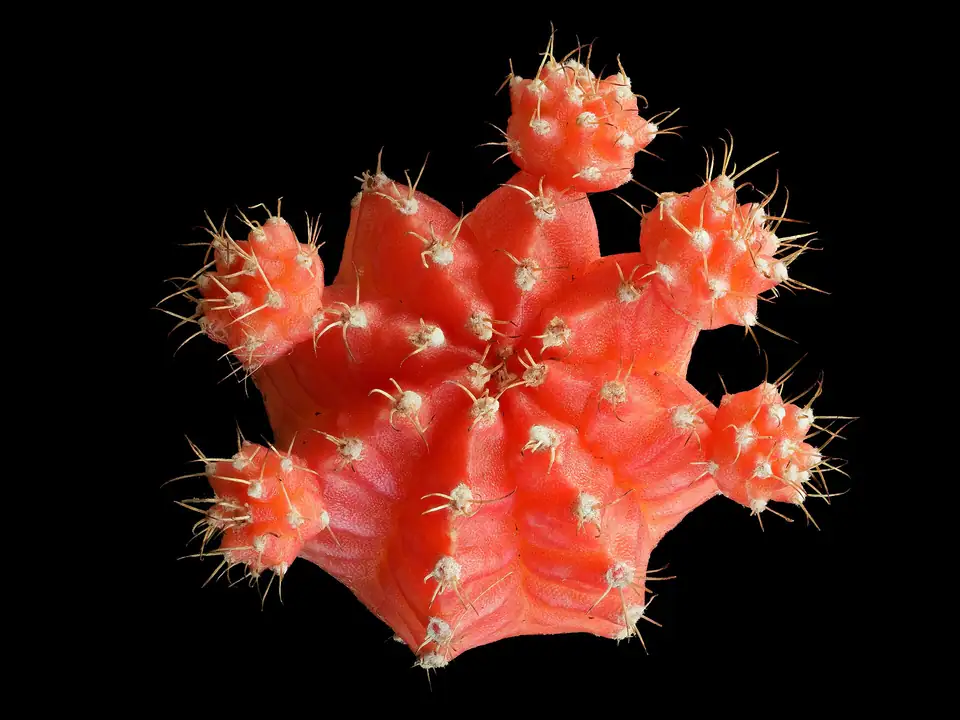
How to care for Moon Cactus
Gymnocalycium mihanovichii · Cactaceae
The neon-colored ball on top is a mutant Gymnocalycium with no chlorophyll of its own, grafted onto a green rootstock (usually Hylocereus) that feeds it. That dependence makes it a naturally short-lived novelty — a few good years is normal. It is charming, inexpensive, and a fun introduction to grafted plants. Water roughly every 14 days while it's growing (about every 30 in winter), give it bright, indirect light, kept above 50°F (10°C) — dry air is fine for it.
Care at a glance
Water when the soil is fully dry, wetting the soil only — water pooling at the graft union invites rot.
Bright light without harsh direct sun — the colored scion lacks chlorophyll and sunburns easily.
Half-strength cactus fertilizer sparingly, two or three times per season.
Mistakes that kill this plant
- Cold, wet winters that rot the frost-tender rootstock.
- Full direct sun, which cooks the colorful top.
- Expecting immortality — the graft naturally fails after some years, and that is not your fault.
Seasonal tips
- Keep it warmer in winter than other cacti — the rootstock dislikes cold below about 10 C.
- Reduce watering in winter but do not let the tropical rootstock desiccate entirely.
- If the scion outlives its rootstock, it can be re-grafted onto a fresh column.
Is it safe for pets?
We couldn’t place Moon Cactus on a toxic or a non-toxic list, so its toxicity is unconfirmed — which is not the same as safe.
Full pet-safety details for cats & dogsCare for your Moon Cactus on autopilot
Ploomily turns this guide into a Living Schedule — watering tuned to your city’s climate, the season, the pot and the light, and feeding tuned to that same pot, drainage and light, following the growing season and pausing while the plant rests. The founding price in force today is shown in full before you confirm, and locked for as long as you stay subscribed — with 30 days to change your mind.
Build my Living ScheduleMore cactus plants
Toxicity here is informational, not a safety guarantee. Those are our own records, compiled by following the ASPCA's published toxic and non-toxic plant lists and Pet Poison Helpline's plant poison list rather than copied from them — confirm anything that matters against those lists or with your vet. If your pet ingested this plant, contact your vet or the ASPCA Animal Poison Control Center at (888) 426-4435.