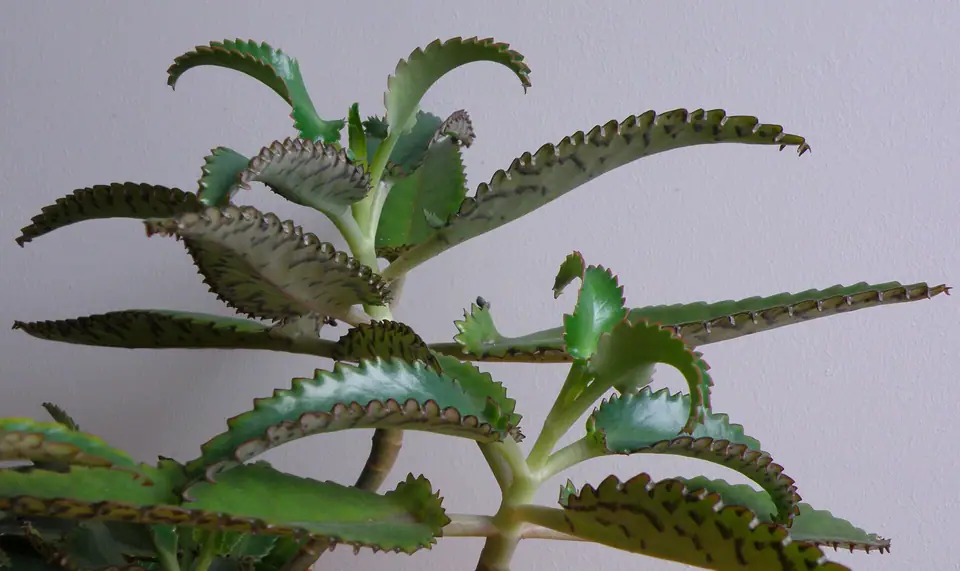
How to care for Mother of Thousands
Kalanchoe daigremontiana · Crassulaceae
Famous for the rows of tiny plantlets that sprout along its serrated leaf edges, this Madagascan succulent practically propagates itself — every plantlet that drops can root where it lands. Its upright stems and arrow-shaped mottled leaves grow fast in good light. Nearly unkillable, though its enthusiasm for spreading means keeping stray babies in check. Water roughly every 12 days while it's growing (about every 28 in winter), give it direct sun, kept above 50°F (10°C) — dry air is fine for it.
Care at a glance
Let the top half of the soil dry between waterings, then water thoroughly until it drains.
A few hours of direct sun keeps stems sturdy and brings out the purple leaf mottling; it tolerates bright indirect light but stretches.
Half-strength balanced fertilizer monthly in the growing season — it needs little.
Mistakes that kill this plant
- Cold, wet winter conditions — the combination rots it fast.
- Letting pets nibble fallen plantlets, which carry the same toxins as the parent.
- Growing it in deep shade until the tall stem snaps under its own weight.
Seasonal tips
- Pot up dropped plantlets in spring or discard them before they colonize neighboring pots.
- Pinch the growing tip in summer to keep the plant from getting top-heavy and leggy.
- Water sparingly in winter — it pauses growth in short days.
Is it safe for pets?
We have Mother of Thousands recorded as toxic to cats and dogs.
Full pet-safety details for cats & dogsCare for your Mother of Thousands on autopilot
Ploomily turns this guide into a Living Schedule — watering tuned to your city’s climate, the season, the pot and the light, and feeding tuned to that same pot, drainage and light, following the growing season and pausing while the plant rests. The founding price in force today is shown in full before you confirm, and locked for as long as you stay subscribed — with 30 days to change your mind.
Build my Living ScheduleMother of Thousands is featured in
More succulent plants
Toxicity here is informational, not a safety guarantee. Those are our own records, compiled by following the ASPCA's published toxic and non-toxic plant lists and Pet Poison Helpline's plant poison list rather than copied from them — confirm anything that matters against the ASPCA's published lists, which this one is matched to, or with your vet. If your pet ingested this plant, contact your vet or the ASPCA Animal Poison Control Center at (888) 426-4435.