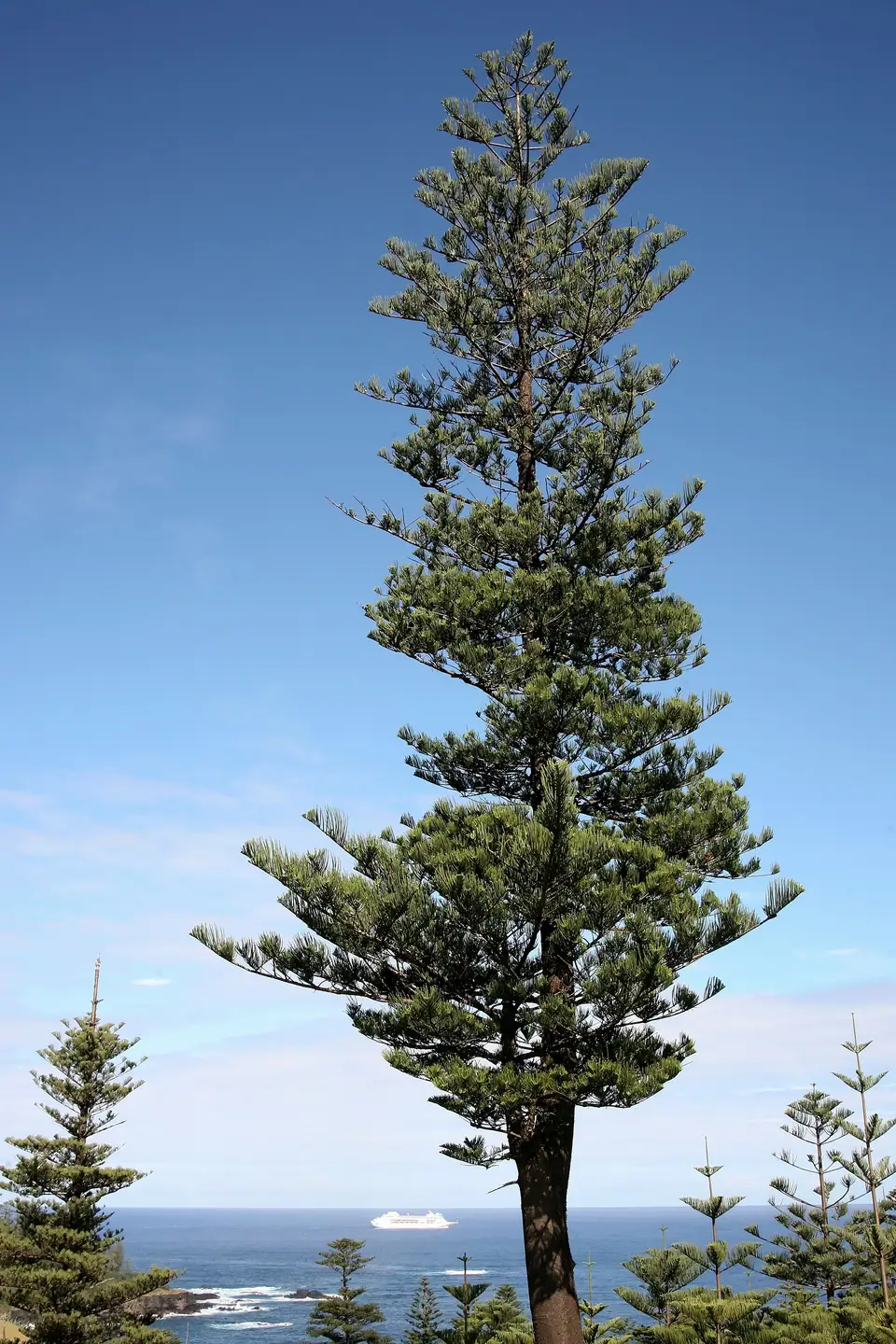
How to care for Norfolk Island Pine
Araucaria heterophylla · Araucariaceae
A soft-needled, symmetrical conifer from the South Pacific, popularly sold as a living Christmas tree. It is really a subtropical tree, not a cold-hardy pine: it wants bright light, decent humidity, and steady moisture, and any branch it loses is gone for good. Water roughly every 7 days while it's growing (about every 12 in winter), give it bright, indirect light, kept above 45°F (7°C) — it wants humid air.
Care at a glance
Keep lightly, evenly moist — water when the surface dries, since dried-out roots translate directly into permanently brown branches.
Very bright light, ideally with some direct sun; rotate weekly or it leans hard toward the window.
Half-strength balanced fertilizer monthly in spring and summer.
Mistakes that kill this plant
- Letting the pot dry out completely — the browning is irreversible.
- Hot, dry air right next to a radiator.
- Treating it as an outdoor Christmas tree in a freezing climate.
Seasonal tips
- Rotate a quarter turn weekly to preserve the symmetrical tiers.
- Run a humidifier nearby in winter; heated air is its hardest season.
- Don't prune the central leader — cutting the top permanently ruins its shape.
Is it safe for pets?
Our records list Norfolk Island Pine as non-toxic to cats and dogs.
Full pet-safety details for cats & dogsCare for your Norfolk Island Pine on autopilot
Ploomily turns this guide into a Living Schedule — watering tuned to your city’s climate, the season, the pot and the light, and feeding tuned to that same pot, drainage and light, following the growing season and pausing while the plant rests. The founding price in force today is shown in full before you confirm, and locked for as long as you stay subscribed — with 30 days to change your mind.
Build my Living ScheduleNorfolk Island Pine is featured in
More tree plants
Toxicity here is informational, not a safety guarantee. Those are our own records, compiled by following the ASPCA's published toxic and non-toxic plant lists and Pet Poison Helpline's plant poison list rather than copied from them — confirm anything that matters against the ASPCA's published lists, which this one is matched to, or with your vet. If your pet ingested this plant, contact your vet or the ASPCA Animal Poison Control Center at (888) 426-4435.