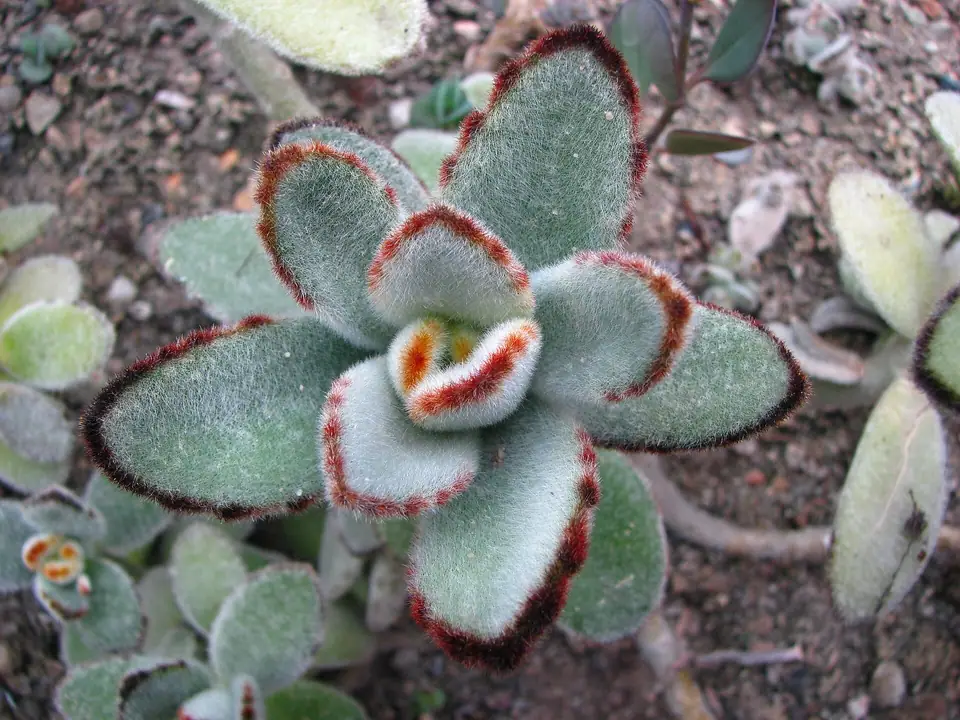
How to care for Panda Plant
Kalanchoe tomentosa · Crassulaceae
A fuzzy Madagascan succulent whose silver-felted leaves are edged in chocolate-brown stitching, giving it an irresistibly pettable look. The velvety hairs help it shrug off dry air, making it a natural for sunny indoor spots. It grows slowly into a small shrubby plant over the years. Water roughly every 14 days while it's growing (about every 30 in winter), give it direct sun, kept above 50°F (10°C) — dry air is fine for it.
Care at a glance
Water the soil directly and avoid wetting the fuzzy leaves, which trap moisture and spot easily.
Give it several hours of direct sun at a south or west window; too little light makes the felted stems stretch and flop.
Feed monthly-ish in spring and summer with a balanced fertilizer diluted to quarter or half strength.
Mistakes that kill this plant
- Overwatering — the fuzzy leaves mask trouble until stems collapse.
- Letting pets chew on it; all kalanchoes are toxic to cats and dogs.
- Misting or overhead watering, which permanently marks the felted foliage.
Seasonal tips
- Move it to your sunniest window in winter to keep growth compact.
- Resume normal watering only once spring growth visibly restarts.
- Take leaf or stem cuttings in late spring — they root readily in dry gritty mix.
Is it safe for pets?
We have Panda Plant recorded as toxic to cats and dogs.
Full pet-safety details for cats & dogsCare for your Panda Plant on autopilot
Ploomily turns this guide into a Living Schedule — watering tuned to your city’s climate, the season, the pot and the light, and feeding tuned to that same pot, drainage and light, following the growing season and pausing while the plant rests. The founding price in force today is shown in full before you confirm, and locked for as long as you stay subscribed — with 30 days to change your mind.
Build my Living SchedulePanda Plant is featured in
More succulent plants
Toxicity here is informational, not a safety guarantee. Those are our own records, compiled by following the ASPCA's published toxic and non-toxic plant lists and Pet Poison Helpline's plant poison list rather than copied from them — confirm anything that matters against the ASPCA's published lists, which this one is matched to, or with your vet. If your pet ingested this plant, contact your vet or the ASPCA Animal Poison Control Center at (888) 426-4435.