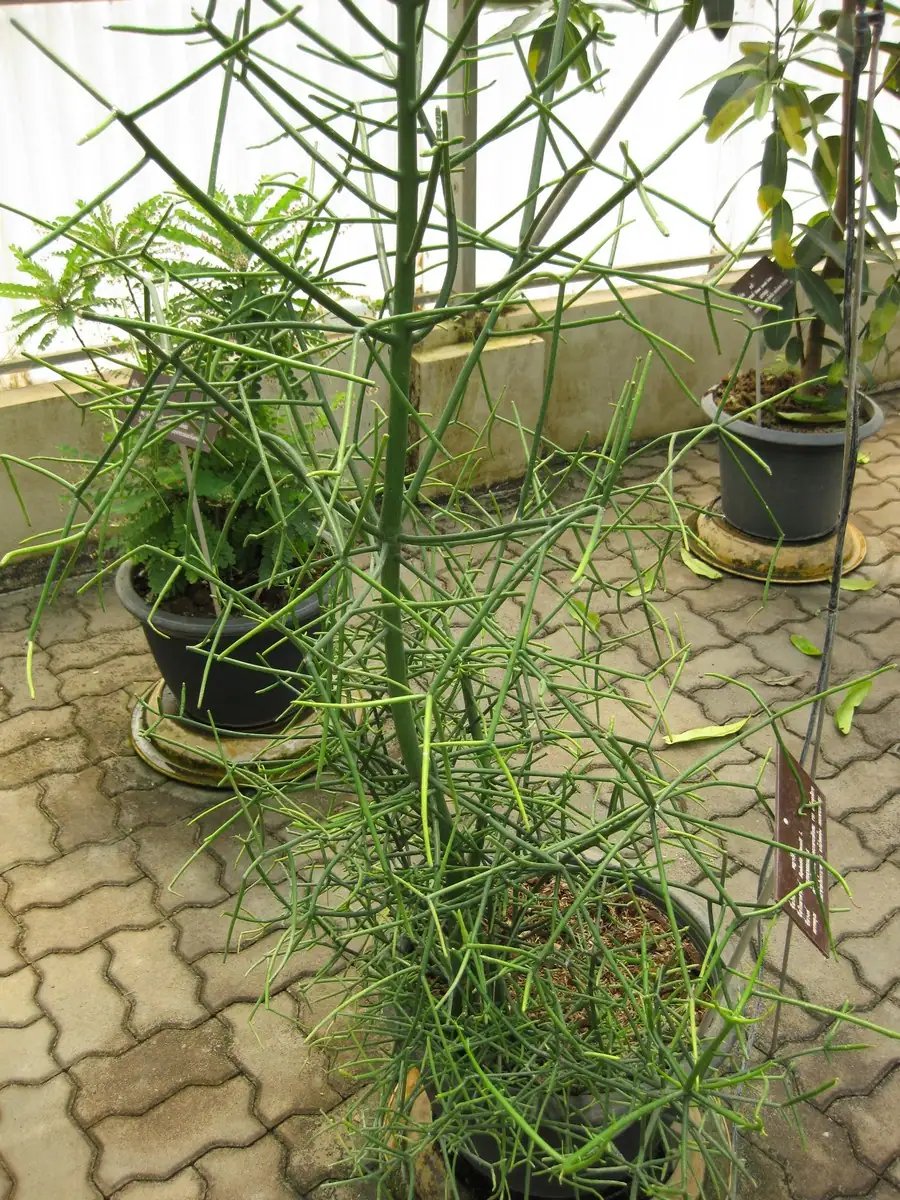
How to care for Pencil Cactus
Euphorbia tirucalli · Euphorbiaceae
Not a cactus at all but a tree-sized African euphorbia, grown indoors for its thicket of smooth, pencil-thin green stems; the 'Firesticks' form blazes orange-red in sun and cool weather. It is tough, drought-proof, and fast in good light. Its milky sap is highly irritating — to skin, eyes, and pets — so prune with gloves and eye protection. Water roughly every 14 days while it's growing (about every 30 in winter), give it direct sun, kept above 50°F (10°C) — dry air is fine for it.
Care at a glance
Water deeply after the soil dries out completely; the thin stems store more water than they appear to.
Place it in direct sun for the densest, most colorful growth; it tolerates bright indirect light but grows thin and green.
Half-strength balanced fertilizer every month or so in spring and summer.
Mistakes that kill this plant
- Constant moisture at the roots — the number one killer.
- Pruning bare-handed at face height; sap in the eye is a medical emergency.
- Keeping it where pets can chew the tempting pencil-like stems.
Seasonal tips
- Prune for shape in late spring wearing gloves and eye protection — the sap sprays.
- Firesticks color is best with cool nights and maximum sun in autumn and winter.
- Cut winter watering roughly in half.
Is it safe for pets?
We have Pencil Cactus recorded as toxic to cats and dogs.
Full pet-safety details for cats & dogsCare for your Pencil Cactus on autopilot
Ploomily turns this guide into a Living Schedule — watering tuned to your city’s climate, the season, the pot and the light, and feeding tuned to that same pot, drainage and light, following the growing season and pausing while the plant rests. The founding price in force today is shown in full before you confirm, and locked for as long as you stay subscribed — with 30 days to change your mind.
Build my Living SchedulePencil Cactus is featured in
More succulent plants
Toxicity here is informational, not a safety guarantee. Those are our own records, compiled by following the ASPCA's published toxic and non-toxic plant lists and Pet Poison Helpline's plant poison list rather than copied from them — confirm anything that matters against the ASPCA's published lists, which this one is matched to, or with your vet. If your pet ingested this plant, contact your vet or the ASPCA Animal Poison Control Center at (888) 426-4435.