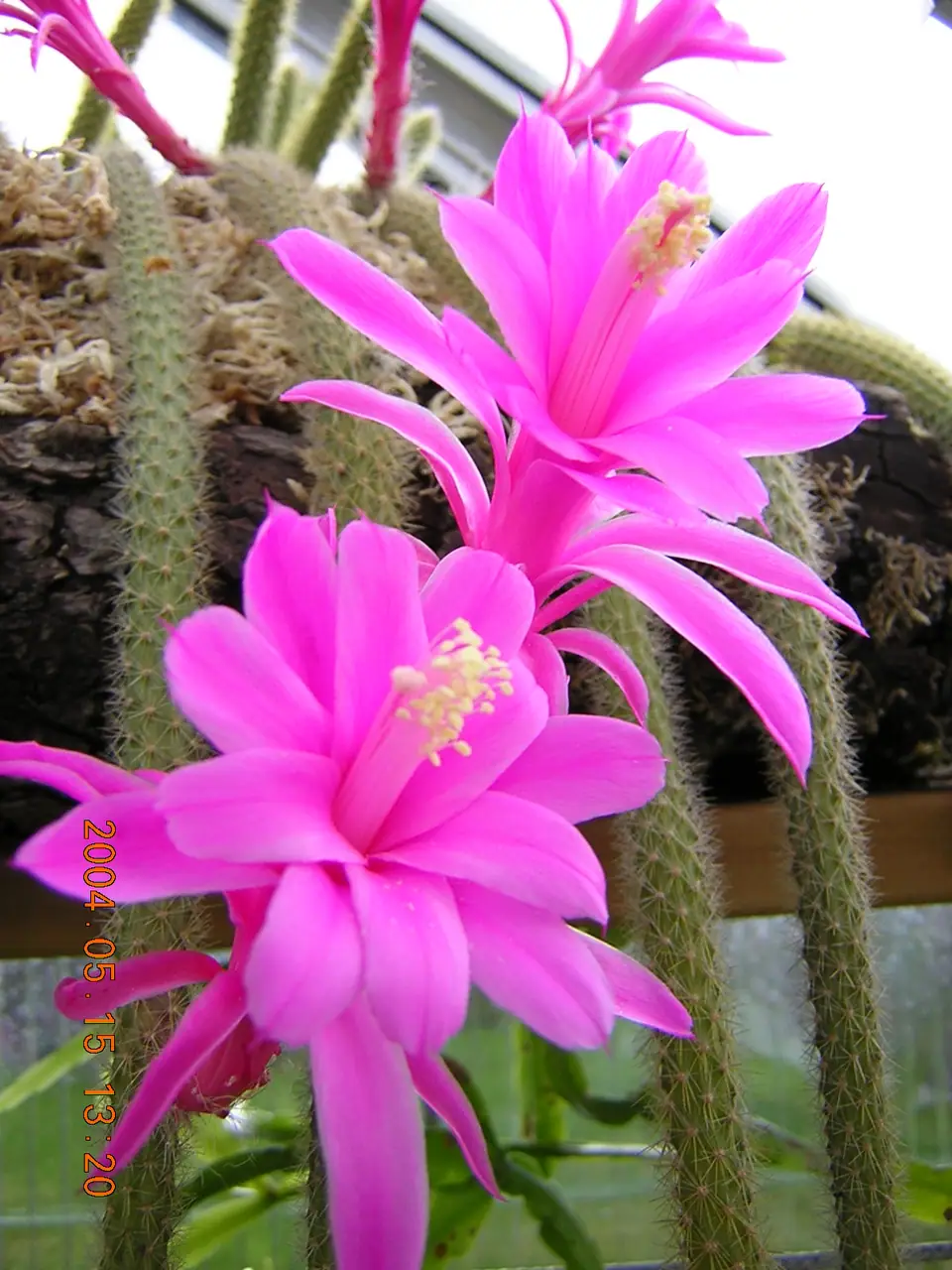
How to care for Rat Tail Cactus
Disocactus flagelliformis · Cactaceae
A trailing Mexican cactus with long, slender, softly-spined stems that pour over the edge of a hanging pot like a mane. In spring it erupts in vivid magenta flowers along the tails — one of the most spectacular cactus blooms you can get on a windowsill. It grows partly on cliffs and trees in the wild, so it likes more water than a desert cactus. Water roughly every 10 days while it's growing (about every 28 in winter), give it bright, indirect light, kept above 46°F (8°C) — average room humidity suits it.
Care at a glance
Water when the top of the mix is dry in the growing season, then keep it much drier through its cool winter rest.
A bright window with some direct morning sun; deep shade means no flowers and weak, stringy tails.
Half-strength high-potassium feed monthly from spring to late summer.
Mistakes that kill this plant
- Wet soil in a cool winter room — the classic way to rot it.
- Keeping it warm and watered year-round, which skips the rest and skips the bloom.
- Deep shade, which slowly starves the trailing stems.
Seasonal tips
- A cool (7-12 C), fairly dry winter rest is essential for the spring flower show.
- Do not move or turn the plant once buds form — they can drop.
- Trim old, ratty tails at the base after flowering; new ones grow fast.
Is it safe for pets?
We couldn’t place Rat Tail Cactus on a toxic or a non-toxic list, so its toxicity is unconfirmed — which is not the same as safe.
Full pet-safety details for cats & dogsCare for your Rat Tail Cactus on autopilot
Ploomily turns this guide into a Living Schedule — watering tuned to your city’s climate, the season, the pot and the light, and feeding tuned to that same pot, drainage and light, following the growing season and pausing while the plant rests. The founding price in force today is shown in full before you confirm, and locked for as long as you stay subscribed — with 30 days to change your mind.
Build my Living ScheduleMore cactus plants
Toxicity here is informational, not a safety guarantee. Those are our own records, compiled by following the ASPCA's published toxic and non-toxic plant lists and Pet Poison Helpline's plant poison list rather than copied from them — confirm anything that matters against those lists or with your vet. If your pet ingested this plant, contact your vet or the ASPCA Animal Poison Control Center at (888) 426-4435.