How to care for Blushing Bromeliad
Neoregelia carolinae · Bromeliaceae
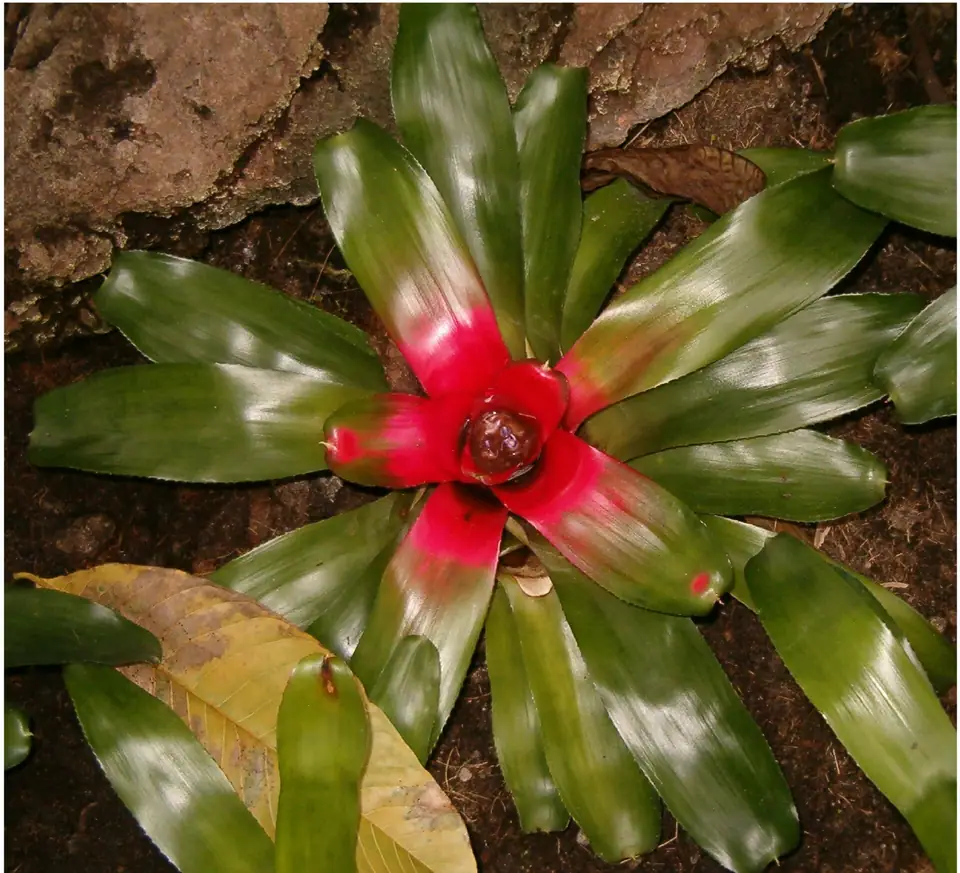
At maturity the blushing bromeliad flushes brilliant red at its center, as if lit from within, while small flowers bloom low inside the water-filled cup. Its display is all foliage — flat, glossy rosettes that spread wider than tall. Strong light is what makes the blush; in shade it stays politely green. Water roughly every 7 days while it's growing (about every 12 in winter), give it bright, indirect light, kept above 54°F (12°C) — average room humidity suits it.
Care at a glance
Maintain a shallow reservoir of fresh water in the rosette's center, flushing it every few weeks, and keep the mix just barely moist.
Bright light — brighter than most bromeliads — brings out the red center; deep shade keeps it green and flat-colored.
Very sparing quarter-strength feed every 6 weeks or so — overfeeding makes leaves long, green, and blush-less.
Mistakes that kill this plant
- Growing it in shade and overfeeding it, guaranteeing a green, stretched, never-blushing plant.
- Soggy soil around its minimal roots.
- Letting the central cup stand empty for weeks in dry heat.
Seasonal tips
- Give it your brightest indirect spot if you want the red center — light is the whole trick.
- Flush and refill the cup regularly, especially in warm weather.
- After blushing and flowering, redirect your care to the pups forming at the base.
Is it safe for pets?
Our records list Blushing Bromeliad as non-toxic to cats and dogs.
Full pet-safety details for cats & dogsCare for your Blushing Bromeliad on autopilot
Ploomily turns this guide into a Living Schedule — watering tuned to your city’s climate, the season, the pot and the light, and feeding tuned to that same pot, drainage and light, following the growing season and pausing while the plant rests. The founding price in force today is shown in full before you confirm, and locked for as long as you stay subscribed — with 30 days to change your mind.
Build my Living ScheduleBlushing Bromeliad is featured in
More flowering plants
Toxicity here is informational, not a safety guarantee. Those are our own records, compiled by following the ASPCA's published toxic and non-toxic plant lists and Pet Poison Helpline's plant poison list rather than copied from them — confirm anything that matters against the ASPCA's published lists, which this one is matched to, or with your vet. If your pet ingested this plant, contact your vet or the ASPCA Animal Poison Control Center at (888) 426-4435.