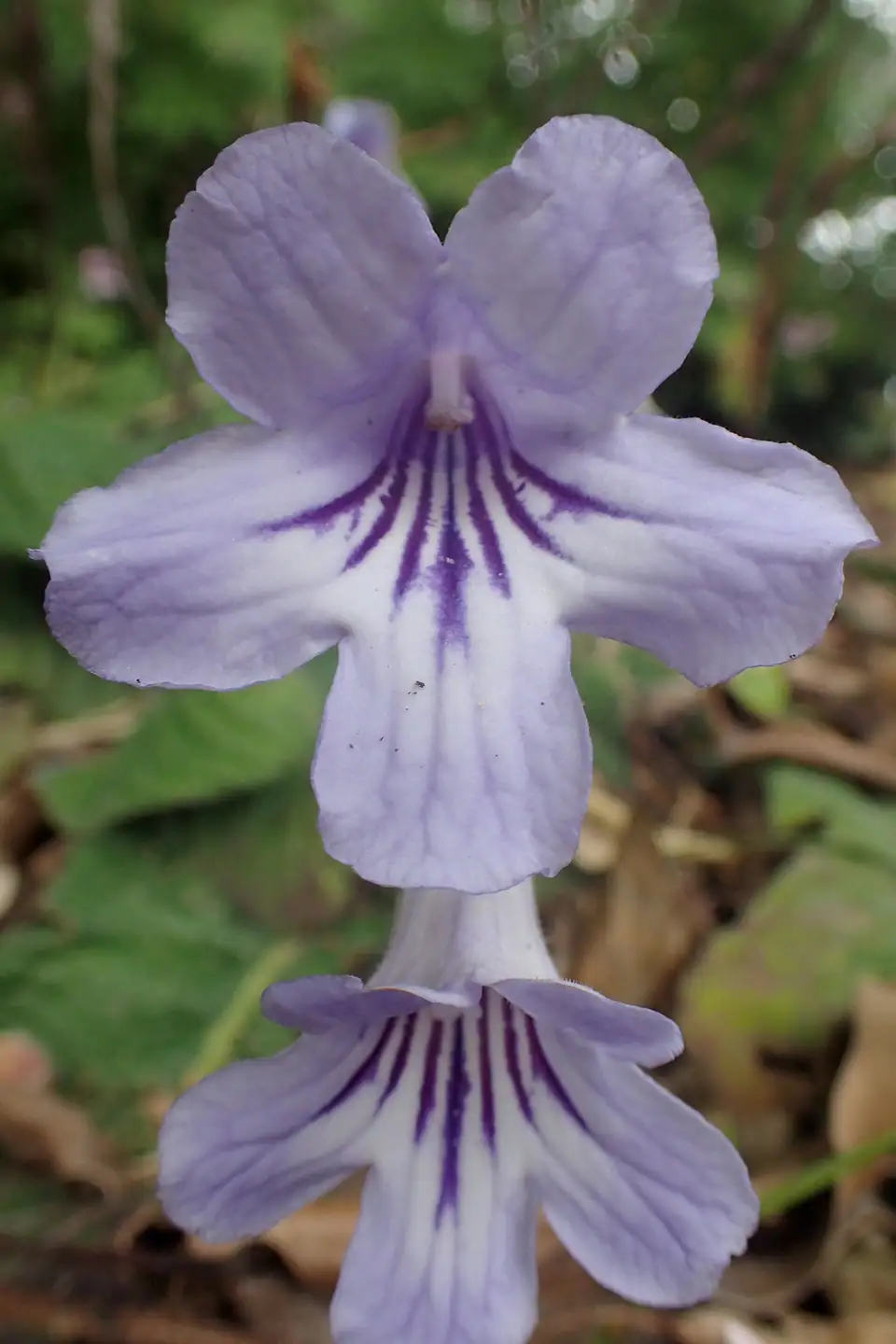
How to care for Cape Primrose
Streptocarpus rexii · Gesneriaceae
Cape primroses form rosettes of long, crinkled, strap-like leaves and send up wave after wave of trumpet flowers for much of the year. They are cool-growing gesneriads that flower more generously than African violets for many growers. Their soft leaves wilt dramatically when thirsty but bounce back fast — a built-in watering gauge. Water roughly every 5 days while it's growing (about every 10 in winter), give it bright, indirect light, kept above 50°F (10°C) — average room humidity suits it.
Care at a glance
Let the surface dry and the leaves just barely soften before watering — it recovers instantly from slight thirst but rots if kept constantly wet.
Bright, indirect light out of hot sun; an east window is ideal, and it prefers rooms on the cool side.
Quarter-strength high-phosphorus fertilizer every 2 weeks while in active growth.
Mistakes that kill this plant
- Keeping the soil constantly wet 'because it wilts' — slight dryness is what it wants.
- Baking it on a hot south windowsill in summer.
- Deep pots of soggy peat around its shallow roots.
Seasonal tips
- It dislikes heat above ~81°F (27°C); in summer heat waves it pauses blooming — keep it shaded and don't overreact.
- Individual leaves die back from the tip with age; cut the dead part off along a clean line.
- Shallow pots suit its fine, shallow root system better than deep ones.
Is it safe for pets?
Our records list Cape Primrose as non-toxic to cats and dogs.
Full pet-safety details for cats & dogsCare for your Cape Primrose on autopilot
Ploomily turns this guide into a Living Schedule — watering tuned to your city’s climate, the season, the pot and the light, and feeding tuned to that same pot, drainage and light, following the growing season and pausing while the plant rests. The founding price in force today is shown in full before you confirm, and locked for as long as you stay subscribed — with 30 days to change your mind.
Build my Living ScheduleCape Primrose is featured in
More flowering plants
Toxicity here is informational, not a safety guarantee. Those are our own records, compiled by following the ASPCA's published toxic and non-toxic plant lists and Pet Poison Helpline's plant poison list rather than copied from them — confirm anything that matters against the ASPCA's published lists, which this one is matched to, or with your vet. If your pet ingested this plant, contact your vet or the ASPCA Animal Poison Control Center at (888) 426-4435.