How to care for Chinese Fan Palm
Livistona chinensis · Arecaceae
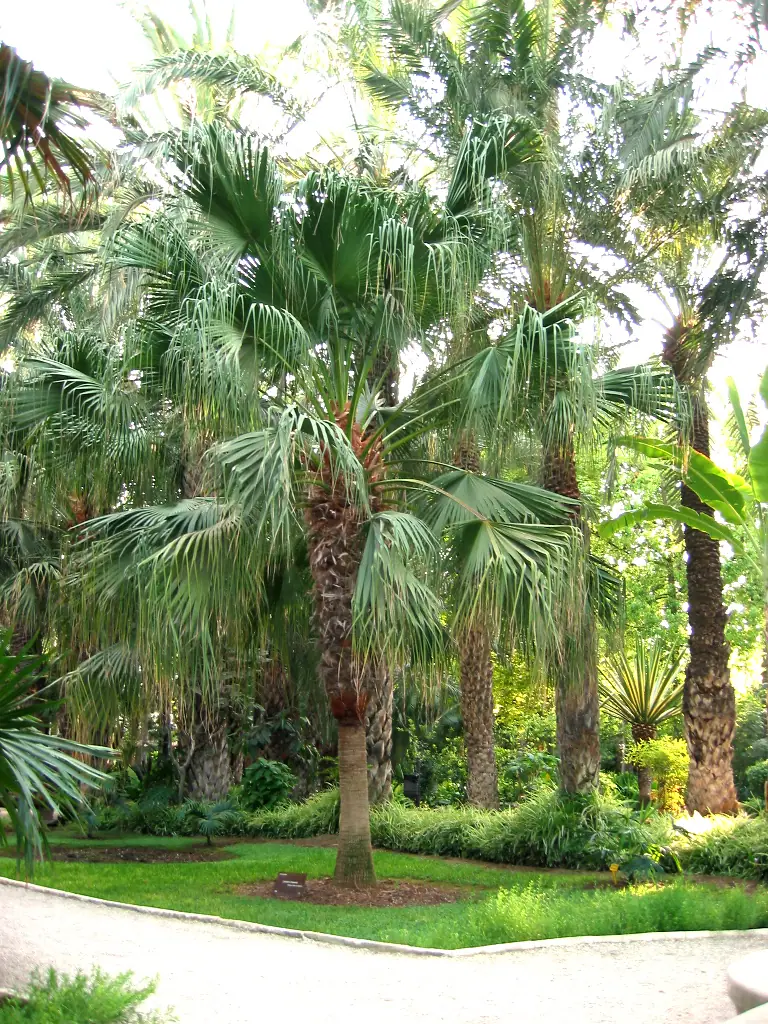
A stately palm with big, pleated circular fans whose segment tips droop gracefully — earning it the nickname 'fountain palm'. It is tougher than it looks, tolerating cooler rooms and average air, but needs strong light and floor space as the fans widen. A slow, architectural grower. Water roughly every 7 days while it's growing (about every 12 in winter), give it bright, indirect light, kept above 46°F (8°C) — average room humidity suits it.
Care at a glance
Water thoroughly when the top few centimeters dry; it prefers even moisture but tolerates brief dry spells better than feather palms.
Bright light with some direct sun suits it best — a spot right by a south or west window.
Half-strength palm fertilizer monthly through the growing season.
Mistakes that kill this plant
- Keeping a light-hungry fan palm in a dim corner.
- Overwatering a slow grower in a large pot.
- Sudden moves into scorching direct summer sun without acclimation.
Seasonal tips
- It tolerates cool winter rooms (down to about 8 C) better than most houseplant palms.
- Trim browned fan tips with scissors, cutting to a point to mimic the natural shape.
- Watch the spiny petioles when handling or walking past.
Is it safe for pets?
We couldn’t place Chinese Fan Palm on a toxic or a non-toxic list, so its toxicity is unconfirmed — which is not the same as safe.
Full pet-safety details for cats & dogsCare for your Chinese Fan Palm on autopilot
Ploomily turns this guide into a Living Schedule — watering tuned to your city’s climate, the season, the pot and the light, and feeding tuned to that same pot, drainage and light, following the growing season and pausing while the plant rests. The founding price in force today is shown in full before you confirm, and locked for as long as you stay subscribed — with 30 days to change your mind.
Build my Living ScheduleMore palm plants
Toxicity here is informational, not a safety guarantee. Those are our own records, compiled by following the ASPCA's published toxic and non-toxic plant lists and Pet Poison Helpline's plant poison list rather than copied from them — confirm anything that matters against those lists or with your vet. If your pet ingested this plant, contact your vet or the ASPCA Animal Poison Control Center at (888) 426-4435.