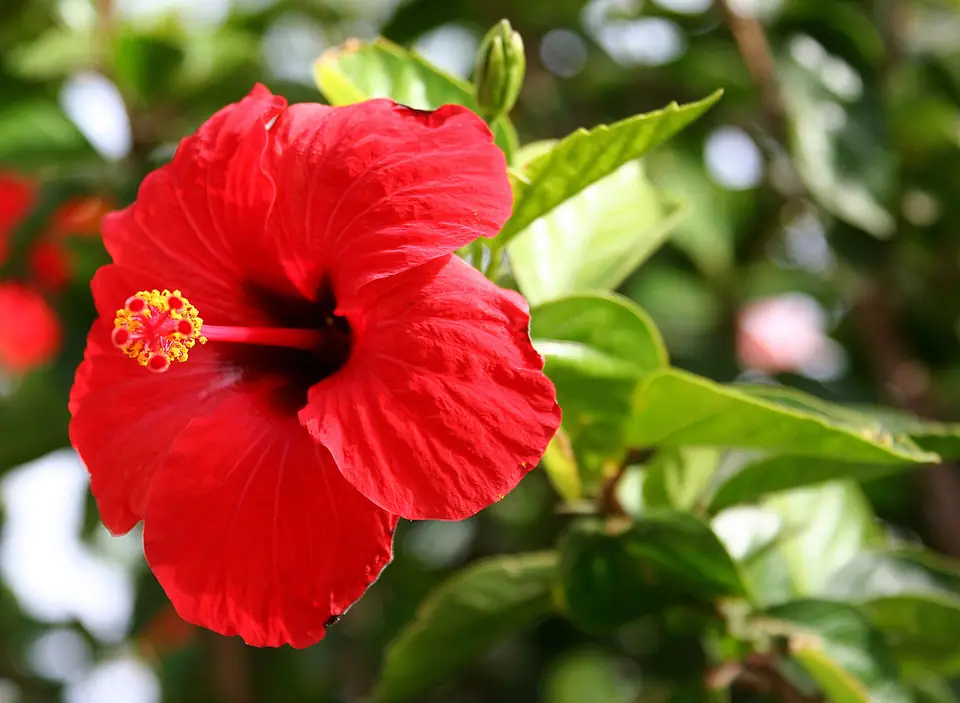
How to care for Chinese Hibiscus
Hibiscus rosa-sinensis · Malvaceae
A tropical shrub with glossy leaves and huge, silky trumpet flowers that each last only a day or two but keep coming all season. Indoors it wants as much sun as you can offer, warmth, and steady water — treat it like the sun-worshipper it is. Water roughly every 4 days while it's growing (about every 8 in winter), give it direct sun, kept above 50°F (10°C) — average room humidity suits it.
Care at a glance
Water thoroughly when the top couple of centimeters dry; big leaves and big flowers make it thirsty in summer.
A south-facing window or several hours of direct sun daily is the price of continuous bloom.
Feed every two weeks in the growing season with a fertilizer higher in potassium than phosphorus.
Mistakes that kill this plant
- Too little light — it slowly defoliates and never blooms in a dim room.
- Letting spider mites build unchecked through winter.
- Cold, wet feet in winter rotting the roots.
Seasonal tips
- Move it outdoors after the last frost and acclimate it gradually to full sun for the best summer show.
- Some bud drop when you move or repot it is normal — hold conditions steady and it recovers.
- Prune in early spring; flowers form on new growth.
Is it safe for pets?
We couldn’t place Chinese Hibiscus on a toxic or a non-toxic list, so its toxicity is unconfirmed — which is not the same as safe.
Full pet-safety details for cats & dogsCare for your Chinese Hibiscus on autopilot
Ploomily turns this guide into a Living Schedule — watering tuned to your city’s climate, the season, the pot and the light, and feeding tuned to that same pot, drainage and light, following the growing season and pausing while the plant rests. The founding price in force today is shown in full before you confirm, and locked for as long as you stay subscribed — with 30 days to change your mind.
Build my Living ScheduleChinese Hibiscus is featured in
More flowering plants
Toxicity here is informational, not a safety guarantee. Those are our own records, compiled by following the ASPCA's published toxic and non-toxic plant lists and Pet Poison Helpline's plant poison list rather than copied from them — confirm anything that matters against those lists or with your vet. If your pet ingested this plant, contact your vet or the ASPCA Animal Poison Control Center at (888) 426-4435.