How to care for Elephant Bush
Portulacaria afra · Didiereaceae
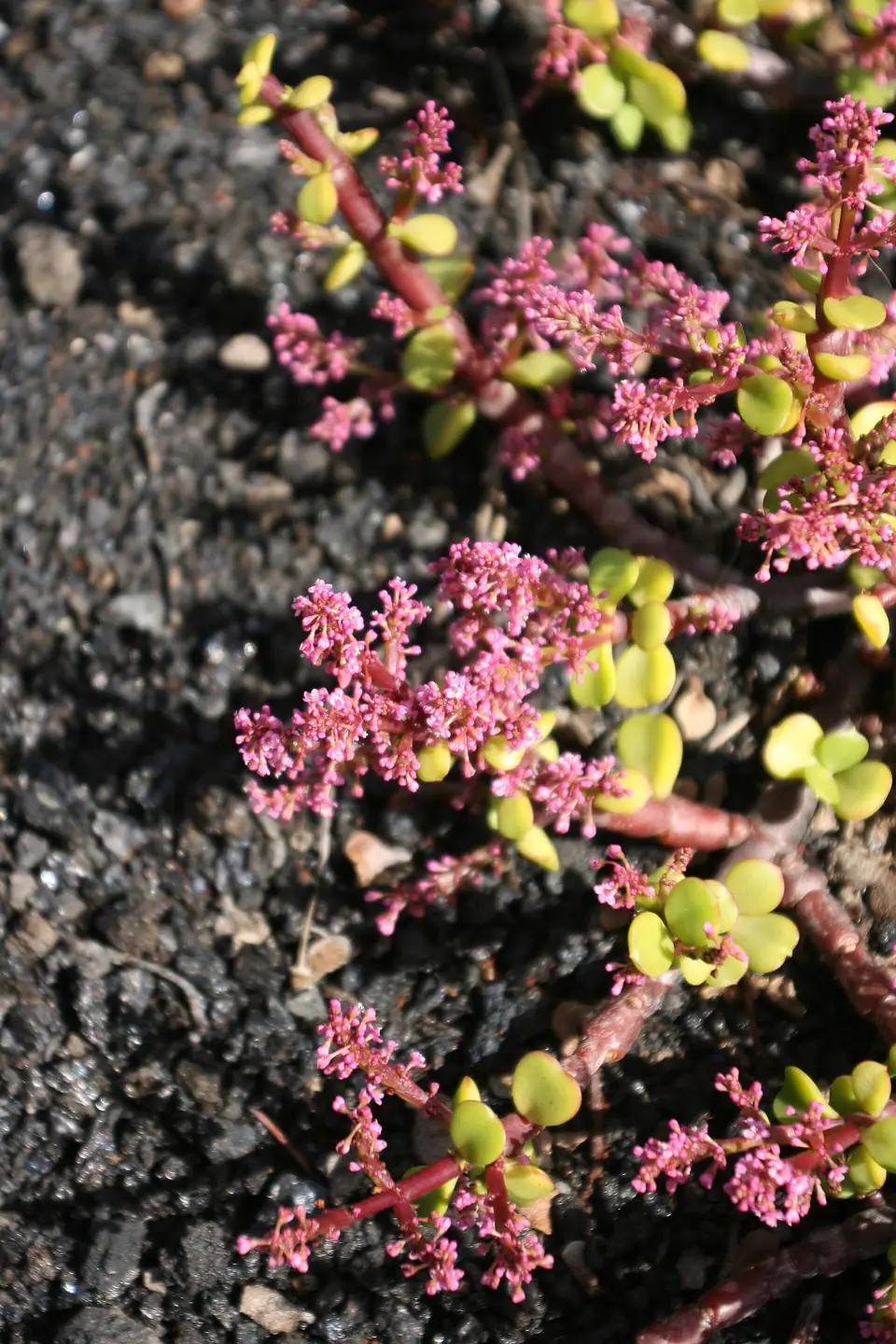
A cheerful South African shrub with wiry red-brown stems and small glossy jade-green leaves — elephants really do browse it in the wild. It grows faster than a jade plant, takes pruning beautifully, and is a favorite for succulent bonsai. Variegated forms trail attractively from hanging pots. Water roughly every 10 days while it's growing (about every 24 in winter), give it direct sun, kept above 45°F (7°C) — dry air is fine for it.
Care at a glance
Water thoroughly when the top few centimeters are dry; it drinks more than most succulents in warm bright weather.
It thrives in direct sun and stays dense there; in bright indirect light it survives but grows sparse and leans.
Half-strength balanced fertilizer monthly through spring and summer supports its brisk growth.
Mistakes that kill this plant
- Leaving it in a waterlogged cachepot with no drainage.
- Deep winter drought while assuming it is 'just a succulent'.
- Exposure to frost or near-freezing drafts, which blackens stems overnight.
Seasonal tips
- Prune freely in spring — every cutting roots easily in dry soil.
- It loves summering outdoors in full sun once acclimated.
- Reduce water in winter but never let it desiccate to the point of heavy leaf drop.
Is it safe for pets?
We couldn’t place Elephant Bush on a toxic or a non-toxic list, so its toxicity is unconfirmed — which is not the same as safe.
Full pet-safety details for cats & dogsCare for your Elephant Bush on autopilot
Ploomily turns this guide into a Living Schedule — watering tuned to your city’s climate, the season, the pot and the light, and feeding tuned to that same pot, drainage and light, following the growing season and pausing while the plant rests. The founding price in force today is shown in full before you confirm, and locked for as long as you stay subscribed — with 30 days to change your mind.
Build my Living ScheduleElephant Bush is featured in
More succulent plants
Toxicity here is informational, not a safety guarantee. Those are our own records, compiled by following the ASPCA's published toxic and non-toxic plant lists and Pet Poison Helpline's plant poison list rather than copied from them — confirm anything that matters against those lists or with your vet. If your pet ingested this plant, contact your vet or the ASPCA Animal Poison Control Center at (888) 426-4435.