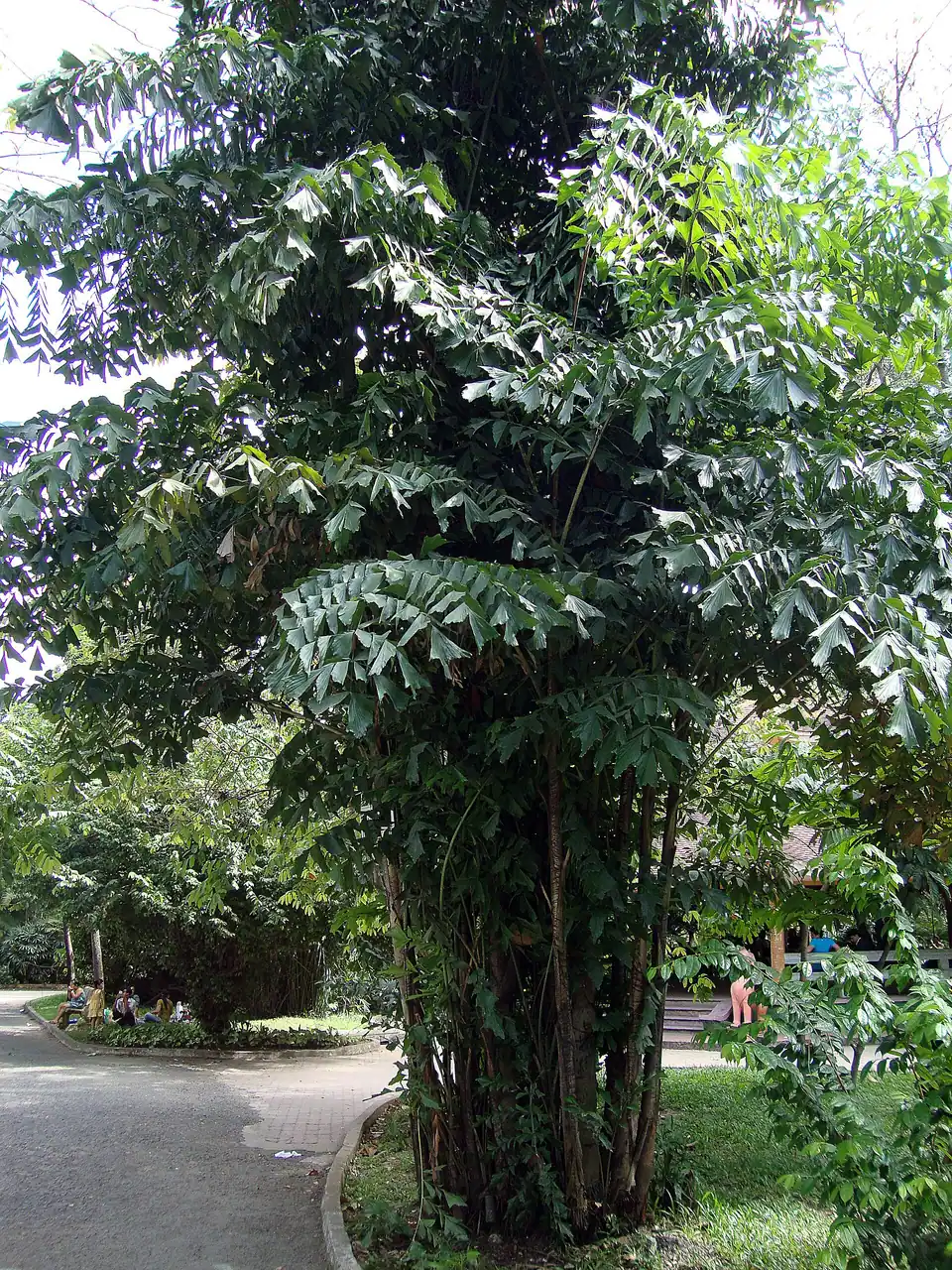
How to care for Fishtail Palm
Caryota mitis · Arecaceae
A clustering palm instantly recognizable by leaflets shaped like ragged fish tails — the only palms with such doubly-divided (bipinnate) fronds. It grows fast and lush with generous light, warmth, and humidity, but sulks and browns in dry rooms. A striking choice for bright, spacious interiors. Water roughly every 5 days while it's growing (about every 9 in winter), give it bright, indirect light, kept above 55°F (13°C) — it wants humid air.
Care at a glance
Keep the soil consistently lightly moist — it is thirsty in growth and quick to brown if the root ball dries.
Very bright, filtered light near a large window; some soft morning sun is welcome, harsh midday sun is not.
Half-strength balanced feed monthly — it is a relatively hungry, fast-growing palm.
Mistakes that kill this plant
- Dry air plus spider mites — the standard death spiral for indoor fishtails.
- Letting the root ball dry out during active growth.
- Cool drafts and cold windowsills in winter.
Seasonal tips
- Humidity is the make-or-break factor — humidifier or grouped plants in winter.
- Shower the foliage monthly to keep spider mites suppressed.
- Each cane flowers once at maturity and then dies — cut spent canes out and let the cluster continue.
Is it safe for pets?
We have Fishtail Palm recorded as toxic to cats and dogs.
Full pet-safety details for cats & dogsCare for your Fishtail Palm on autopilot
Ploomily turns this guide into a Living Schedule — watering tuned to your city’s climate, the season, the pot and the light, and feeding tuned to that same pot, drainage and light, following the growing season and pausing while the plant rests. The founding price in force today is shown in full before you confirm, and locked for as long as you stay subscribed — with 30 days to change your mind.
Build my Living ScheduleFishtail Palm is featured in
More palm plants
Toxicity here is informational, not a safety guarantee. Those are our own records, compiled by following the ASPCA's published toxic and non-toxic plant lists and Pet Poison Helpline's plant poison list rather than copied from them — confirm anything that matters against those lists or with your vet. If your pet ingested this plant, contact your vet or the ASPCA Animal Poison Control Center at (888) 426-4435.