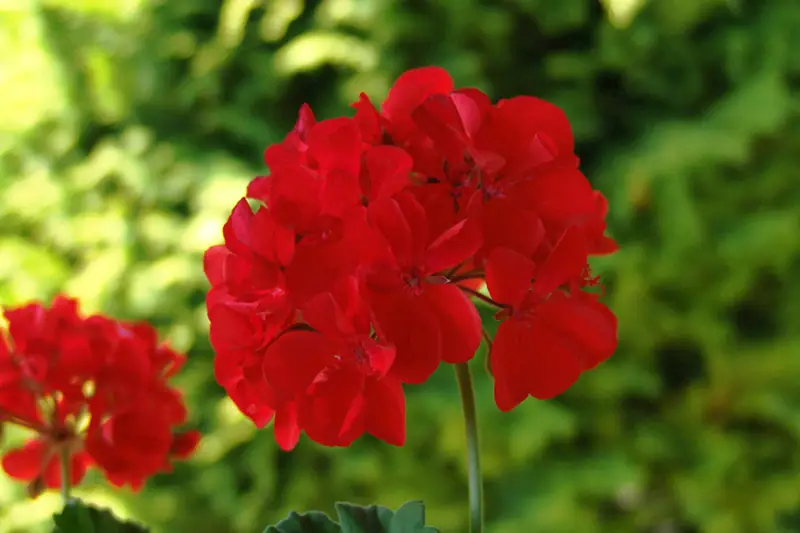
How to care for Geranium
Pelargonium × hortorum · Geraniaceae
The cheerful zonal geranium of window boxes everywhere, with rounded, often dark-banded leaves and long-lasting flower clusters in reds, pinks, and whites. It is tough, drought-tolerant, and blooms generously indoors given plenty of direct sun. Water roughly every 7 days while it's growing (about every 14 in winter), give it direct sun, kept above 45°F (7°C) — dry air is fine for it.
Care at a glance
Let the top third of the soil dry between waterings; geraniums flower better slightly dry than constantly moist.
A sunny south or west windowsill with several hours of direct sun keeps it compact and blooming.
Half-strength balanced liquid feed every two weeks while it is growing and flowering.
Mistakes that kill this plant
- Overwatering, which rots the fleshy stems from the base up.
- Wet foliage plus poor air circulation leading to grey mold.
- Deep shade — it survives briefly but stretches and collapses.
Seasonal tips
- Deadhead spent flower heads at the base of the stalk to keep new clusters coming.
- It overwinters happily as a cool, bright, barely watered windowsill plant.
- Take stem cuttings in late summer — they root easily and make free spring plants.
Is it safe for pets?
We have Geranium recorded as toxic to cats and dogs.
Full pet-safety details for cats & dogsCare for your Geranium on autopilot
Ploomily turns this guide into a Living Schedule — watering tuned to your city’s climate, the season, the pot and the light, and feeding tuned to that same pot, drainage and light, following the growing season and pausing while the plant rests. The founding price in force today is shown in full before you confirm, and locked for as long as you stay subscribed — with 30 days to change your mind.
Build my Living ScheduleGeranium is featured in
More flowering plants
Toxicity here is informational, not a safety guarantee. Those are our own records, compiled by following the ASPCA's published toxic and non-toxic plant lists and Pet Poison Helpline's plant poison list rather than copied from them — confirm anything that matters against the ASPCA's published lists, which this one is matched to, or with your vet. If your pet ingested this plant, contact your vet or the ASPCA Animal Poison Control Center at (888) 426-4435.