How to care for Hens and Chicks
Sempervivum tectorum · Crassulaceae
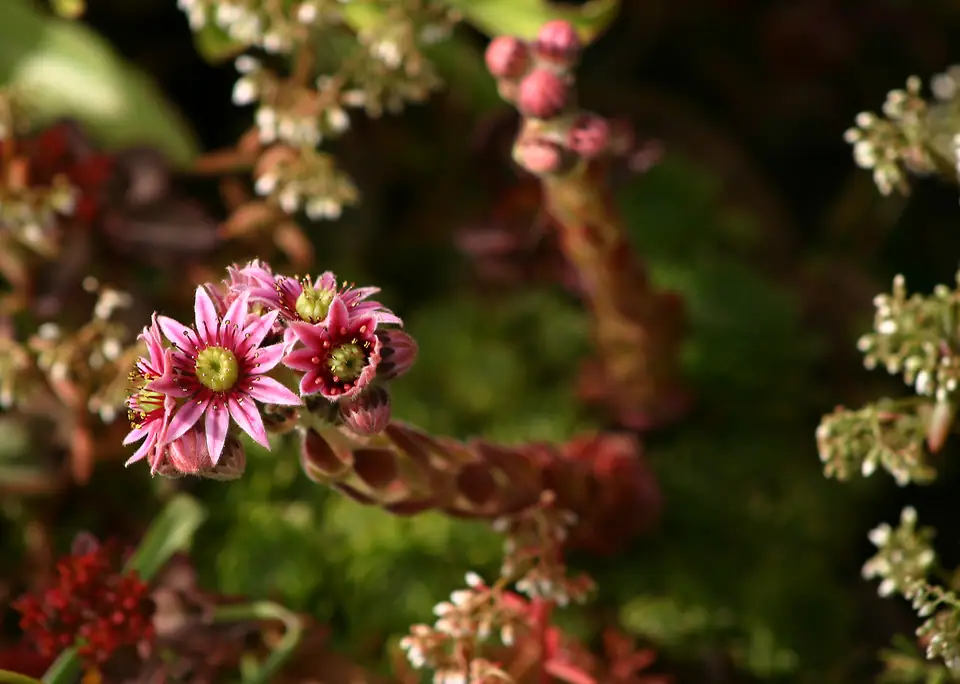
A frost-hardy alpine rosette that multiplies by surrounding the 'hen' with a brood of chick offsets. Outdoors it is nearly indestructible, but indoors it struggles without intense light and a cool winter. Each rosette flowers once after several years and then dies, leaving its chicks to carry on. Water roughly every 14 days while it's growing (about every 35 in winter), give it direct sun, kept above 32°F (0°C) — dry air is fine for it.
Care at a glance
Water sparingly at the soil line when fully dry; these alpine plants rot fast with moisture in the rosette.
Needs genuine direct sun for most of the day; it is honestly happier on a balcony or windowsill outdoors.
Barely feed — a quarter-strength cactus fertilizer once a season at most.
Mistakes that kill this plant
- Keeping it warm, dim, and watered like a tropical houseplant.
- Water pooling in the rosettes, especially in cool weather.
- Rich potting soil instead of a lean, gritty mineral mix.
Seasonal tips
- Give it a cold, bright winter — a chilly windowsill or unheated porch keeps it compact.
- A hen that flowers will die afterward; pot up its chicks to continue the colony.
- Grow it in shallow, gritty containers with maximum airflow.
Is it safe for pets?
We couldn’t place Hens and Chicks on a toxic or a non-toxic list, so its toxicity is unconfirmed — which is not the same as safe.
Full pet-safety details for cats & dogsCare for your Hens and Chicks on autopilot
Ploomily turns this guide into a Living Schedule — watering tuned to your city’s climate, the season, the pot and the light, and feeding tuned to that same pot, drainage and light, following the growing season and pausing while the plant rests. The founding price in force today is shown in full before you confirm, and locked for as long as you stay subscribed — with 30 days to change your mind.
Build my Living ScheduleMore succulent plants
Toxicity here is informational, not a safety guarantee. Those are our own records, compiled by following the ASPCA's published toxic and non-toxic plant lists and Pet Poison Helpline's plant poison list rather than copied from them — confirm anything that matters against those lists or with your vet. If your pet ingested this plant, contact your vet or the ASPCA Animal Poison Control Center at (888) 426-4435.