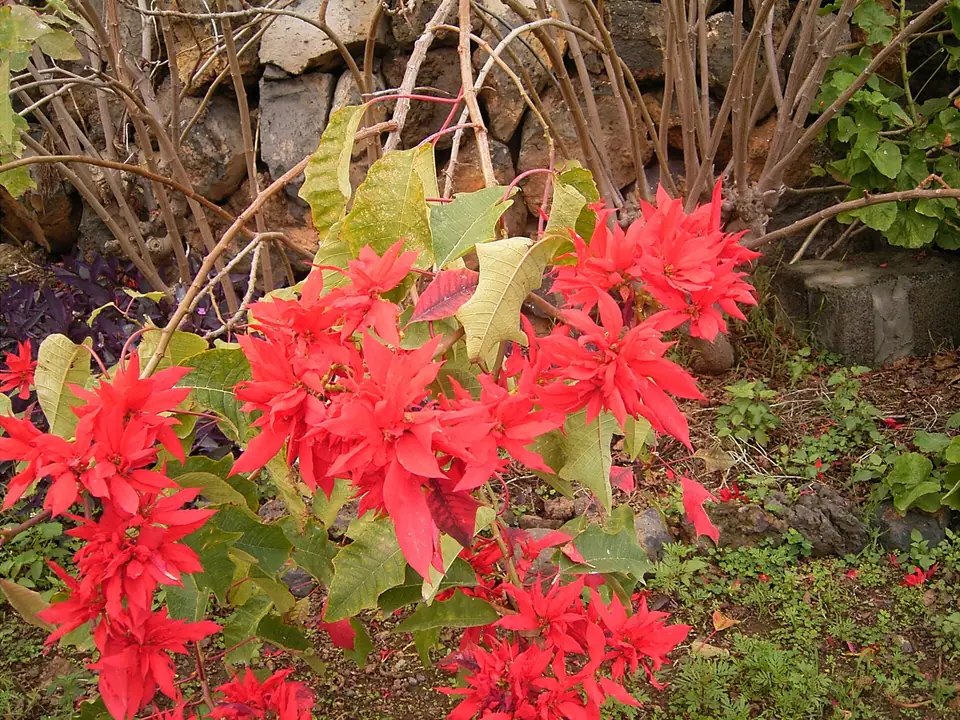
How to care for Poinsettia
Euphorbia pulcherrima · Euphorbiaceae
The classic holiday plant, whose brilliant red 'flowers' are actually modified leaves called bracts. With steady warmth and careful watering it can stay handsome long after the holidays, and dedicated growers can even coax it to recolor the following winter with strict dark treatment. Water roughly every 6 days while it's growing (about every 10 in winter), give it bright, indirect light, kept above 55°F (13°C) — average room humidity suits it.
Care at a glance
Water when the top few centimeters are dry, remove any decorative foil sleeve first, and never let the pot sit in trapped water.
Give it a bright east or west window out of harsh midday sun and away from cold drafts and heat vents.
Feed monthly in spring and summer with a balanced fertilizer at half strength; do not feed while in color.
Mistakes that kill this plant
- Leaving it standing in water inside the decorative foil wrapper.
- Placing it in a cold draft or against a freezing windowpane.
- Watering on autopilot through winter when the soil is still wet.
Seasonal tips
- Cut stems back by half in spring and resume feeding to trigger bushy regrowth.
- To rebloom, give 14 hours of total darkness nightly from early autumn until the bracts color.
- Shield it from cold air on the trip home from the store — bag it if it's below 10 C outside.
Is it safe for pets?
We have Poinsettia recorded as toxic to cats and dogs.
Full pet-safety details for cats & dogsCare for your Poinsettia on autopilot
Ploomily turns this guide into a Living Schedule — watering tuned to your city’s climate, the season, the pot and the light, and feeding tuned to that same pot, drainage and light, following the growing season and pausing while the plant rests. The founding price in force today is shown in full before you confirm, and locked for as long as you stay subscribed — with 30 days to change your mind.
Build my Living SchedulePoinsettia is featured in
More flowering plants
Toxicity here is informational, not a safety guarantee. Those are our own records, compiled by following the ASPCA's published toxic and non-toxic plant lists and Pet Poison Helpline's plant poison list rather than copied from them — confirm anything that matters against the ASPCA's published lists, which this one is matched to, or with your vet. If your pet ingested this plant, contact your vet or the ASPCA Animal Poison Control Center at (888) 426-4435.