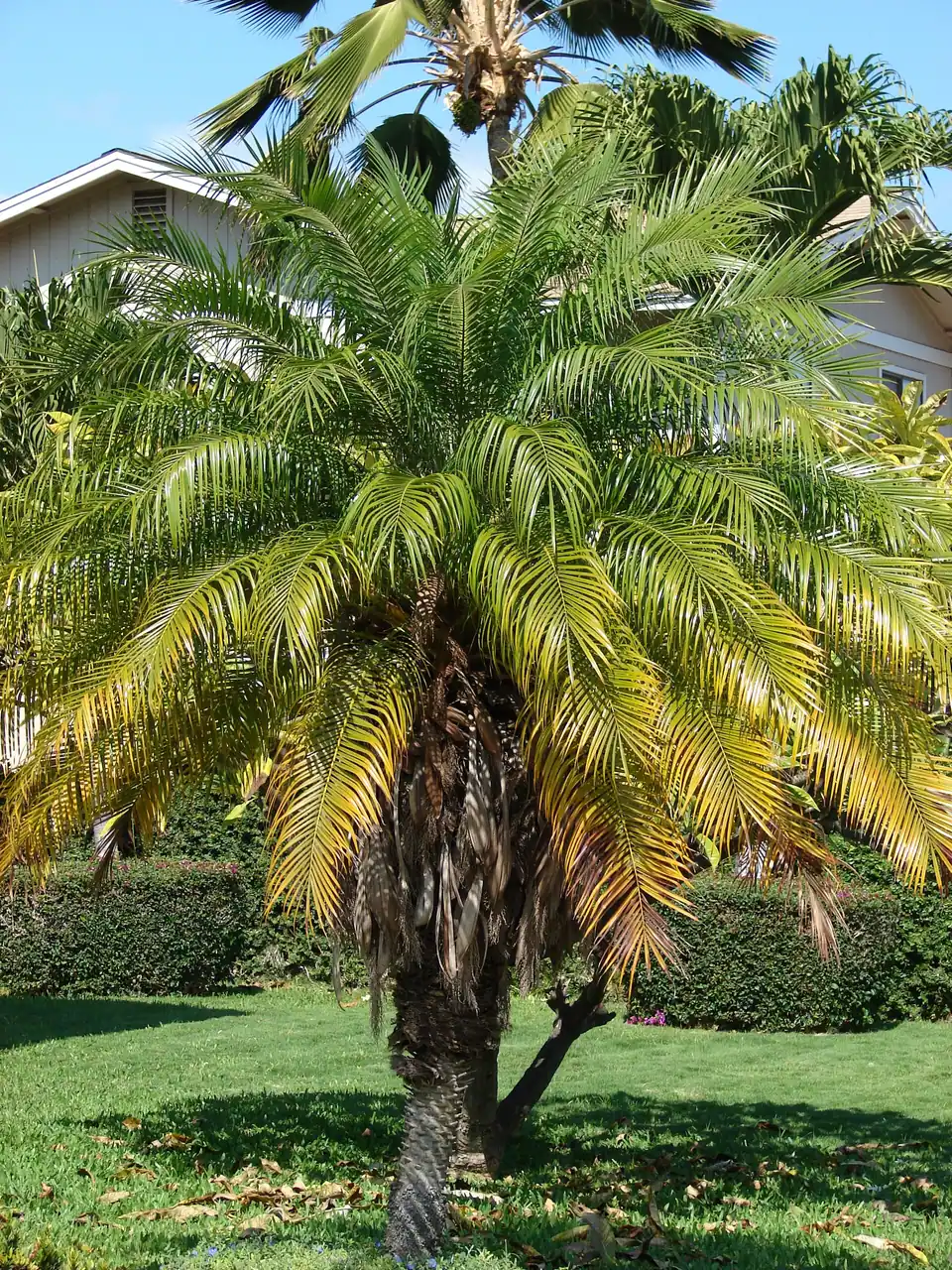
How to care for Pygmy Date Palm
Phoenix roebelenii · Arecaceae
A miniature date palm from Southeast Asia with a slender textured trunk and a soft, fine-feathered crown — a true palm-tree silhouette at living-room scale. It wants more sun than most indoor palms and hides sharp spines at the frond bases. Slow but rewarding in a bright spot. Water roughly every 6 days while it's growing (about every 11 in winter), give it bright, indirect light, kept above 50°F (10°C) — average room humidity suits it.
Care at a glance
Keep the soil evenly, lightly moist in the growing season and let the top few centimeters dry before watering again.
Give it your brightest window — it happily takes several hours of gentle direct sun and sulks in dim rooms.
Half-strength palm fertilizer with micronutrients monthly in the growing season.
Mistakes that kill this plant
- Insufficient light, which slowly starves and thins the crown.
- Cold, soggy winter soil.
- Never feeding it, leading to progressive nutrient-deficiency decline.
Seasonal tips
- A bright, sheltered outdoor summer spot dramatically improves its vigor.
- Wear gloves when pruning — the lower frond spines are needle-sharp.
- Feed with a palm-specific fertilizer to head off micronutrient yellowing.
Is it safe for pets?
Our records list Pygmy Date Palm as non-toxic to cats and dogs.
Full pet-safety details for cats & dogsCare for your Pygmy Date Palm on autopilot
Ploomily turns this guide into a Living Schedule — watering tuned to your city’s climate, the season, the pot and the light, and feeding tuned to that same pot, drainage and light, following the growing season and pausing while the plant rests. The founding price in force today is shown in full before you confirm, and locked for as long as you stay subscribed — with 30 days to change your mind.
Build my Living SchedulePygmy Date Palm is featured in
More palm plants
Toxicity here is informational, not a safety guarantee. Those are our own records, compiled by following the ASPCA's published toxic and non-toxic plant lists and Pet Poison Helpline's plant poison list rather than copied from them — confirm anything that matters against the ASPCA's published lists, which this one is matched to, or with your vet. If your pet ingested this plant, contact your vet or the ASPCA Animal Poison Control Center at (888) 426-4435.