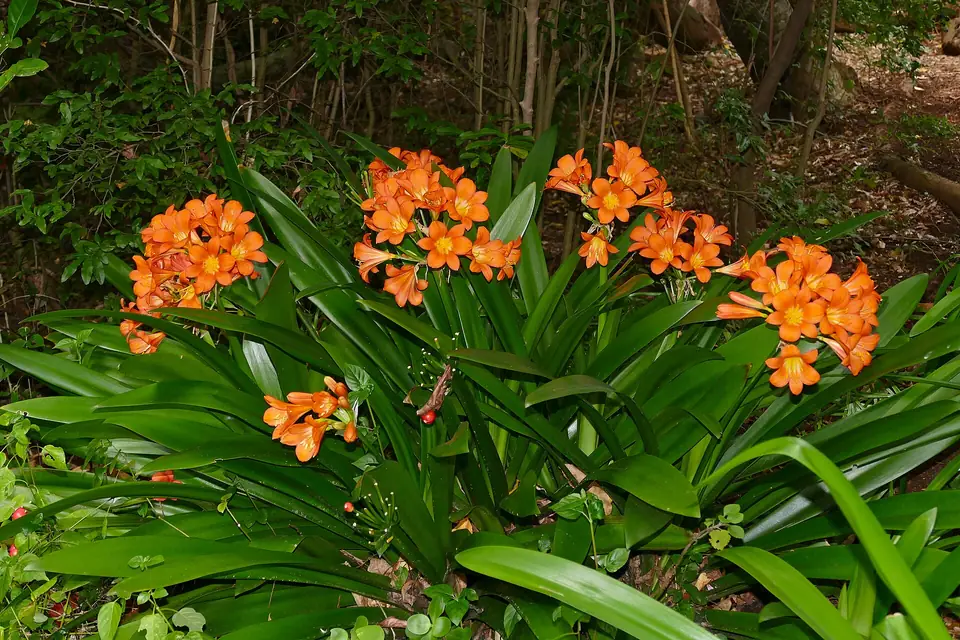
How to care for Clivia
Clivia miniata · Amaryllidaceae
Clivia is a long-lived South African plant with fans of glossy, strap-shaped leaves and dense heads of orange trumpet flowers in late winter or spring. It is famously tolerant of neglect, shade, and pot-bound roots — old specimens are handed down through families. Its only firm demand is a cool, dry winter rest to trigger bloom. Water roughly every 8 days while it's growing (about every 21 in winter), give it bright, indirect light, kept above 45°F (7°C) — dry air is fine for it.
Care at a glance
Water when the top half of the soil is dry in the growing season; in winter give barely enough to keep leaves from wilting.
Bright, indirect light — an east window or bright north exposure; hot direct sun scorches yellow patches on the leaves.
Half-strength balanced fertilizer every 3 weeks from spring through late summer only.
Mistakes that kill this plant
- Skipping the cool winter rest, then wondering why it never flowers.
- Warm, wet winters that rot the fleshy roots.
- Letting pets gnaw the leaves or base — it is toxic.
Seasonal tips
- Give 6–8 weeks of cool (45–55°F (7–13°C)), nearly dry rest in winter — that's what sets the flower buds.
- Wait until the flower stalk is well up before resuming normal water and warmth, or the stalk stays stunted.
- Repot rarely; it blooms best crowded, so wait until roots are literally pushing it out of the pot.
Is it safe for pets?
We have Clivia recorded as toxic to cats and dogs.
Full pet-safety details for cats & dogsCare for your Clivia on autopilot
Ploomily turns this guide into a Living Schedule — watering tuned to your city’s climate, the season, the pot and the light, and feeding tuned to that same pot, drainage and light, following the growing season and pausing while the plant rests. The founding price in force today is shown in full before you confirm, and locked for as long as you stay subscribed — with 30 days to change your mind.
Build my Living ScheduleClivia is featured in
More flowering plants
Toxicity here is informational, not a safety guarantee. Those are our own records, compiled by following the ASPCA's published toxic and non-toxic plant lists and Pet Poison Helpline's plant poison list rather than copied from them — confirm anything that matters against the ASPCA's published lists, which this one is matched to, or with your vet. If your pet ingested this plant, contact your vet or the ASPCA Animal Poison Control Center at (888) 426-4435.