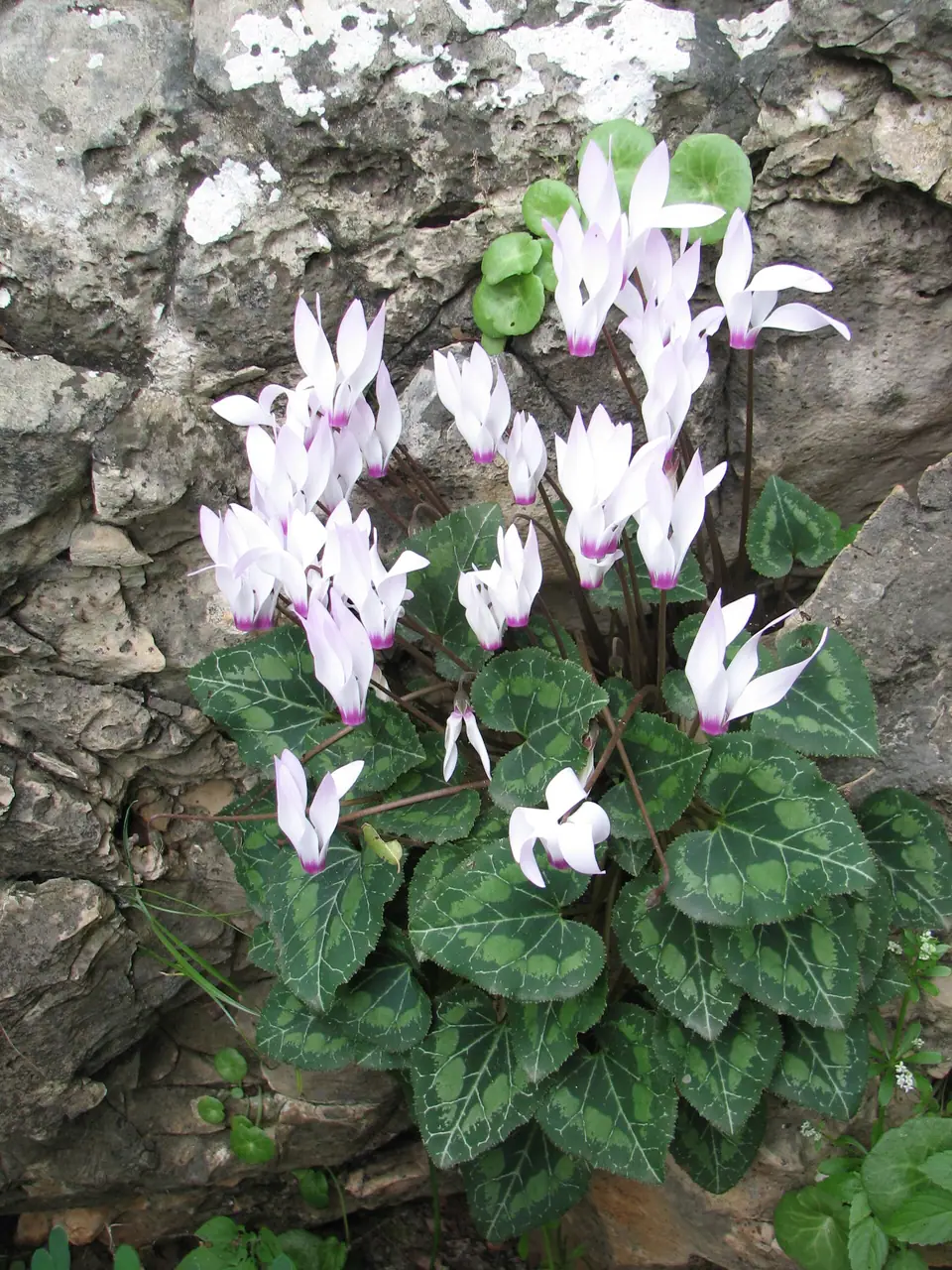
How to care for Cyclamen
Cyclamen persicum · Primulaceae
Florist cyclamen bloom through the darkest months, holding swept-back flowers like flames above marbled, heart-shaped leaves. They are cool-season plants that flourish at temperatures most homes find chilly and sulk in heated rooms. Grown cool and watered from below, one tuber flowers for months and returns each autumn. Water roughly every 5 days while it's growing (about every 21 in summer), give it bright, indirect light, kept above 41°F (5°C) — average room humidity suits it.
Care at a glance
Water from the bottom when the pot feels light, keeping the top of the tuber dry — water in the crown rots it.
A bright, cool windowsill with winter sun; it blooms longest in rooms kept around 55–64°F (13–18°C).
Half-strength balanced feed every 3 weeks while in leaf and flower; none during summer rest.
Mistakes that kill this plant
- Watering onto the tuber's crown until it rots.
- Keeping it in a warm, dry room, which forces early collapse.
- Discarding the dormant tuber in summer — it is resting, not dead.
Seasonal tips
- Keep it cool — a warm living room shortens the display from months to weeks.
- Twist off spent flowers and yellow leaves at the base with a sharp tug rather than cutting, to avoid rot stubs.
- When leaves yellow in late spring, let it dry into summer dormancy and restart watering in early autumn.
Is it safe for pets?
We have Cyclamen recorded as toxic to cats and dogs.
Full pet-safety details for cats & dogsCare for your Cyclamen on autopilot
Ploomily turns this guide into a Living Schedule — watering tuned to your city’s climate, the season, the pot and the light, and feeding tuned to that same pot, drainage and light, following the growing season and pausing while the plant rests. The founding price in force today is shown in full before you confirm, and locked for as long as you stay subscribed — with 30 days to change your mind.
Build my Living ScheduleCyclamen is featured in
More flowering plants
Toxicity here is informational, not a safety guarantee. Those are our own records, compiled by following the ASPCA's published toxic and non-toxic plant lists and Pet Poison Helpline's plant poison list rather than copied from them — confirm anything that matters against the ASPCA's published lists, which this one is matched to, or with your vet. If your pet ingested this plant, contact your vet or the ASPCA Animal Poison Control Center at (888) 426-4435.