How to care for Gloxinia
Sinningia speciosa · Gesneriaceae
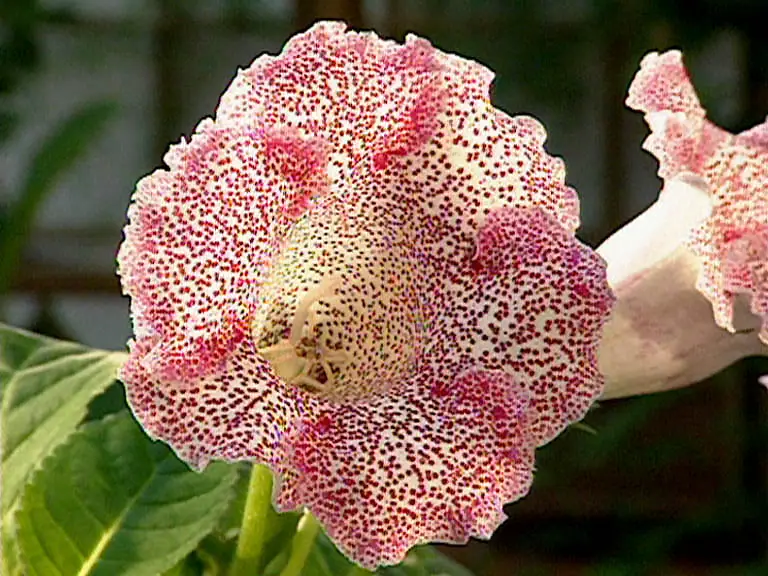
Florist gloxinias bear huge, velvety trumpet flowers in jewel tones over plush emerald leaves — a spectacular tabletop display. They grow from a tuber and, unlike African violets, have a true dormancy: after blooming, the plant dies back and rests. Many are discarded at this stage when they are simply asleep. Water roughly every 4 days while it's growing (about every 30 in winter), give it bright, indirect light, kept above 61°F (16°C) — it wants humid air.
Care at a glance
Keep evenly moist with tepid water at the soil line while growing and blooming, then taper off completely as leaves yellow into dormancy.
Bright, indirect light such as a shaded east window; direct sun scorches the velvety foliage.
Half-strength high-phosphorus feed every 2 weeks during growth and bloom; none during dormancy.
Mistakes that kill this plant
- Throwing the plant away at dormancy — the tuber is alive and will regrow.
- Watering the resting tuber, which rots it.
- Splashing cold water on leaves and flowers, spotting and rotting them.
Seasonal tips
- When leaves yellow after bloom, let the pot dry and rest the tuber somewhere dark and cool for 2–3 months.
- Restart in late winter: fresh mix, tuber hollow-side up barely covered, warmth, and sparing water until sprouts show.
- Never mist the leaves; humidity should come from a pebble tray or humidifier.
Is it safe for pets?
Our records list Gloxinia as non-toxic to cats and dogs.
Full pet-safety details for cats & dogsCare for your Gloxinia on autopilot
Ploomily turns this guide into a Living Schedule — watering tuned to your city’s climate, the season, the pot and the light, and feeding tuned to that same pot, drainage and light, following the growing season and pausing while the plant rests. The founding price in force today is shown in full before you confirm, and locked for as long as you stay subscribed — with 30 days to change your mind.
Build my Living ScheduleGloxinia is featured in
More flowering plants
Toxicity here is informational, not a safety guarantee. Those are our own records, compiled by following the ASPCA's published toxic and non-toxic plant lists and Pet Poison Helpline's plant poison list rather than copied from them — confirm anything that matters against the ASPCA's published lists, which this one is matched to, or with your vet. If your pet ingested this plant, contact your vet or the ASPCA Animal Poison Control Center at (888) 426-4435.